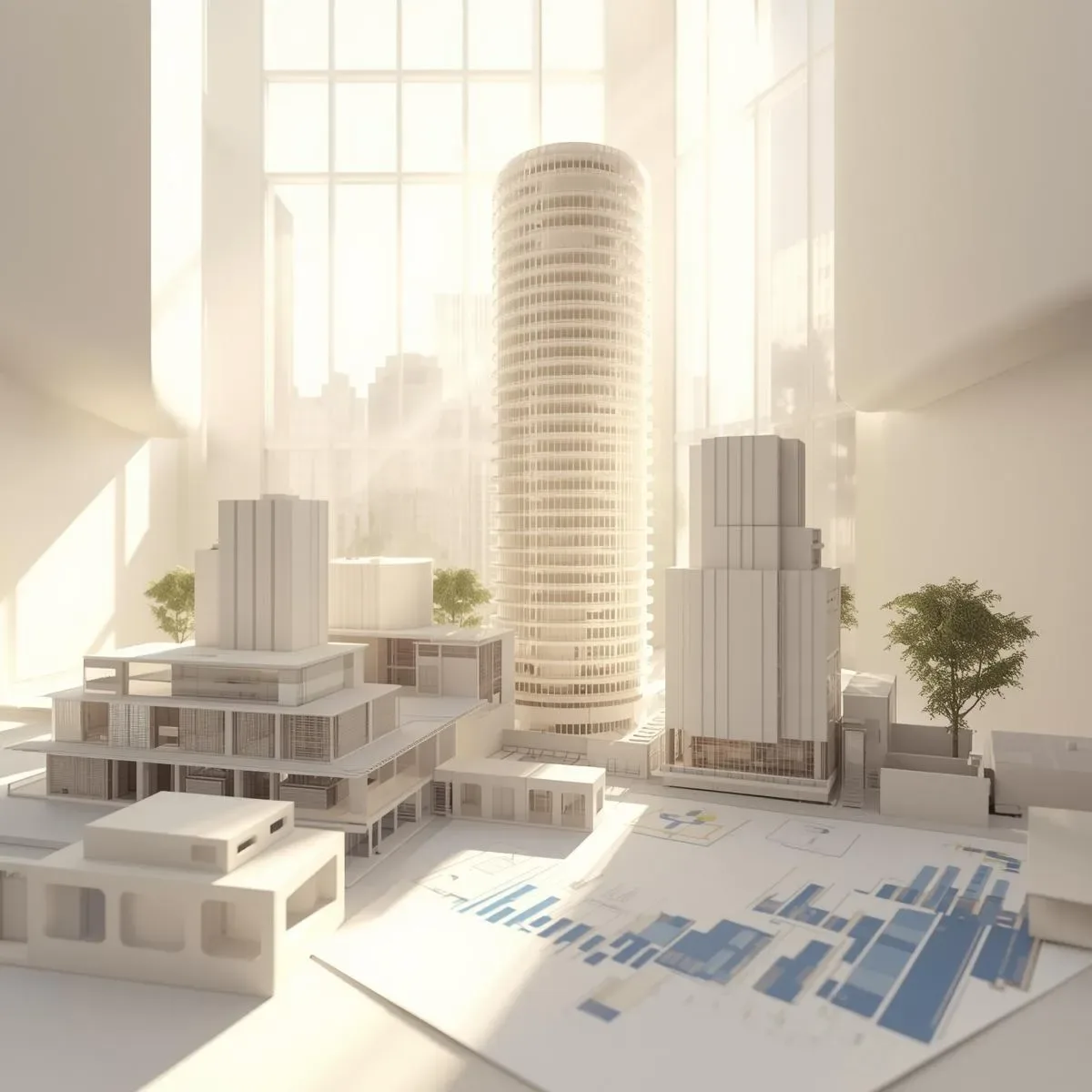
Bangkok’s daylight at latitude 13.75°N is intense and has a smaller seasonal variation in sun angle than temperate regions. Buildings designed without daylight analysis consistently suffer from one of two failure modes: rooms with insufficient glazing that require artificial lighting throughout the day, or oversized windows that admit solar heat loads that drive up air conditioning consumption. 3D Model Daylight Analysis finds the precise balance between these extremes for Bangkok’s specific sun path.
The analysis uses Radiance or DAYSIM software with Bangkok’s actual annual sun path data to generate Daylight Factor Maps showing natural illuminance at every point in the space for every hour of the day. Useful Daylight Illuminance (UDI) Analysis quantifies what percentage of occupied hours fall within the comfortable 100-2,000 lux range. Annual Sunlight Exposure (ASE) mapping identifies locations at risk of direct glare or excessive solar heat gain—determining precisely where shading devices are needed and to what depth.
For Bangkok homes and offices, daylight optimization has a direct financial impact. Buildings designed to use natural daylight for 50-70% of occupied hours reduce artificial lighting consumption by 30-45%. In commercial buildings where lighting accounts for 20-30% of total electricity use, this translates to 6-13% total electricity savings from design-stage analysis alone—before any smart controls are added to the building.