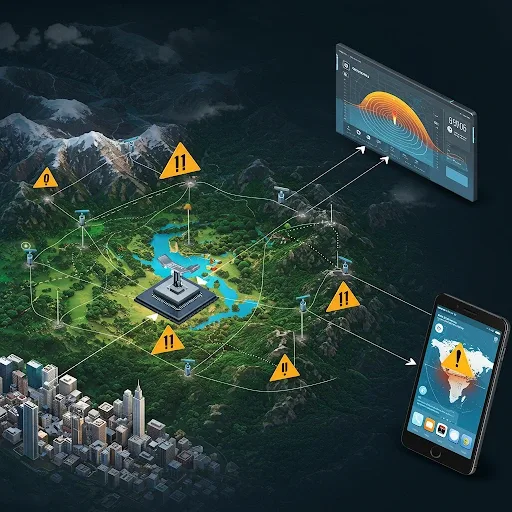
The Numbers Geologists Watch: 250-300 Events Per Year
Thailand is not a high-seismicity zone like Japan or Indonesia, but TMD data confirms an annual average of 250-300 earthquakes, with at least 4-5 exceeding 4.0 magnitude each year. That is enough shaking to knock objects off shelves and cause genuine alarm. This figure has not declined over the past five years, and several geologists note that fault activity in Northern and Western Thailand appears to be trending upward.
5 Active Fault Lines You Need to Know
Thailand has dozens of active fault lines catalogued by the Department of Mineral Resources, but five are drawing particular attention in 2025.
The Mae Tha Fault (Lamphun-Lampang) runs approximately 70 kilometers through industrial zones and dense residential areas. The Mae Chan Fault (Chiang Rai) is linked to the 5.1M 2014 event that damaged 12,000 homes across Chiang Rai Province. The Sri Sawat Fault (Kanchanaburi) runs near the Srinakarin Dam, a critical infrastructure asset. The Moei Fault (Tak) is the source of repeated quakes along the Tak-Myanmar border, several of which have exceeded 5.0M. The Phayao Fault (Chiang Rai) can transmit tremors as far as Chiang Mai and Lamphun.
Fault Cycles: Why Researchers Are Watching 2020-2030
Each fault line has its own energy release cycle. Geological evidence suggests several Northern and Western Thai faults may be approaching the end of a 10-20 year cycle, periods typically associated with elevated energy release. This does not mean a major earthquake is inevitable, but it indicates that preparation during this window is especially important.
Real Stories from HappySmart Users
Sakchai from Kanchanaburi says his EWS system alerted him before he felt any shaking. He had time to walk from his second-floor bedroom to an open outdoor area before objects fell from his shelves. He says he would not have woken up in time without the system.
Maneerut from Bangkok lives on the 22nd floor of a condominium with her 74-year-old mother. She installed HappySmart to receive LINE notifications immediately when vibration is detected. Even though high-rise buildings are not near fault lines, tall structures amplify ground motion far more than low-rise buildings, and elderly residents need extra response time.
HappySmart: Designed for the Thai Context
HappySmart's Smart Home EWS is designed with Thai realities in mind: hot and humid climate, intermittent power in some areas, and LINE as the primary communication platform for Thai users. The system supports alerts via LINE Notify and LINE OA, in-home sirens, and integration with existing Smart Home setups.
HappySmart provides end-to-end service including site survey, design, installation, configuration, after-sales support, and software updates. The system suits residential homes, schools, hotels, and commercial buildings in risk areas.
Summary: 5 Fault Lines Are 5 Reasons to Decide Today
The Mae Tha, Mae Chan, Sri Sawat, Moei, and Phayao fault lines are not on the map to frighten anyone; they are there to confirm that real risk exists. Installing a Smart Home EWS today is the best decision you can make for your family and your property.