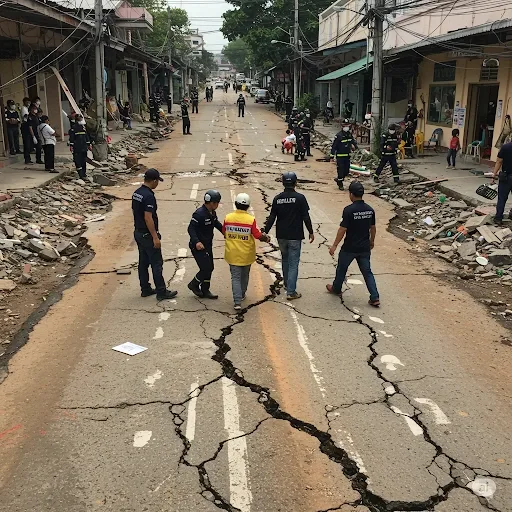
5.9M Mae Suai Chiang Rai Earthquake: The Event That Changed Thai Society's Understanding
In early 2025, a 5.9 magnitude earthquake centered near Mae Suai District, Chiang Rai Province, sent tremors felt across Chiang Mai, Lampang, Phayao, and even parts of Bangkok. While there were no mass casualties, old residential buildings, school structures, and several temples sustained damage. The event clearly demonstrated that Thailand is not as safe from earthquakes as many believed.
3 Key Lessons from the Event
The first lesson is that structures not designed for seismic loads suffered the most damage. Buildings that failed most severely were predominantly masonry constructions on soft soils that amplified ground motion, or old buildings predating any earthquake-resistant construction standards.
The second lesson is that inadequate alert coverage left residents without preparation time. Many areas received no advance warning, leaving people without the opportunity to exit buildings, close gas valves, or take shelter in safe zones.
The third lesson is that not knowing the correct response behavior increases risk. Many people panicked and ran out of buildings while shaking was still occurring — a behavior that significantly increases the risk of injury from falling facade debris.
4 Areas Every Homeowner Must Address
The first area is structural assessment and reinforcement. Hire a licensed structural engineer to inspect your home, particularly if it was built before 1997 or is within 50 kilometers of an active fault line. Where weaknesses are found, reinforcing columns and beams with Carbon Fiber Wrap or additional steel can significantly improve resistance.
The second area is EWS installation. A Smart Home EWS like HappySmart provides personal advance warning before the main shaking arrives. Starting at 4,500 THB, it can prevent far more damage than its cost through automatic gas shutoff and power cutoff.
The third area is family emergency planning. Designate an outdoor assembly point, practice the evacuation plan at least twice a year, prepare a 72-hour emergency kit, and teach every child in the household the Drop-Cover-Hold On procedure.
The fourth area is earthquake insurance. Verify that your home insurance policy covers both structural damage and contents. Several Thai insurers offer targeted packages for risk-zone properties at reasonable premiums.
Government Roles That Need Acceleration
The Thai government must accelerate development in three areas: expanding the seismic monitoring station network, enforcing earthquake-resistant construction standards across 12 high-risk provinces, and establishing public education programs on correct earthquake response behavior.
Summary: From Lessons to Concrete Preparedness
The 5.9M Mae Suai earthquake confirmed that real risk exists and that further events are possible. Structural assessment, EWS installation, emergency planning, and earthquake insurance are the four concrete steps every homeowner in a risk zone should take without delay.