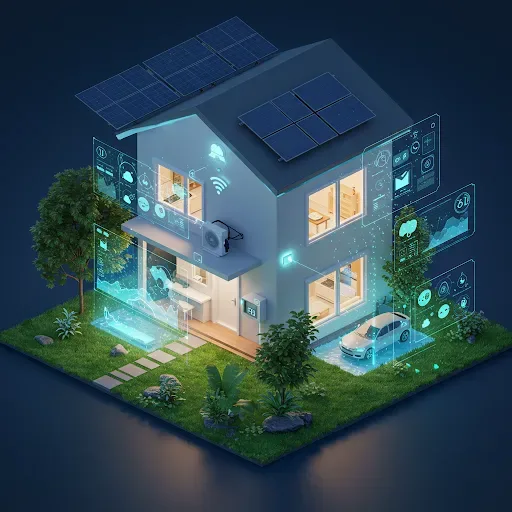
Modern Smart Homes: From Convenience to Disaster Prevention
Smart Home systems in 2025 have moved far beyond voice-controlled lights and remote camera viewing. They are now centralized systems that connect to disaster detection sensors for earthquakes, fires, floods, and gas leaks. Modern AI within these systems learns local vibration patterns and distinguishes earthquakes from ordinary sources, reducing false alarms and increasing system reliability.
Why Earthquakes Require Special Preparation
Earthquakes differ from other disasters in that they occur without clear long-range warning, have no accurate long-term prediction, and the main destructive shaking typically arrives within 30-120 seconds of P-wave detection. This narrow window means that responses must be automatic rather than waiting for human decisions.
Thailand has multiple active fault lines including Mae Tha, Phayao, Mae Chan, Sri Sawat, and Moei, which are capable of generating moderate to strong earthquakes, particularly in Northern and Western Thailand where seismic activity has been trending upward in recent years.
How EWS Integrates with Smart Home
When an earthquake sensor detects vibration exceeding configured thresholds, the Smart Home system simultaneously executes responses across four domains.
Gas and electrical safety: automatic gas valve closure to prevent fires, and power cutoff to designated circuits to prevent electrical faults.
Evacuation: automatic unlocking of all exit doors and activation of emergency lighting in corridors.
Recording: immediate activation of all security cameras, with footage automatically uploaded to cloud storage.
Notification: LINE Notify and push notifications sent to all household members, including those away from home.
Beyond Earthquakes: What New EWS Sensors Can Detect
New Smart Home EWS systems are not limited to earthquake detection. Modern environmental sensors can detect abnormal atmospheric pressure changes that may signal severe weather, and rapid temperature and humidity shifts that may indicate fire risk or moisture infiltration in the building structure.
Recommended Brands for the Thai Context
HappySmart is the top choice for Thai homes, designed with the hot and humid climate in mind, LINE as the primary alert channel, and fully turnkey installation that requires no technical knowledge from the user. Xiaomi Smart Sensor is a cost-effective option for existing Xiaomi ecosystem users. Tuya Smart Life suits those who want an open platform supporting diverse device brands.
Summary: Smart Home EWS Is the Next Level of Safety for Thai Homes
Integrating EWS with Smart Home enables a residence to respond to disasters faster and more accurately than any human reaction. In 2025, with accessible technology costs and active fault lines, the decision to invest in this system is the highest-return safety investment available for Thai families.