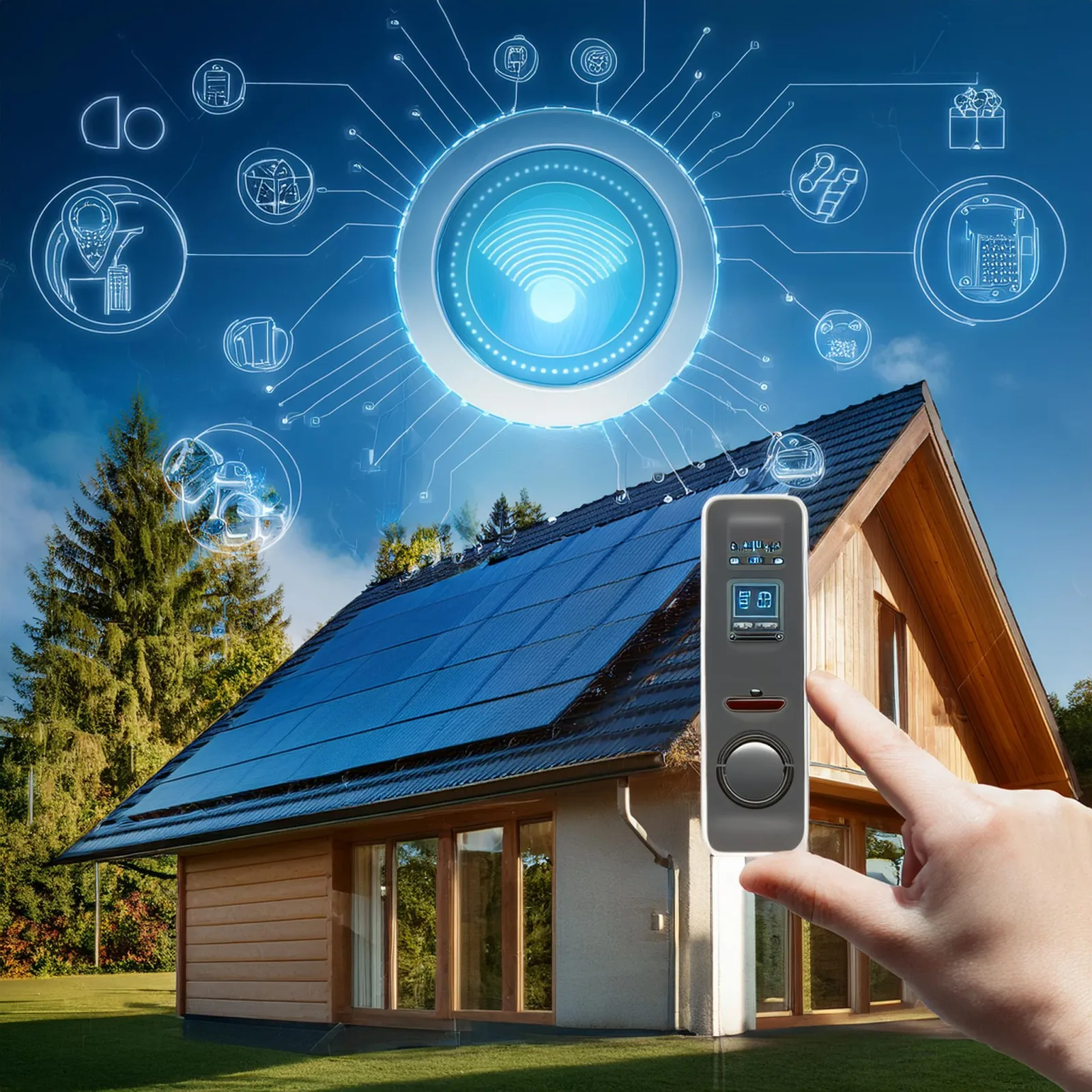
Why Temperature Control Is Bangkok's Biggest Home Challenge
Bangkok averages above 30°C year-round, with peak summer temperatures reaching 38–40°C. Air conditioning is not a luxury in this climate — it is a necessity. But running conventional AC systems all day pushes electricity bills to uncomfortable levels, and standard thermostats offer no intelligence about when, where, or how to cool efficiently.
IoT-driven temperature control solves this problem by making the entire HVAC ecosystem aware, adaptive, and occupancy-sensitive.
Smart Thermostats: The Control Layer Your AC Needs
A smart thermostat is not a Wi-Fi-enabled remote control. It is a learning device that understands your temperature preferences across different times of day and adjusts air conditioning output accordingly — without manual input after the initial setup period.
HappySmart installs thermostats and IR blasters compatible with Matter 1.4, Tuya Smart, and Xiaomi Mi Home. Critically, your existing air conditioning units do not need replacement. The smart control layer integrates with virtually any split or ducted system through IR bridge technology, transforming conventional AC into an intelligent climate management system at a fraction of the cost of full replacement.
Occupancy-Based Adjustment: Cool the Room, Not the Empty House
The most immediately impactful feature in HappySmart's climate installations is occupancy-based temperature adjustment. PIR sensors and millimetre-wave radar detect whether a room is occupied or not.
When a room is empty, the system raises the set temperature by 2–3°C or enters an energy-saving mode. When someone enters, it returns to the target temperature within two to three minutes. Across a full home, this single feature accounts for a significant portion of the 20–30% energy savings clients report.
Automated Blinds: The Overlooked Cooling Tool
In Bangkok's direct sunlight, solar heat gain through windows is a major driver of cooling load. Motorised blinds and smart shading systems, integrated into the climate control network, automatically close during peak sun hours — reducing the temperature load the AC must overcome.
HappySmart programs blinds to track solar position throughout the day, maximising shade during the hottest hours and opening for natural light in the morning and evening. Smart HVAC vents in multi-zone properties distribute cooling based on real-time occupancy data, ensuring cold air goes where it is needed rather than being wasted.
Humidity Sensors: Essential in the Thai Climate
Bangkok's relative humidity frequently sits between 70–85%, well above the comfortable range of 40–60%. High humidity makes temperatures feel significantly warmer than they are, and it creates conditions that accelerate mould growth and bacteria proliferation.
IoT humidity sensors connected to dehumidifiers and ventilation systems maintain indoor humidity within the healthy range. The result is a home that feels cooler at higher thermostat settings — reducing AC load while improving comfort and protecting your interiors.
Measurable Results: 20-30% Monthly Energy Savings
HappySmart's climate control data across Bangkok installations shows consistent 20–30% reductions in monthly electricity consumption compared to pre-installation baselines. For a home spending 20,000 THB monthly on power, that is 4,000–6,000 THB saved every month — a return on investment that pays back the system cost within two to three years.
Beyond cost, maintaining stable temperature and humidity extends the life of electronics, wooden furniture, and art — additional value that conventional AC management cannot provide.
Contact HappySmart via LINE @HappySmart for a free consultation and quote.