Why Bangkok Home Electricity Bills Run High
Most Bangkok homes overconsume electricity for three main reasons: forgetting to switch off the air conditioner when leaving a room, leaving lights on in unoccupied spaces, and multiple appliances drawing high standby power around the clock.
A smart home system addresses all three simultaneously through automations that work independently of occupant behavior.
Intelligent Air Conditioning Control
Air conditioning accounts for 40–60% of a Thai home's electricity bill — the single largest load.
Using mmWave occupancy sensors and an IR blaster compatible with any air conditioner remote, Home Assistant can run several automations: when a room has been empty for 15 minutes, the system raises the AC setpoint by 2–3°C or switches it off entirely; when someone re-enters, it restores the preferred temperature automatically.
For homes using Xiaomi Mi Home, many air conditioner models connect directly via Xiaomi Miot integration, enabling full control and energy monitoring without an IR blaster.
Lighting and Smart Plug Management
Smart LED bulbs and Tuya switches enable precise lighting control.
Set automations to switch off lights when a room has been empty for 10 minutes based on mmWave presence detection. Schedule exterior lights to switch off at sunrise using Home Assistant's location-based sun data.
Power-monitoring smart plugs such as Athom Tasmota plugs at ฿400–600 each reveal which devices draw excessive standby power. When a television has not been used for two hours, the system can cut power to the outlet automatically.
Energy Dashboard and Consumption Analysis
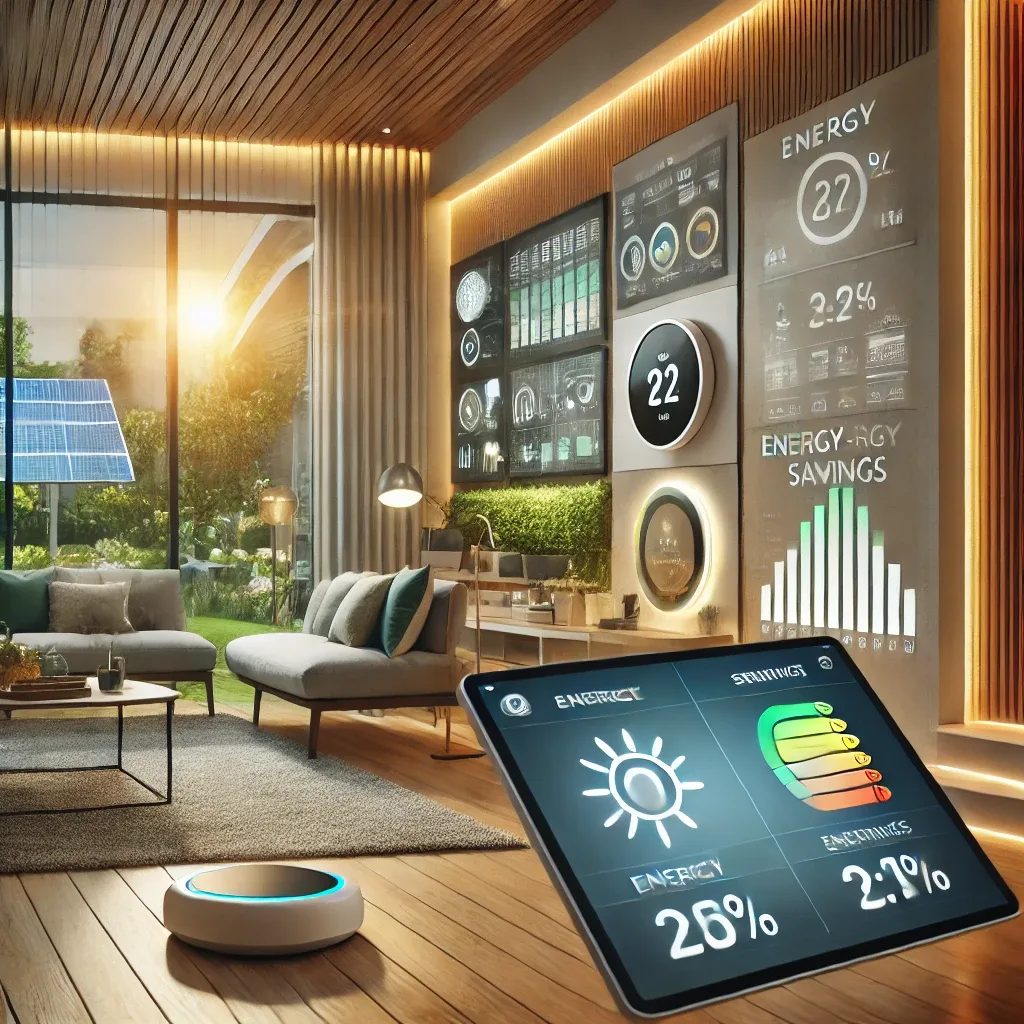
Home Assistant includes a built-in Energy Dashboard showing real-time and historical consumption broken down by device.
Connecting a Shelly EM CT clamp power monitor — installed in the home's distribution board at ฿2,000–3,500 — provides whole-home real-time energy graphs and alerts when consumption exceeds a defined threshold.
Energy Dashboard data informs decisions about which appliances to replace for being inefficient, and which automations are not delivering the expected savings.
What Results to Expect
A 150–250 sq.m. Bangkok home with a complete automation setup typically sees a 15–30% electricity bill reduction within the first three months. Hardware investment usually pays back within 12–18 months.
HappySmart calculates an energy ROI estimate before installation so you have a clear picture of when the system recovers its cost.