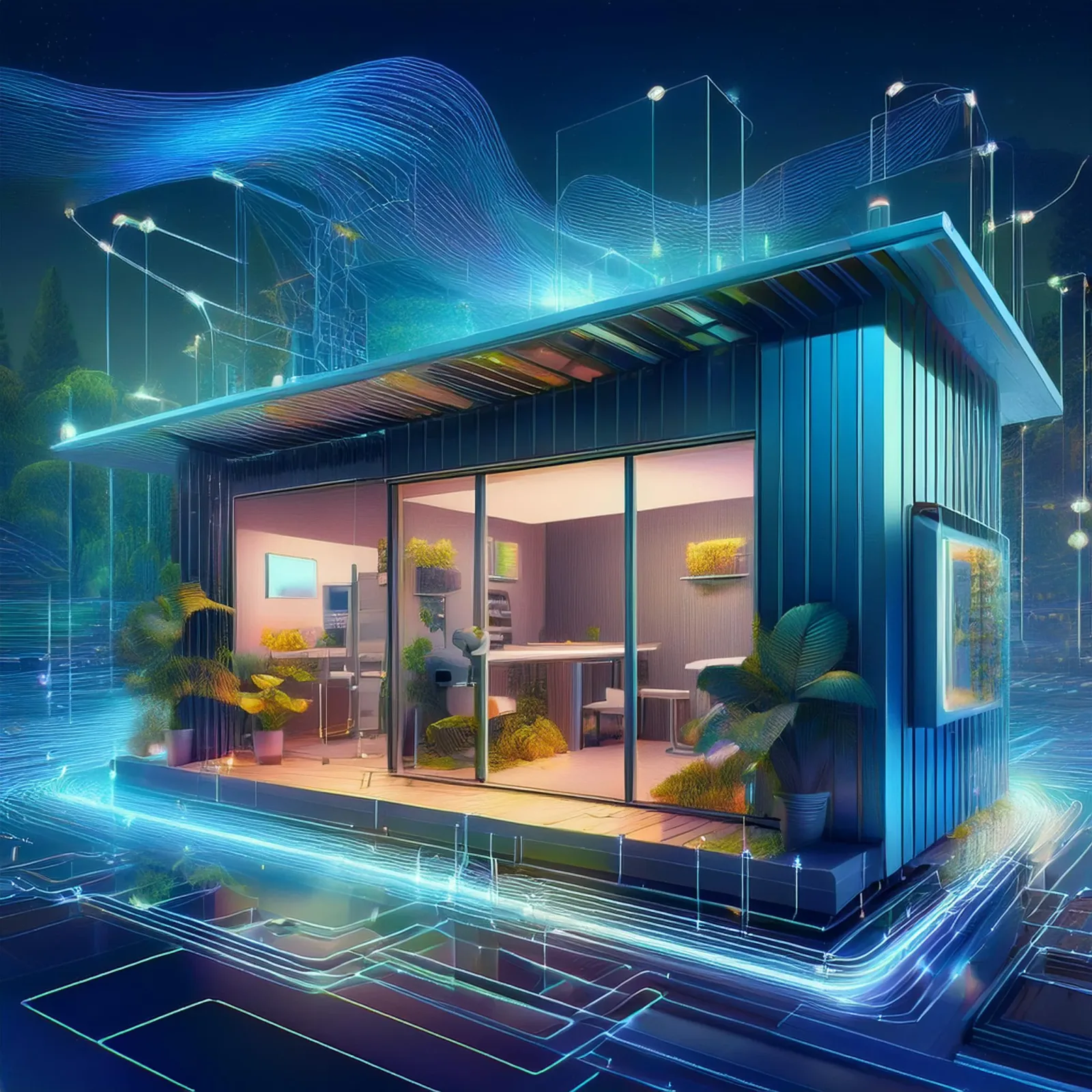
What Is a Prefab or Knock-Down Home and Why Is It Booming in Thailand?
A knock-down or prefab home is factory-manufactured in panels or modules and assembled on-site in as little as two to eight weeks. Contrast that with a conventional reinforced-concrete build, which typically runs six to eighteen months in the Thai market. By 2026 the segment is growing fast, driven by buyers seeking holiday retreats in Hua Hin and Khao Yai, as well as investors who want rental-ready units without the wait.
The core advantages are hard to ignore. Construction costs run 30–50% below a comparable brick-and-mortar build. Design is modular, so rooms can be added or removed as your needs change. Construction waste is reduced by over 80% compared with conventional methods, making prefab a genuinely greener choice. And if you ever need to relocate, the structure can be disassembled and rebuilt on a new plot.
What to Check Before You Buy
Building-permit rules vary significantly across Thailand. In Bangkok and the inner suburbs the Department of Public Works enforces strict setback distances and footprint limits, so confirm zoning before you sign anything. Upcountry regulations are often more relaxed, but still require a local building permit.
Choose a manufacturer certified to Thai Industrial Standard (TIS/มอก.) and affiliated with the Thai Construction Industry Association. Pay particular attention to the thermal insulation rating (U-value) — in Thailand's hot-humid climate, poor insulation means punishing air-conditioning bills from day one.
Plan utilities early: electrical load capacity, water supply, wastewater treatment, and crucially, internet connectivity. That last point determines how capable your smart home system can be.
Prefab Homes and Smart Home Integration: A Natural Match
The myth that prefab homes cannot support smart technology dies quickly when you look at 2026 IoT hardware. Every device HappySmart installs in a knock-down home connects wirelessly — no conduit, no pulled cables, no structural disruption whatsoever.
Tuya Smart and Xiaomi Mi Home ecosystems both support devices running on Wi-Fi 2.4/5 GHz and Zigbee 3.0. Smart bulbs, smart plugs, EZVIZ IP cameras, and digital door locks all go live within an afternoon. TP-Link Deco mesh routers ensure solid coverage even in larger open-plan prefab layouts. For holiday homes in areas with inconsistent internet, a dual-WAN router paired with a 4G/5G backup SIM keeps the smart home online regardless.
All HappySmart devices carry Matter 1.4 certification, the universal interoperability standard that lets Apple HomeKit, Google Home, and Amazon Alexa coexist on the same network without vendor lock-in.
HappySmart Portable Smart Home Packages for Prefab Homes
HappySmart has engineered three tiers specifically for prefab and knock-down builds.
The Starter package covers lighting and smart-plug control — ideal for a holiday home where you need to switch off the air conditioning remotely before checkout. The Essential package adds an EZVIZ camera system, a digital door lock, and door/window sensors, giving you full perimeter awareness from your phone. The Premium package delivers a complete smart home: AI-driven HVAC scheduling, motorised blinds, automated irrigation, and a whole-home energy dashboard.
Because the install is wireless-first, every package can be deployed in a single day and moved with you if you change properties.
Bangkok vs Upcountry: Different Priorities
In Bangkok and its satellite cities the primary considerations are regulatory (setbacks and floor-area ratios) and connectivity (Fiber Optic and 5G are both widely available). Security is also a stronger concern in dense urban areas, making camera systems and digital locks a priority.
In Hua Hin and Khao Yai the advantages flip: larger plots, fewer height restrictions, and stunning natural settings. The planning priority shifts to energy resilience. HappySmart recommends pairing rooftop solar panels with a battery storage system for any holiday home that will sit unoccupied for extended periods. The combination cuts electricity costs by 40–60% and keeps the smart home online through grid outages.
Contact HappySmart via LINE @HappySmart for a free consultation and quote.