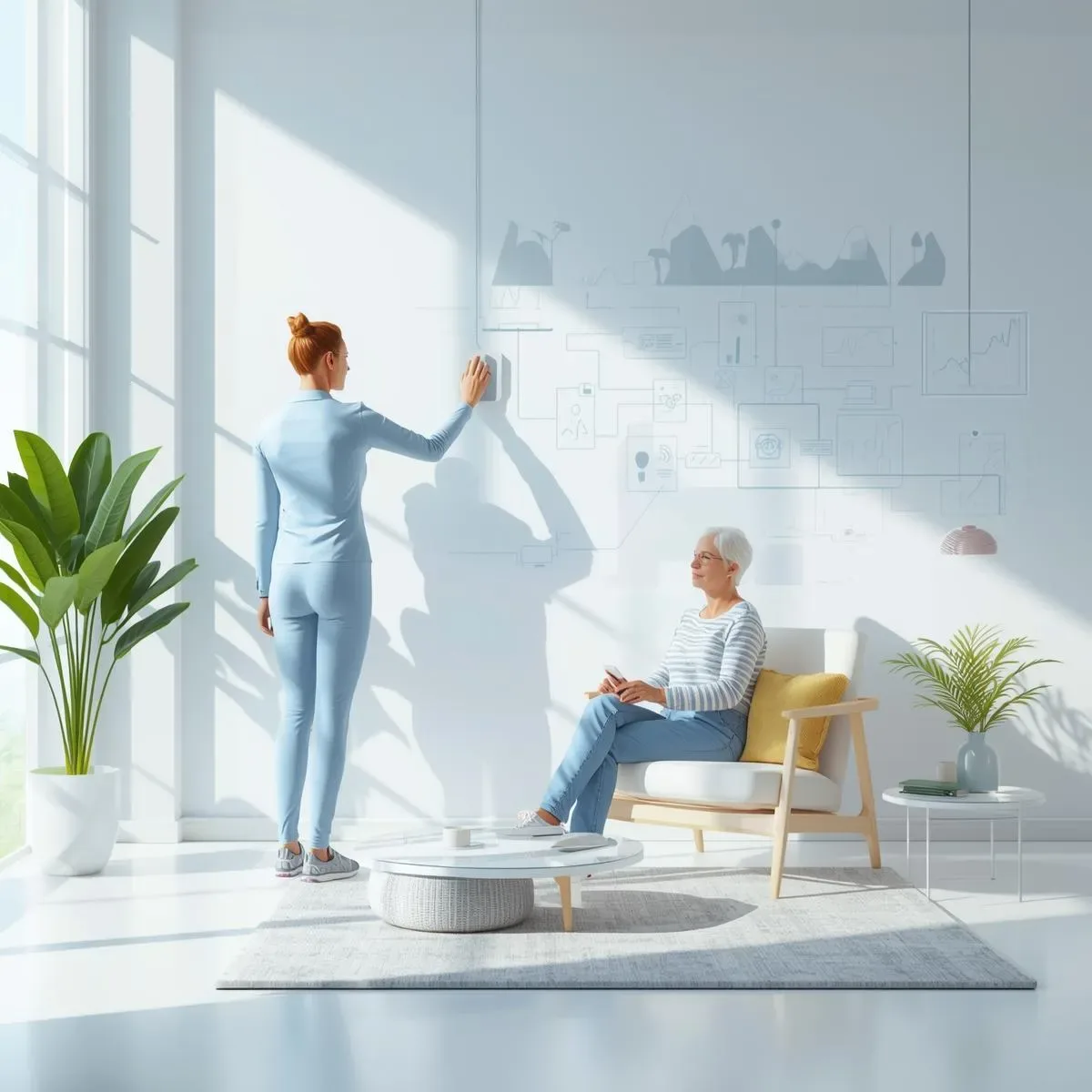
Ambient Assisted Living (AAL), a European Commission framework, uses unobtrusive technology to support elderly independence in daily life without sacrificing dignity or privacy. In Thailand — where 1 in 5 will be 65 or older by 2030 — AAL provides essential infrastructure for multi-generational families and elderly living alone.
Sensor Types and Their Specific Roles
PIR (Passive Infrared) sensors detect heat-based motion, establishing room occupancy status and building a daily activity baseline — which rooms are traversed at which times of day.
60GHz millimeter-wave radar (Seeed Studio MR60FDA1 or Aqara FP2) detects falls, monitors breathing rate, and tracks presence without cameras — ideal for bedrooms and bathrooms where privacy is paramount. Lab-tested fall detection accuracy exceeds 95%.
Door/window sensors capture detailed daily routines: what time the refrigerator is first opened (verifying breakfast was eaten), how many bathroom visits occur per hour (flagging polyuria or nocturia as potential diabetes signals).
A smart scale (Withings Body+) tracks daily weight. A rapid 2 kg gain over 3 days may indicate oedema from cardiac or renal issues, warranting clinical review.
Wearable integration (from post 23072) provides HRV, SpO2, and step count as physiological ground truth for fusion with environmental sensor data.
Sensor Fusion Logic in Home Assistant
Fusion combines multiple sensor streams to produce more reliable decisions than any single sensor alone.
Activity Score: count PIR triggers and door sensor events per hour, compared against a personal baseline (calculated from the first 14 days). If score drops more than 40% below baseline for 2 consecutive daytime hours → send LINE yellow-level alert.
Fall Alert: radar detects fall event + no movement for 60 seconds + no cancel button pressed on smart display → send LINE red-level alert with emergency contact numbers.
Cognitive Decline Flag: long-term pattern shifts — wake time drifting more than 2 hours from norm, refrigerator access frequency declining more than 30%, walking routes within the home changing significantly → generate a weekly report for physician review.
Privacy-First Design for Thai Cultural Values
Thai culture places profound importance on elder dignity. AAL systems must not deploy cameras in bedrooms or bathrooms — radar and PIR sensors provide sufficient safety intelligence without privacy compromise. All processing runs locally on Home Assistant with no data leaving to cloud servers, ensuring full PDPA (B.E. 2562) compliance.