What Is Smart Lighting and How Does It Work?
Smart Lighting is a lighting system controlled via smartphone app, voice commands, or pre-set automated conditions. The technology falls into four main categories based on use case.
App-controlled lights allow you to switch them on and off, adjust brightness, and set schedules from anywhere in the world. They eliminate energy waste from forgotten lights and support voice control through major smart home ecosystems.
Motion Sensor lights activate automatically when movement is detected, making them ideal for hallways, bathrooms, and garages. They switch off after a configurable idle period, delivering consistent energy savings without any manual effort.
AI Automation and Color-Changing Lights: Personalized Lighting for Every Mood
AI-automated lighting analyzes usage behavior and learns the homeowner's routine so it can adjust lighting appropriately without daily manual input. It also connects with CCTV cameras and Smart Locks to form a complete security layer, for example switching lights on instantly when the camera detects abnormal movement.
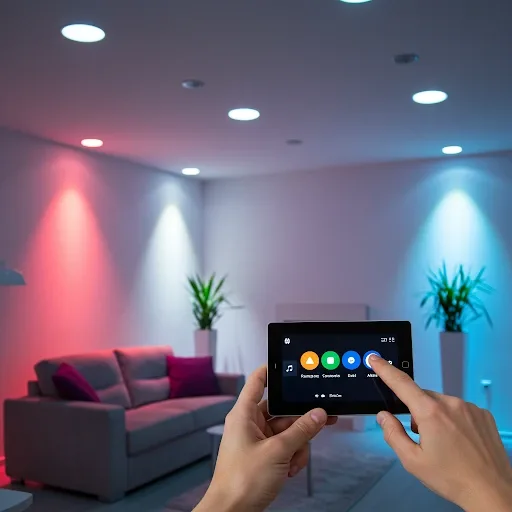
Color-changing lights such as Philips Hue create atmosphere tailored to the activity at hand. Cool white supports focused work, warm orange promotes relaxation, and vibrant colors enhance social gatherings. All of these can be voice-controlled through Google Assistant or Amazon Alexa with simple, natural language commands.
Security Benefits of Smart Lighting
Smart Lighting plays a meaningful role in deterring unwanted visitors. Lights that activate automatically when motion is detected make would-be intruders think twice before approaching. Setting lights to turn on and off in randomized patterns while you are away creates the impression that someone is home, measurably reducing burglary risk.
Connecting Smart Lighting to CCTV improves nighttime image quality and allows the system to flood an area with bright light automatically when a security threat is detected. This integration turns lighting from a convenience into a genuine safety tool.
A Guide to Choosing Smart Lighting for Your Home
App-connected lights suit those who want full control including brightness, color, scheduling, and scene creation, along with integration into a broader Smart Home system.
Motion Sensor lights are best suited for safety-focused and energy-saving zones such as hallways, bathrooms, parking areas, and outdoor pathways.
Color-changing lights are ideal for living rooms, bedrooms, or creative spaces where you want to shift the atmosphere to match your mood or activity. Always check for a Google Home, HomeKit, or Alexa logo on the packaging to confirm platform compatibility before purchasing.
How to Install Smart Lighting Correctly
For standard smart bulbs, the process is straightforward: replace the bulb, download the companion app, connect via Wi-Fi or Bluetooth, and configure settings following the manual. For more complex switch or sensor systems involving electrical wiring, consulting a licensed electrician with Smart Home experience is recommended for safety.
Key tips: set schedules that reflect your actual daily routine, tune light color to the activity such as cool white for work and warm orange for rest, and always verify cross-device compatibility before purchasing to avoid integration issues later.