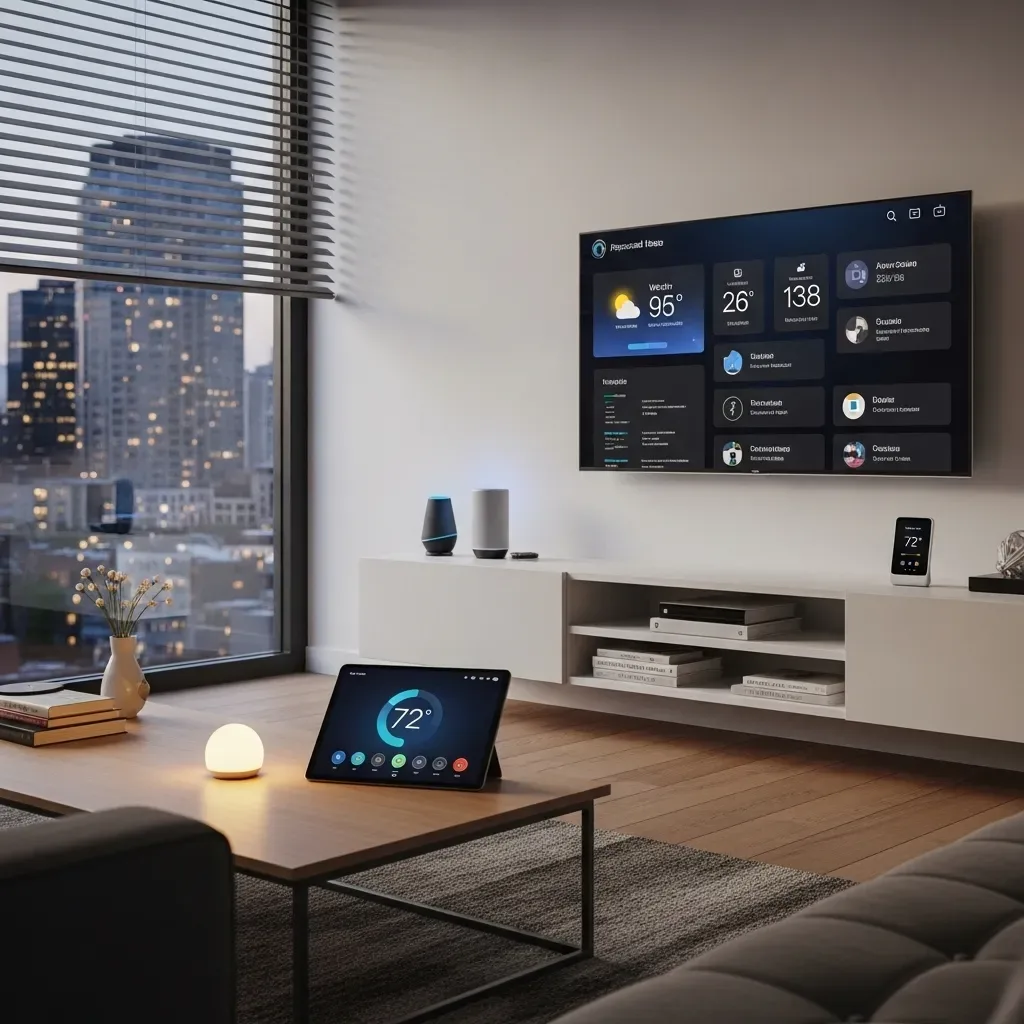
The Future of Living Is Already Here
The phrase "smart home" has changed substantially over the past five years. What began as voice-triggered light switches has evolved into a self-learning residential system that adapts to your routines without requiring manual input. In 2026, AI built into smart hubs from Apple, Google, and Amazon analyses weekly usage patterns and pre-configures scenes automatically — turning on the bathroom light and kettle ten minutes before your usual wake time, or pre-cooling the bedroom thirty minutes before your normal sleep hour.
For Thai homeowners, this shift means smart home investment is no longer about gadgetry. It is a long-term quality-of-life decision that makes a home safer, more economical, and genuinely adaptable to every member of the household across different life stages.
AI Automation That Adapts to Every Lifestyle
Modern smart home hubs — the Apple HomePod mini and Google Nest Hub Max being the most widely deployed in Thailand as of 2026 — use unsupervised learning to build occupancy profiles without explicit programming. The system observes when rooms are used, how long devices stay on, and which automations you override, then refines its behaviour accordingly.
For households with elderly members, motion sensors placed in risk areas such as bathrooms and stairwells can alert family members if no movement is detected for an unusual length of time. Voice control through Siri in Thai or Google Assistant in Thai removes the need to interact with a smartphone entirely — a meaningful accessibility benefit for older residents who find touchscreen interfaces unfamiliar.
Structured Energy Savings
MEA electricity tariffs in 2026 run at approximately ฿4.0–4.5 per unit, meaning a household consuming 500 units monthly faces a ฿2,000–2,250 electricity bill. A well-designed smart home reduces consumption through three distinct mechanisms: - Automatic shut-off: Lights and air conditioning switch off when rooms are vacated, detected via PIR sensors and occupancy algorithms rather than timers. - Smart scheduling: Washing machines, water heaters, and EV chargers run automatically during MEA off-peak hours without manual programming. - Consumption analytics: A real-time dashboard breaks down usage by device, identifying unnecessary standby loads and high-draw appliances.
HappySmart AI SmartHome users in Thailand consistently report 22–30% monthly savings, sufficient to recover system costs within 6–18 months depending on installation scope.
Built for Every Member of the Household
Multi-profile support in HomeKit and Google Home allows each family member to hold their own preferred lighting and temperature settings. When your iPhone enters a room, that room's scene activates according to your personal profile — not a generic default. For households with young children, smart locks can be configured to alert parents whenever the front door opens during defined hours, and geofencing lets the system know when adults have left the property radius, automatically switching cameras and sensors to an enhanced monitoring mode.
This flexibility makes Smart Home technology relevant across every life stage: a young professional who wants effortless control, a growing family that needs safety and oversight, and elderly residents who benefit from voice control and fall-detection sensors.
Long-Term Property Value
Smart home features have moved from premium differentiator to buyer expectation in Bangkok's mid-to-upper residential market. Data from luxury condo and landed property transactions in 2025–2026 indicates that projects with integrated smart home systems attract 35–50% more serious inquiries and command a 3–7% price premium over comparable units without the technology.
HappySmart AI SmartHome packages are designed to scale from a ฿1,599 starter set to a comprehensive whole-home system, applicable to both new builds and retrofits without requiring structural changes to existing wiring or fittings.