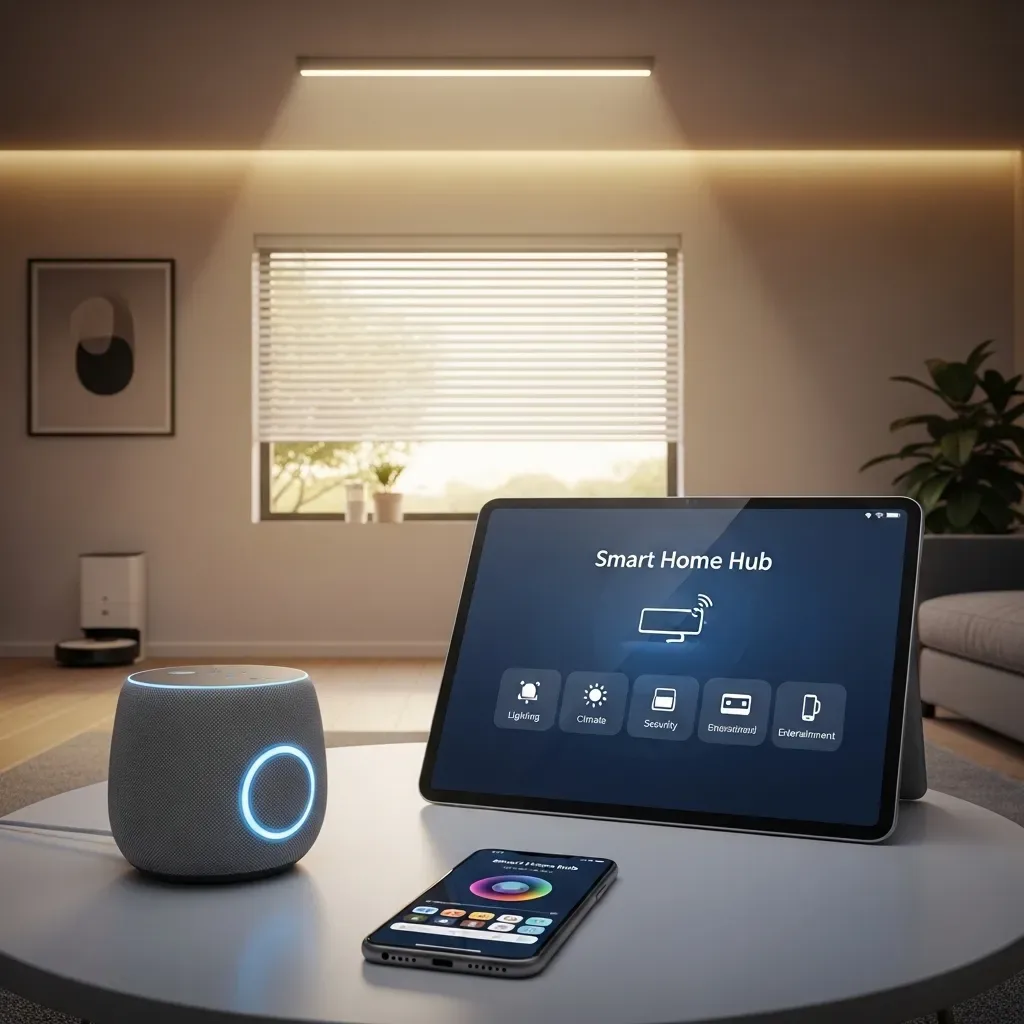
What Is Smart Home IoT?
IoT (Internet of Things) refers to connecting every physical device in the home to the internet so they can communicate, share data, and work together automatically. In a typical home, devices — air conditioners, light bulbs, security cameras, and appliances — operate in complete isolation. Smart Home IoT transforms them into a unified, communicating system.
HappySmart Smart Home designs IoT systems that integrate all device categories, from the ฿5,000 Starter Package to Full Automation driven by a central AI hub.
The Architecture of a Smart Home IoT System
Layer 1: Sensors (Perception) Every sensor type — Motion, Door/Window, Temperature, Humidity, PM2.5, CO₂, Light, and Leak Detectors — forms the home’s sensory system, streaming real-time environmental data continuously.
Layer 2: Connectivity (Communication) Protocols include Wi-Fi, Zigbee, Z-Wave, Thread, and Matter. HappySmart selects the right protocol mix based on home size, device count, and reliability requirements.
Layer 3: Smart Hub (Processing) The central brain receives all sensor data, applies AI logic and automation rules, and issues commands to connected devices.
Layer 4: Actuators (Execution) Devices that respond to commands: Smart Switches, Smart Plugs, Smart Locks, Smart Curtains, Air Conditioner Controllers, and more.
Layer 5: Interface (Control) LINE OA, Voice Assistants, and dashboard apps let residents monitor status, issue commands, and receive alerts anywhere, anytime.
Examples of Intelligent Device Cooperation
Scenario 1: Arriving Home Phone enters Geofence 500m from home → air conditioner turns on 15 minutes early → entry lights activate → door unlocks automatically on arrival → brief security camera summary sent via LINE.
Scenario 2: Sleep Mode One-tap Sleep button → all lights off except bedside night light → air conditioner switches to 26°C Sleep Mode with quieter fan → doors and windows lock → exterior security cameras activate.
Scenario 3: High PM2.5 Sensor detects PM2.5 above 50 μg/m³ → ventilation inlets close automatically → Air Purifiers in bedroom and living room activate → all household members notified via LINE → hourly PM2.5 readings logged for trend tracking.
Scenario 4: Leaving Home Front door closes → system confirms no occupants → all lights, air conditioners, and appliances switch off → security cameras enter Away Mode → home status summary sent via LINE.
Core Benefits of Smart Home IoT
Convenience — Control everything from one place, whether at home or overseas.
Security — AI cameras detect abnormal movement and alert instantly on intrusion.
Energy Savings — Sensor-device cooperation cuts electricity bills by 25–40%.
Quality of Life — Automatic Air Quality management protects the whole family from PM2.5 and CO₂ spikes.
Peace of Mind — Real-time home status visibility 24 hours a day, wherever you are.
Contact HappySmart via LINE OA to design a custom IoT system that connects every device in your home to work together intelligently.