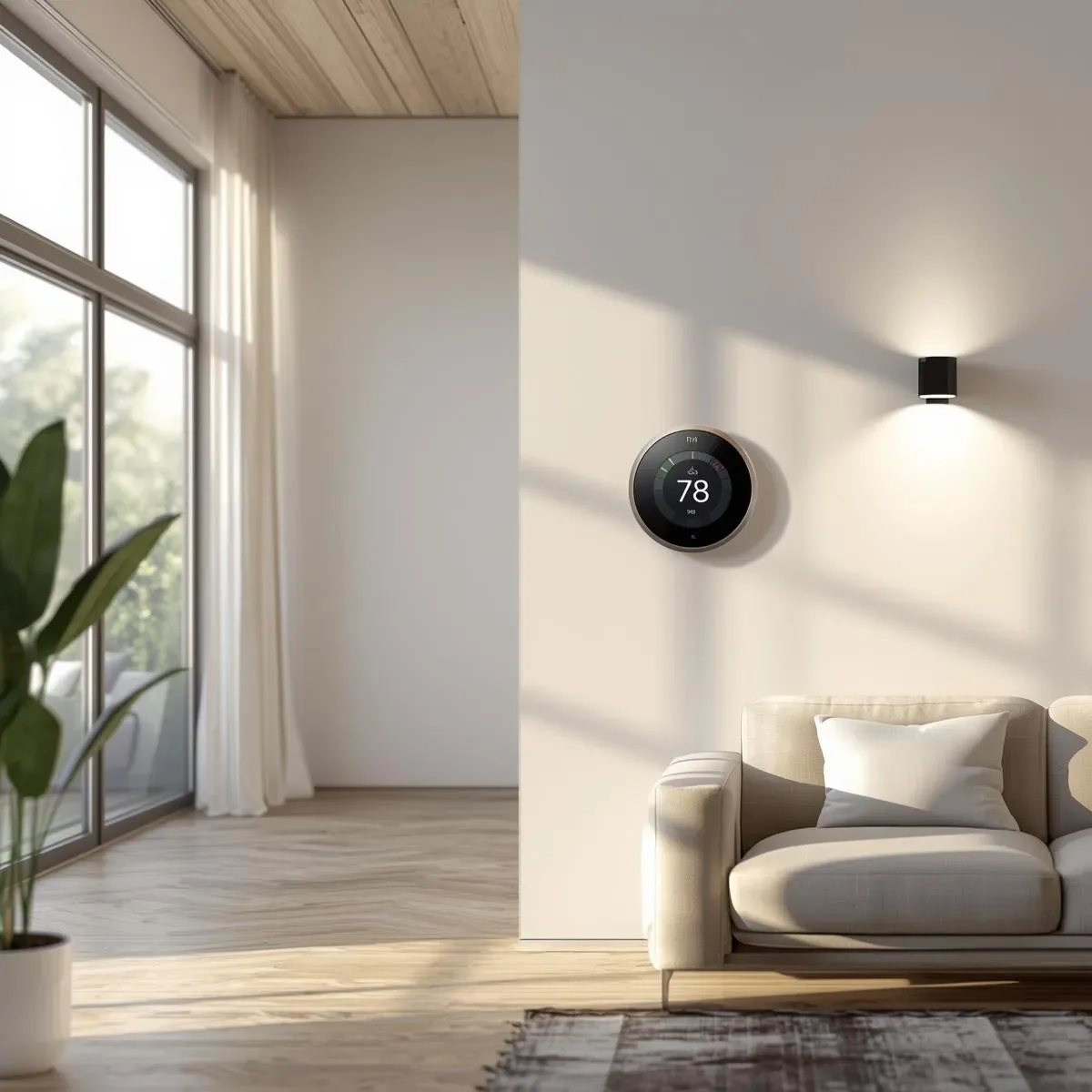
The New Definition of a Smart Home for Modern Living
In the past, a smart home meant controlling lights and air conditioning from a phone. In 2025–2026, a truly modern smart home must address three dimensions simultaneously: Convenience (automating daily routines), Safety (preventing accidents and intruders), and Healthcare (passively monitoring family health). These three dimensions work together to create an environment that looks after every family member — even when no one else is home.
Dimension 1: Convenience — Automate Everything
Morning Routine: Bedroom lights gradually brighten 30 minutes before the alarm, automated blinds open, the coffee maker starts, and Bangkok weather plus AQI data is read aloud via Google Nest Hub.
Away Mode: When all residents leave (detected via phone presence), HA turns off lights, reduces AC setpoints, locks doors, and activates CCTV monitoring automatically.
Welcome Home: When the car enters the driveway (detected via RFID or GPS geofencing), entrance lights illuminate, AC pre-cools 10 minutes early, and the front door unlocks automatically.
Dimension 2: Safety — Protecting Every Family Member
Young children: Door sensors on medicine cabinets and sharp-utensil drawers, proximity alerts for hazardous areas, floor pressure sensors to detect bed falls.
Elderly residents: Bathroom motion sensors with 30-minute inactivity alerts for fall detection, large-PIN-code smart locks, and SOS buttons that trigger LINE messages to family members.
Fire/gas: Smoke detector + CO detector + gas leak sensor connected to HA, auto-cutting power and alerting occupants, with a smart gas valve that closes automatically.
Dimension 3: Healthcare — A Home That Monitors Passively
Indoor air quality: CO2, PM2.5, TVOCs, temperature/humidity sensors in every room, linked to air purifiers and HRV to keep CO2 below 1,000 ppm and humidity at 45–60% RH, reducing respiratory illness risk.
Sleep quality monitoring: mmWave sensors (e.g., LD2450) or a Withings Sleep Analyzer under the mattress track heart rate, breathing rate, and sleep stages non-invasively. Data feeds into an HA dashboard and can be shared with a physician.
Activity tracking for elderly residents: Motion sensors in the kitchen, living room, and bathroom log daily activity patterns. Simple AI anomaly detection alerts family if patterns change — for example, no kitchen activity in the morning.
Designing a Smart Home for Thai Families
Thai households have specific characteristics to consider: Multi-generation living — multiple generations under one roof require interfaces usable by all ages. Domestic workers — maids or nannies require access control with clearly defined permission levels. Buddhist practice — shrine areas require carefully planned lighting scenes. Tropical climate — high humidity demands devices with appropriate IP ratings and moisture resistance.
Starter Package for a Modern Smart Home
Phase 1 — Foundation (฿20,000–35,000): Home Assistant hub (Raspberry Pi 5 + SSD), Zigbee coordinator, 4 smart plugs, 4 smart switches, 3 temperature/humidity sensors, 2 door sensors.
Phase 2 — Safety (add ฿15,000–25,000): 2 IP cameras, 2 smoke/CO detectors, 4 motion sensors, 1 smart lock.
Phase 3 — Healthcare (add ฿10,000–20,000): 2 air quality sensors (CO2+PM2.5+TVOC), 1 sleep monitor kit, 1–2 smart air purifiers.
Total investment across all three phases: ฿45,000–80,000. Returns are measurable: 15–25% reduction in electricity bills, improved household safety, and meaningful long-term quality-of-life gains.