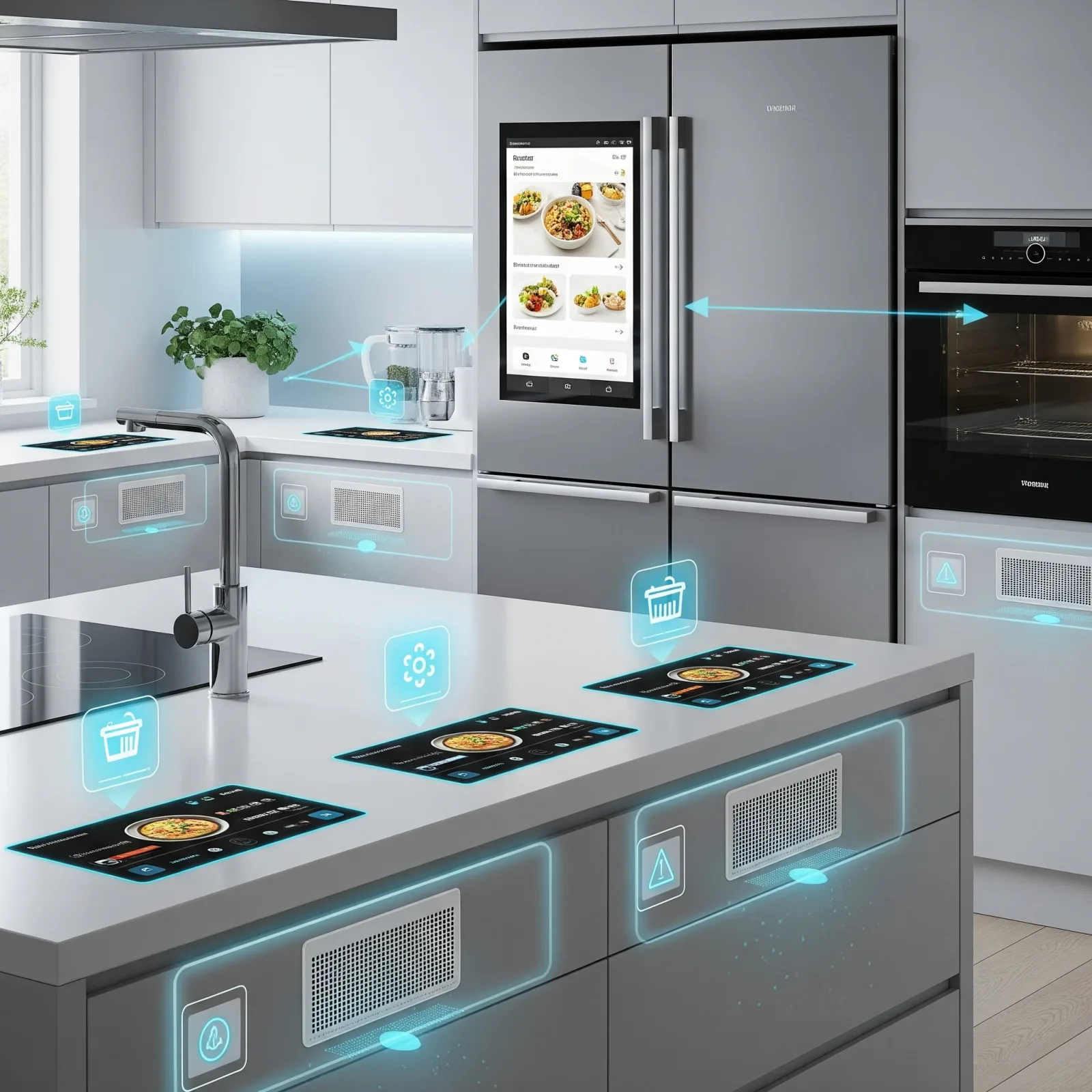
Smart Homes That Genuinely Care
Your home is no longer just four walls — it has become the center of health management, safety, and quality of life for everyone inside. With Bangkok's PM2.5 levels spiking seasonally and more elderly parents living alone, smart home technology has matured into a practical investment for Thai families of every size.
Intelligent Security Systems
Modern AI cameras go far beyond recording. They analyze behavior in real time — recognizing family faces, detecting unfamiliar visitors, and pushing instant app alerts when something feels wrong. Window and door sensors work in layered defense alongside smart alarm systems that simultaneously sound a siren, flash lights, and notify your smartphone. Smart locks let you unlock via face recognition or your phone, review an entry log from anywhere, and set automatic locking schedules so no one has to remember to lock up at night.
Health-Focused Home Features
A smart air purifier connected to a CO2 sensor monitors indoor air quality continuously. When CO2 climbs past 1,000 ppm — common in a tightly sealed Bangkok bedroom — the system automatically activates the purifier or ventilation fan, preventing the fatigue and headaches that accumulate silently overnight. Temperature and humidity sensors in the bedroom work with your AC and humidifier to maintain the ideal sleep environment (24–26°C, 40–60% relative humidity). White noise and binaural-beat speakers mask traffic and construction noise — a genuine quality-of-life upgrade in any urban Thai home — and are especially calming for young children and elderly family members who wake easily.
IoT Care for the Elderly and Young Children
Fall detection sensors in bathrooms and bedrooms push an emergency alert the moment an elderly person falls — seconds that can be lifesaving when no one is home. Automatic LED guide lights illuminate corridors the instant motion is detected at night, eliminating the risky stumble to find a light switch. Two-way audio cameras allow real-time conversation with parents or children anywhere in the house, while door sensors alert you the moment a toddler tries to slip outside unsupervised.
Total Home Control From Your Phone
Home Assistant consolidates every device into a single app and allows unlimited automations — turn on the air purifier when AQI spikes, close blinds at noon, activate cameras when the house is empty. Multi-channel alerts cover smoke, fire, water leaks, falls, and intrusions. For households where grandparents who prefer not to wrestle with apps live alongside grandchildren who can't yet be trusted alone, voice commands via Google Assistant or Alexa bridge the gap beautifully. This is smart home technology that pays for itself not in novelty, but in peace of mind.