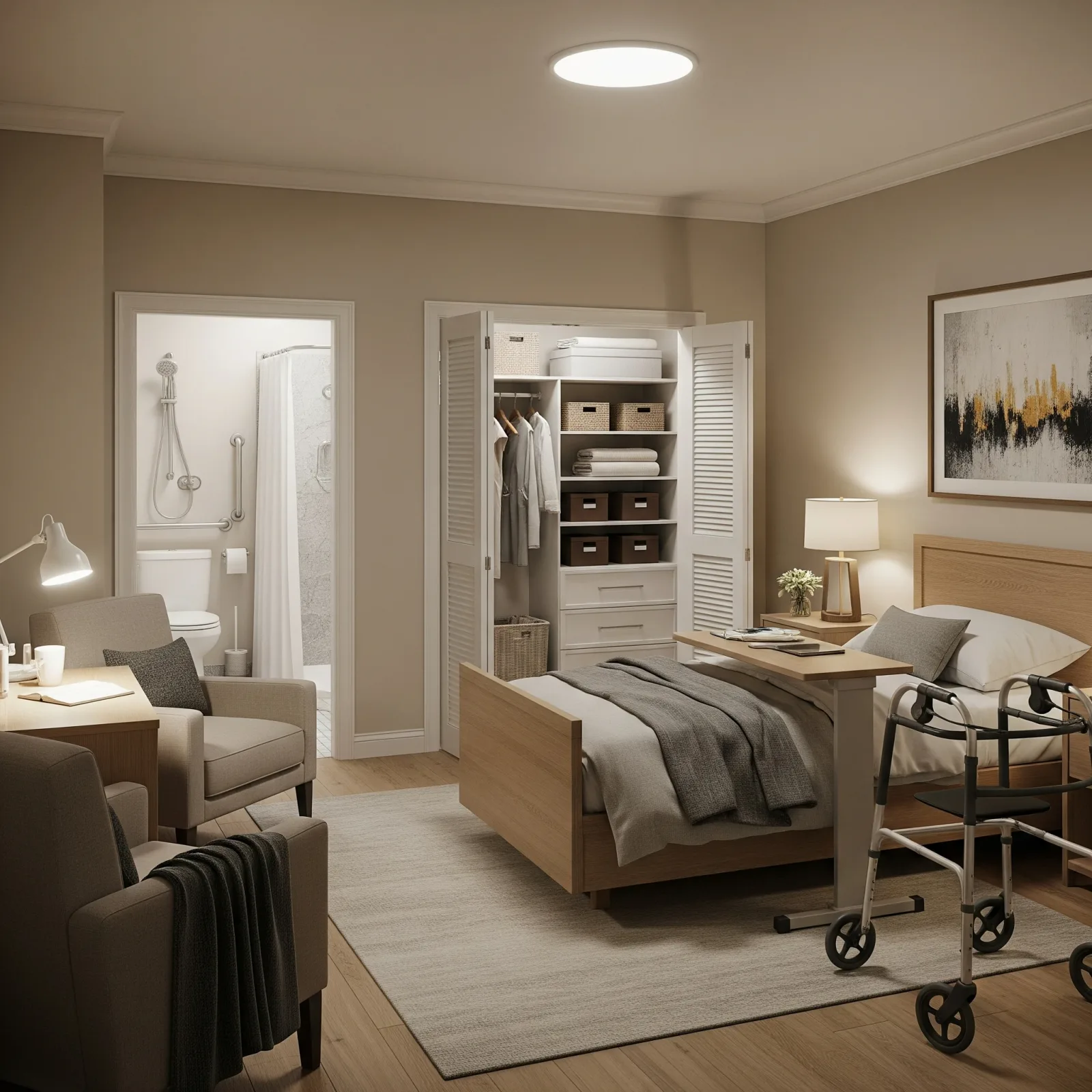
How to Organize an Elderly Bedroom for Daily Life Comfort and Safety
Seniors spend more time in their bedroom than anywhere else in the home, making thoughtful design a direct investment in their safety and quality of life. A well-organized elderly bedroom goes beyond furniture selection — it is a system calibrated to the body’s changing needs over time.
Space Structure and Walkways
Flooring should use anti-slip materials such as laminate, vinyl, or textured tiles. Avoid rugs without non-slip backing. Door widths of at least 90 cm accommodate wheelchairs and walkers. Lever-style door handles are far easier to operate than round knobs for those with weakened wrists.
Bed and Key Furniture
The ideal bed height is 45–50 cm from the floor, allowing the senior to stand up without straining. Electric adjustable beds support those with spinal or cardiac conditions. Bedside rails prevent falls and aid in getting up. A bedside table within easy reach — holding water and medication — reduces the need to move around in the dark.
Lighting and Pathway Guidance
Warm-white LED bulbs reduce eye strain and glare. Install automatic LED strip lights along the floor from the bed to the bathroom, triggered by motion sensors that switch on when movement is detected and off after a set period. This single feature dramatically reduces nighttime fall risk.
HappySmart Smart Home for Seniors
HappySmart installs mmWave Sensors in bedrooms for precise fall detection without cameras — ideal for private spaces. The system connects via Home Assistant on Raspberry Pi 5, sending instant alerts to family smartphones upon detecting a fall or anomaly. AI cameras are added in surveillance-priority areas. Light, curtain, and temperature control through app or voice command gives seniors independence while keeping families informed and at ease.