IoT Technology for Modern Homes: Taking Care of the Elderly via Mobile Phone Anytime, Anywhere
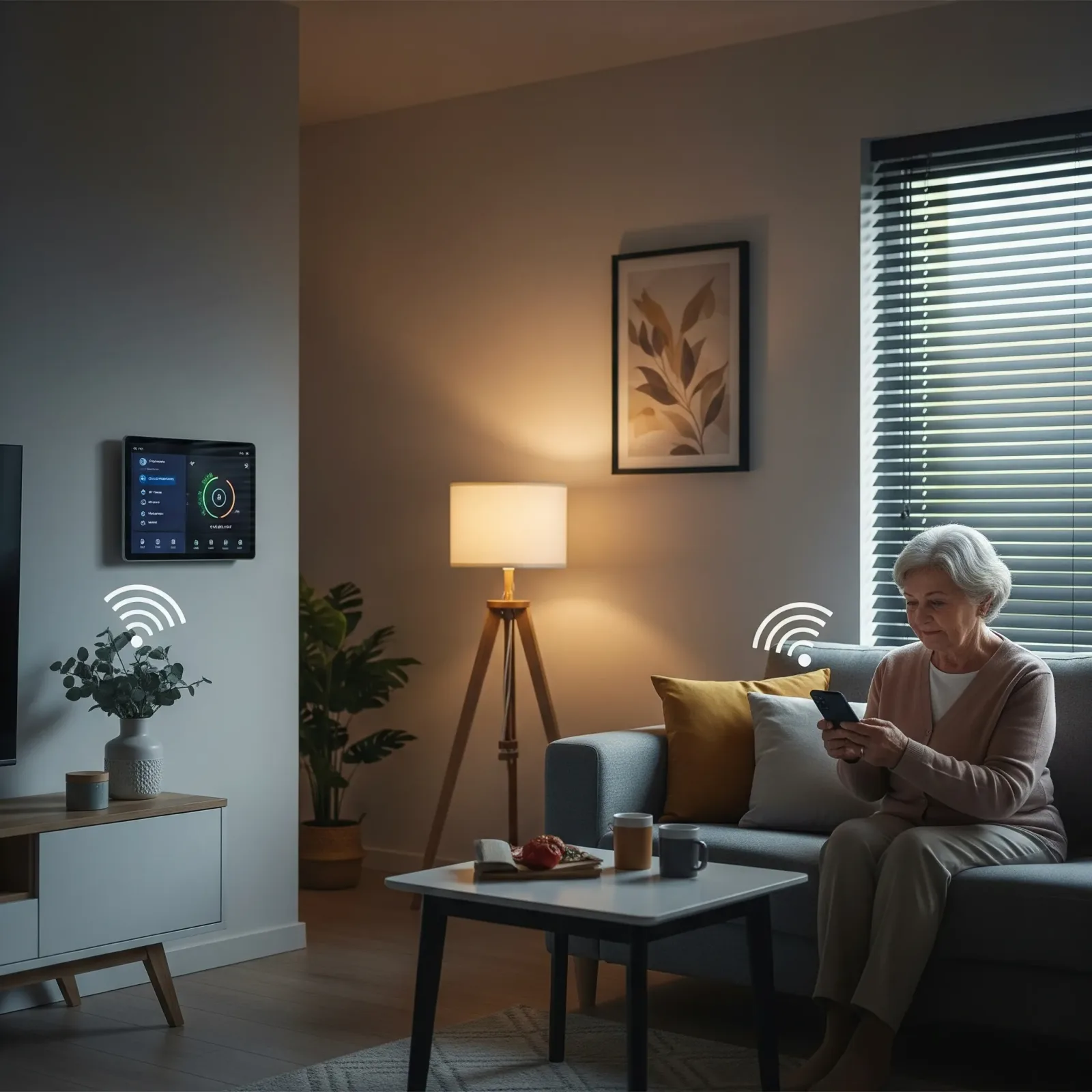
As the home becomes the center of care, rapidly advancing technology has made remote elderly care a genuine reality. Integrating IoT (Internet of Things) with Smart Home concepts has become the essential solution that makes caring for elderly family members simpler and more reliable than ever before.
Problems That Ordinary Homes Cannot Solve
Ordinary homes are rarely designed specifically for elderly care. Problems include falls in the bathroom with no one aware, elderly residents losing consciousness while alone, poor indoor air quality affecting health, difficulty turning lights on and off at night, and delayed responses to emergency calls for help. All of these can be addressed with the right IoT system.
mmWave Sensors: A Silent Caregiver That Notices Every Movement
mmWave sensors operate without recording any video footage, giving elderly residents comfort and privacy in their personal spaces. They detect movement even in low-light or completely dark conditions, require no wearable device, install easily on walls or ceilings, and send instant app notifications when anything abnormal is detected — such as a fall or an unusually prolonged period of stillness.
Control the Entire Home Remotely from Your Phone
IoT technology allows family members to turn lights on and off and check AI camera feeds from work or another province, control smart air purifiers automatically based on PM2.5 and CO2 levels, view movement and sleep statistics for their elderly relative, and receive emergency alerts with precise timestamp and location immediately.
Case Study: Grandfather in the Provinces, Son in Bangkok
A real-world example: Grandfather lives in a rural province while his son works in Bangkok. After installing mmWave sensors and an AI camera in the living room and bathroom, connected to a smartphone app, the app now delivers a morning summary of Grandfather's routine every day. If a fall is detected, the system sends an immediate alert, allowing the son to call to check and coordinate a nearby relative to assist — without waiting for anyone to call him first. IoT technology becomes the bridge connecting a child's care to their elderly parent across any distance.
Supplementary Technologies for an Elderly Person's Home
Beyond mmWave sensors and AI cameras, a complete IoT setup also includes automatic guide lighting that activates when the elderly person walks at night, sound therapy speakers to promote deep sleep, and a smart air purifier that continuously monitors air quality for those with respiratory conditions — all working together through Home Assistant to create a home that genuinely cares for the elderly even when family is not present.