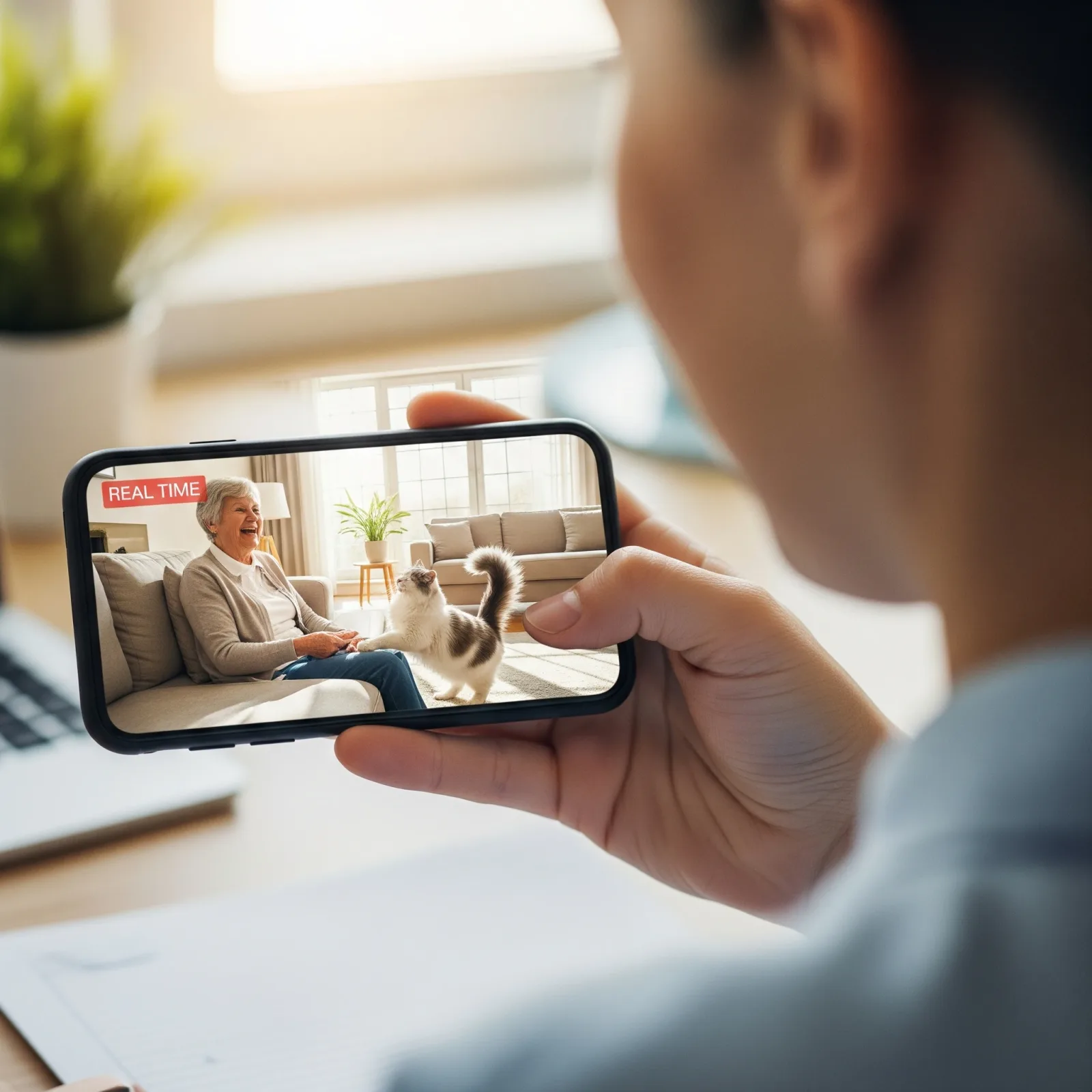
IoT Technology Takes Care of Parents at Home: Smart Home That Cares for the New Generation
As Thailand moves fully into an aging society, many working-age children face a difficult challenge: caring for elderly parents while being away from home throughout the day. Bringing IoT technology into the home is no longer optional — it is an essential solution for modern Thai families.
mmWave Sensors Detect Falls Without Invading Privacy
mmWave (Millimeter-Wave) sensor technology uses high-frequency radio waves to detect movement, breathing, and falls — without requiring the elderly person to wear any device. Unlike CCTV cameras, mmWave sensors record neither images nor audio, preserving complete privacy.
A key advantage is that they function accurately even in low-light or completely dark conditions, and can be installed flush on bathroom or bedroom walls and ceilings. When a fall or abnormal stillness is detected, the system instantly sends an alert to family members' smartphones.
Automatic Guide Lighting Reduces Nighttime Fall Risk
Rising to use the bathroom at night is one of the leading causes of falls among the elderly. LED guide strips installed along hallway walls and staircases activate automatically when motion is detected and turn off on their own when no longer needed — providing just enough light without disrupting sleep and significantly reducing tripping hazards.
Smart Air Purifiers Protect Elderly Respiratory Health
Older adults typically have more sensitive respiratory systems than younger people. PM2.5 dust, airborne mold, and CO2 buildup in closed rooms can trigger allergies and disrupt sleep. A smart air purifier connected to Home Assistant continuously monitors air quality and activates automatically when readings exceed safe thresholds.
Door-Window Sensors and Voice Control
Door and window sensors alert caregivers when entries are opened at unusual times — such as late at night when an elderly resident should not venture out alone. Voice-controlled smart speakers allow the elderly to turn lights on or off, operate the television, or call family members without needing to get up and walk to a switch, reducing unnecessary movement that could lead to falls.
A Smart Home That Keeps Families Connected
Integrating IoT technology through Home Assistant allows adult children to monitor their parents' safety in real time from anywhere — whether checking movement status, air quality, or emergency alerts. A Smart Home becomes a bridge of love that keeps families close even when they are physically apart.