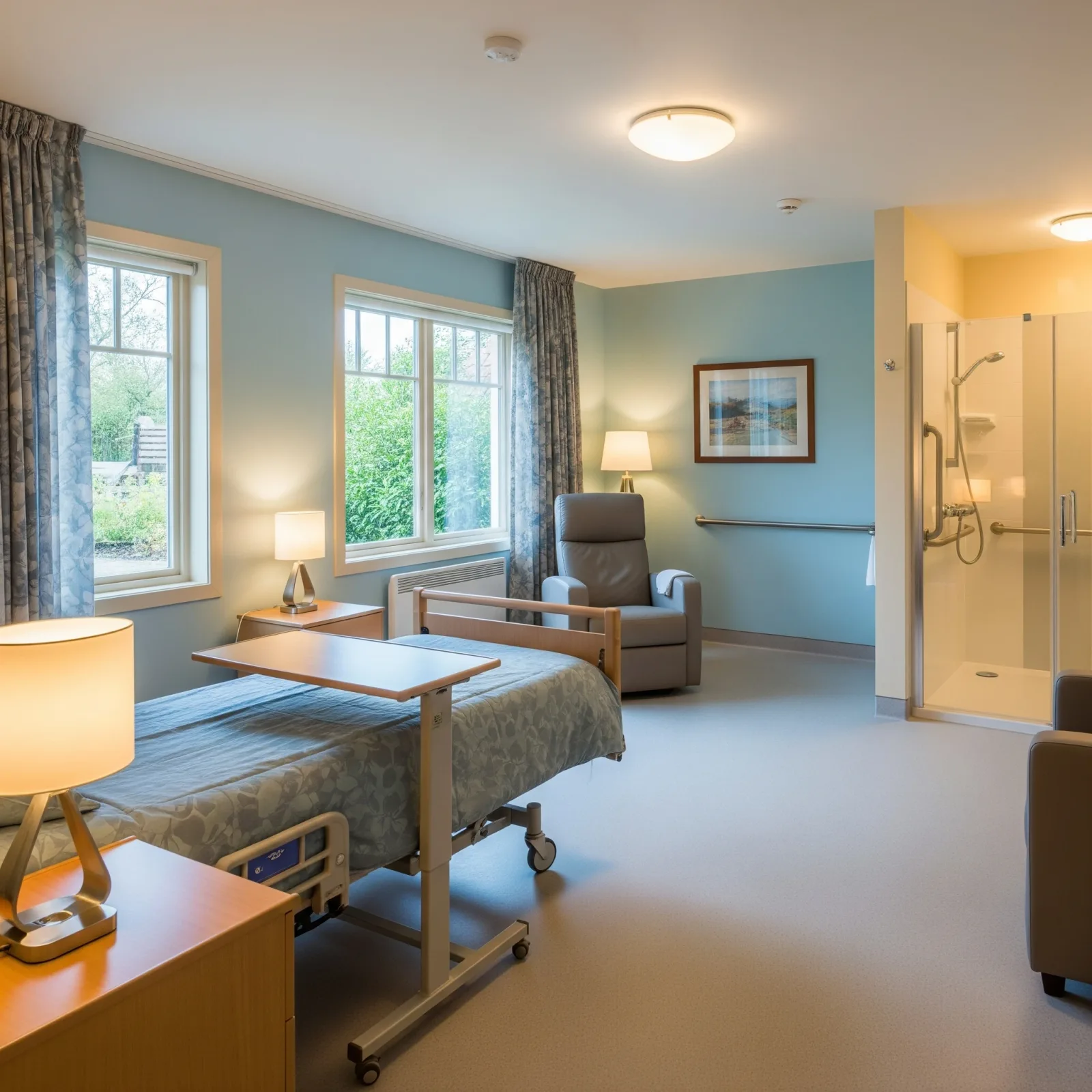
Elderly Room Design: How to Create a Safe and Easy-to-Use Space for Seniors of All Ages
As Thailand moves fully into an aging society, designing an elderly room correctly from the outset can reduce accident risk and enable seniors to live independently. A senior’s bedroom is not just a resting place — it must address safety, convenience, and technology in equal measure.
Key Factors in Elderly Room Design
Space and layout: the room should be wide enough for walking and wheelchair access, free of level changes, with furniture arranged to leave clear pathways.
Flooring: use laminate wood, anti-slip vinyl, or textured tiles. Avoid rugs with raised edges or without non-slip backing beneath them.
Bed and furniture: a bed height of 45–50 cm, bedside rails for support, and furniture with rounded corners to minimize injury risk.
Lighting: warm-white LED for eye comfort, with automatic floor-level LED strips that activate on motion during nighttime hours.
En-suite bathroom: positioned close to the bed with grab bars, anti-slip flooring, a raised toilet, and a sliding door wide enough for wheelchair access.
Smart Home for a Safer Elderly Room
HappySmart designs Smart Home systems specifically for elderly bedrooms. mmWave Sensors detect falls in bedrooms and bathrooms without cameras — protecting privacy. The Home Assistant system connects all devices and sends immediate alerts to family apps. AI cameras supplement where needed. Lighting and temperature control through app or voice command gives seniors confidence in their safety and gives families genuine peace of mind.