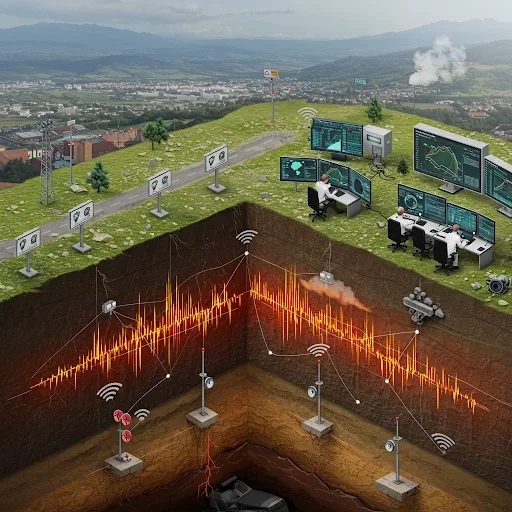
Active Fault Lines You Should Know
Thailand has 14 active fault lines directly affecting residents across multiple provinces. The Mae Chan Fault in Chiang Rai stretches over 150 kilometers and impacts several major cities in the north. The Mae Tha Fault in Lamphun lies close to densely populated urban areas. The Phetchabun Fault affects Phetchabun province and surrounding regions. The Three Pagodas Pass Fault in Kanchanaburi is the most frequently active fault in the central region.
Residents living within 100 kilometers of these fault lines should assess their risk seriously and prepare accordingly.
Three Types of Risk for Homes Near Fault Lines
The first risk is structural damage. Earthquakes of magnitude 5.0 or higher can create cracks in walls, columns, and foundations that are invisible to the naked eye but significantly weaken structural integrity. The second risk is personal safety and property loss, particularly during nighttime events when most people are unable to react in time and face injury from falling objects. The third risk is high repair costs, as earthquake damage is typically not covered by standard home insurance policies and must be paid entirely out of pocket.
The Lesson from the 2014 Mae Lao Earthquake
The magnitude 6.3 earthquake at Mae Lao, Chiang Rai, in 2014 damaged more than 7,000 homes and destroyed schools and government buildings across multiple districts. Critically, no early warning system was operational. Most residents did not know what to do during the first 5-10 seconds.
Most losses resulted from slow response, not solely from the earthquake's intensity.
Comparison: With EWS Versus Without
In terms of response, homes with EWS receive alerts 1-3 seconds before S-waves arrive, while homes without systems only detect shaking once it begins. For gas safety, EWS-equipped homes automatically shut off gas valves, while unprotected homes risk gas leaks and post-earthquake fires. For post-event data, EWS homes have vibration logs for structural engineers to assess damage, while unprotected homes rely entirely on visual inspection. EWS-equipped homes may qualify for insurance discounts. And in terms of peace of mind, occupants of EWS homes consistently report significantly greater feelings of safety.
Features a Reliable EWS Must Have
A trustworthy earthquake warning system should include: 3-axis XYZ detection rather than single-dimension sensing, backup battery power during outages, OTA software updates via Wi-Fi, adjustable sensitivity settings from 10-year to 100-year event thresholds, and offline operation when internet connectivity is lost. HappySmart covers all these features in a single package with installation completed in one day.