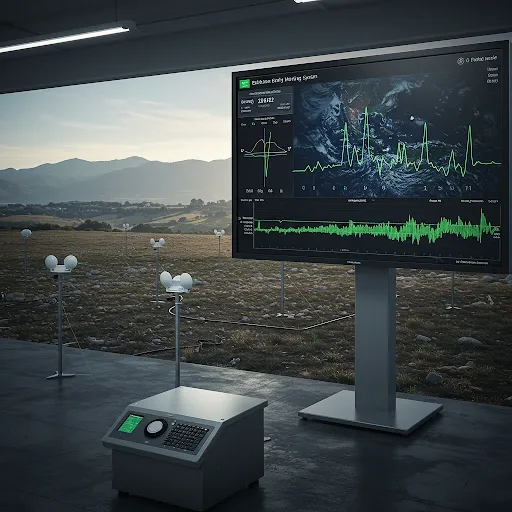
Why Thai Homes Need Earthquake Warning Systems
Thailand has more than 15 active fault lines, concentrated in Chiang Rai, Chiang Mai, Mae Hong Son, Tak, and Kanchanaburi. Earthquakes of 3.0 to 5.0 Richter occur regularly in these provinces, and a 4.0 Richter event can damage structural elements within seconds. An early warning system is therefore a sound investment for families living in high-risk areas.
Option 1: DIY with MPU6050, ESP32, and Home Assistant
Tech-savvy homeowners can build their own system using core components: an MPU6050 sensor at 50 to 150 THB, an ESP8266 or ESP32 at 100 to 300 THB, a Raspberry Pi 4 or mini PC for running HA at 1,500 to 4,000 THB, and smart switches at 300 to 800 THB each. Total cost runs approximately 1,500 to 5,000 THB excluding labor.
DIY advantages include low cost, complete customization freedom, and hands-on learning. Limitations include the need for self-calibration, no warranty or after-sales support, self-reliance when troubleshooting failures, and potentially lower accuracy than industrial-grade sensors.
Option 2: Full-Service from HappySmart
HappySmart delivers a turnkey solution covering site survey, installation of industrial MEMS sensors, HA and Automation configuration, and ongoing after-sales with OTA firmware updates. Pricing ranges from 10,000 to 20,000 THB depending on home size and device count.
HappySmart advantages include high-quality factory-calibrated sensors, professional installation, warranty coverage, immediate system readiness, and Thai-language support throughout. The main limitation is higher upfront cost compared to DIY, with customization going through the support team.
Six-Dimension Comparison
Initial cost: DIY 1,500 to 5,000 THB | HappySmart 10,000 to 20,000 THB Sensor quality: DIY hobby-grade MEMS | HappySmart industrial MEMS Installation: DIY self-installed | HappySmart professional technician Warranty: DIY none | HappySmart after-sales and OTA updates Accuracy: DIY depends on self-calibration | HappySmart factory calibrated Flexibility: DIY fully open | HappySmart adjustable via support team
Who Should Choose Which
Choose DIY if you have electronics and IoT knowledge, want complete system control, and can accept the risk of no warranty support.
Choose HappySmart if you want an immediately ready system without technical expertise, your home includes elderly residents or children requiring high reliability, or you need long-term after-sales support.