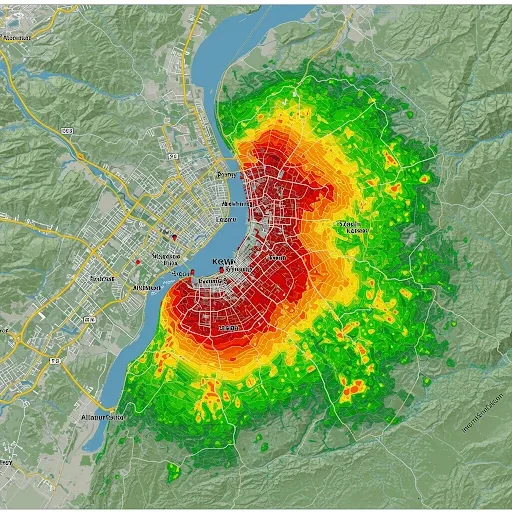
Why You Need to Know Your Risk Level
Earthquakes are not exclusive to other countries. Thailand has more than 15 active fault lines distributed across the country. Knowing which fault line your home is near and what risk level that implies helps you plan correctly -- from choosing insurance coverage to deciding whether to install a warning system.
3 Risk Levels in Thailand
High-risk areas include provinces near major active fault lines: Chiang Rai (Mae Chan Fault), Chiang Mai (Mae Tha Fault), Mae Hong Son, Kanchanaburi (Three Pagodas Pass Fault), and Tak (Mae Ramad Fault). These areas have histories of magnitude 5.0 and above events capable of causing structural damage.
Medium-risk areas include Phetchabun, Prachuap Khiri Khan, and Nakhon Si Thammarat. These are farther from the main fault lines but can still be affected by earthquakes originating in Myanmar or Malaysia.
Low-risk areas include Bangkok, lower Isan, and parts of the south. Although risk is lower, Bangkok sits on soft soil that can amplify seismic waves from distant earthquakes.
How to Check Your Home's Risk
The first method is to consult the fault line map from the Department of Mineral Resources at dmr.go.th, which displays active fault positions nationwide with associated risk levels. The second is to use apps such as Earthquake Network, MyShake, or HappySmart that provide real-time earthquake data and alerts when vibrations are detected in your area. The third is to consult your local municipality or a civil engineer for location-specific information about your home's exact position.
What the Warning System Does When P-Waves Are Detected
HappySmart detects P-waves, which travel faster than the destructive S-waves, providing 5 to 15 seconds of lead time before major shaking arrives. In that short window, Automation can close gas and water valves automatically to prevent fire and flooding, cut circuits in vulnerable areas, activate emergency lighting and unlock doors, and transmit the home's GPS coordinates to rescue teams or family members.
Why Knowing Your Risk Level Matters
Beyond the decision to install a warning system, knowing your risk level helps you assemble an appropriate emergency kit, select insurance policies that cover earthquake damage, and plan long-term structural reinforcement of your home.