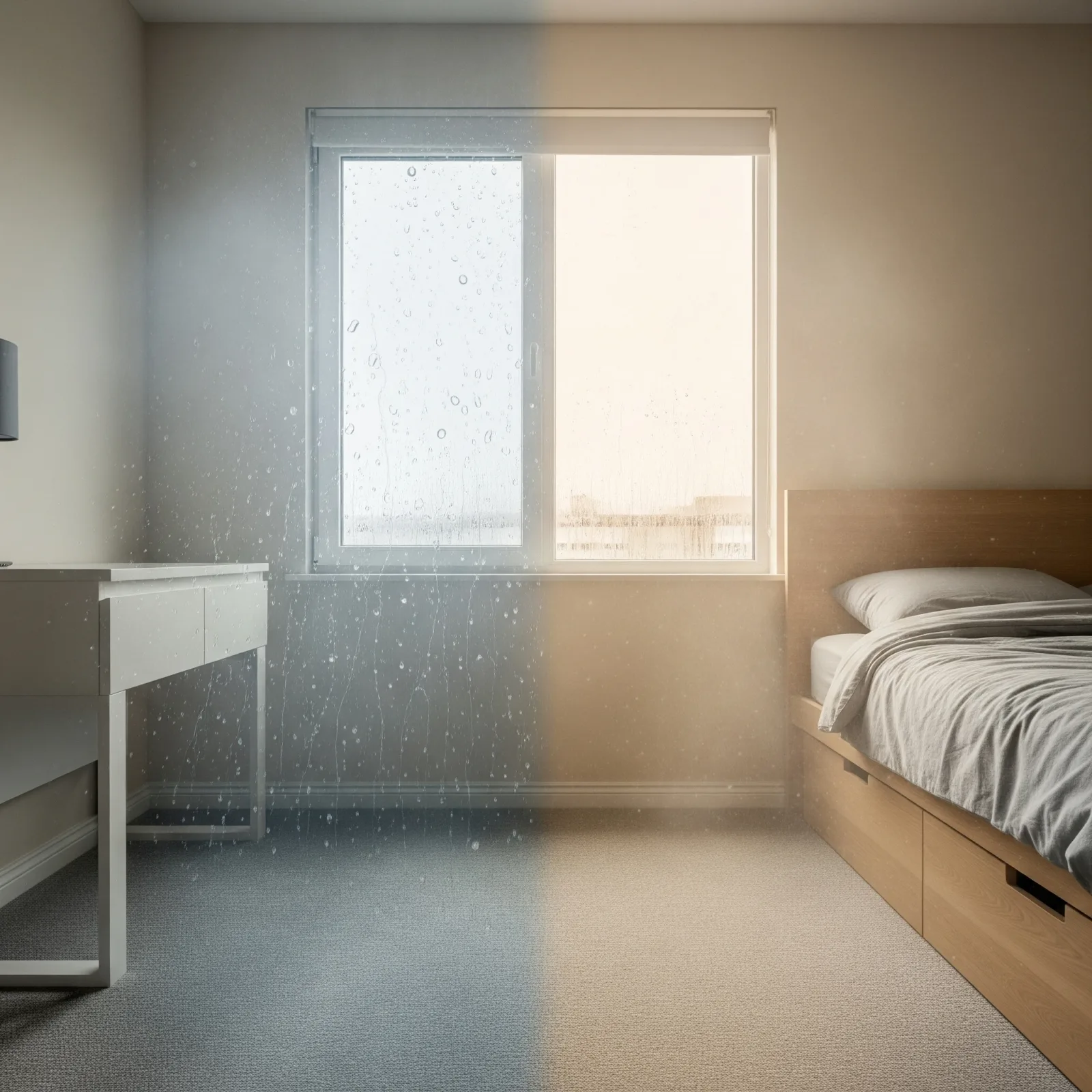
Bedroom Humidity: The Overlooked Factor in Sleep Quality
The bedroom is the most important space for rest in any household, yet the factor that most directly shapes sleep quality — relative humidity — is among the most commonly overlooked. The ideal range is 40–60%. Both excess humidity and insufficient humidity disrupt sleep and degrade health in distinct but equally significant ways.
Effects of High Humidity in the Bedroom
When relative humidity remains above 60% for extended periods, the bedroom becomes an ideal breeding environment for mold, dust mites, and bacteria. The consequences include worsening allergy and asthma symptoms, persistent nasal congestion, chronic coughing, skin rashes, and a body that is fighting allergens throughout the night rather than resting. Black mold staining along wall joints and a persistent musty smell are visible indicators that humidity has been running too high for too long.
Effects of Low Humidity in the Bedroom
Humidity below 40% dries out the nasal membranes, increasing susceptibility to respiratory infections. Dry throat, hoarse morning voice, and dry persistent coughs follow. Skin becomes dry, flaky, and itchy — particularly on the face and hands. In Thai households running air conditioning through the night without a humidifier, these effects are most pronounced during the cool season and during periods of strong, dry wind.
Smart Tools for Controlling Bedroom Humidity
A Smart Hygrometer connects via WiFi and displays real-time humidity and temperature readings in a smartphone app, pushing alerts when values go outside the set range. Popular options for Thai households include the Xiaomi Mi Temperature and Humidity Monitor 2, the SwitchBot Meter Plus, and the Govee H5102. A dehumidifier is the appropriate solution for rooms prone to high humidity — particularly in southern Thailand's rainy season or in basement-level or ground-floor rooms. Choose a model with automatic humidity control and a scheduling function. A humidifier counters the drying effects of nightly air conditioning use, reduces dry-throat discomfort, and improves skin comfort. Use distilled water and clean the water tank weekly to prevent bacterial growth.
Automated Control Through Home Assistant
A complete bedroom humidity automation using DHT22 or AM2302 sensors with ESPHome and Home Assistant works as follows: if humidity drops below 40%, start the humidifier; if humidity exceeds 65%, start the exhaust fan or dehumidifier; if humidity is within 40–60%, stop all devices; and push a phone notification whenever values go outside the acceptable range while the house is unoccupied. Once configured, the system maintains ideal bedroom humidity around the clock without any manual intervention — because balanced humidity is the foundation of consistent, restorative sleep and long-term respiratory health.