Bangkok Home Air Quality: Not Just Outdoor Dust
Bangkok's average AQI during the dry season (Jan-Apr) runs 100-200, considered unhealthy. But air quality problems extend indoors: sealed homes with continuous AC accumulate PM2.5, VOCs from building materials and new furniture, moisture-driven mold, and elevated CO2 from occupant density.
Health impacts: PM2.5 particles smaller than 2.5 microns penetrate lungs and bloodstream directly. Some VOCs are carcinogens. CO2 above 1,000 ppm reduces concentration and cognitive performance by 15-50%.
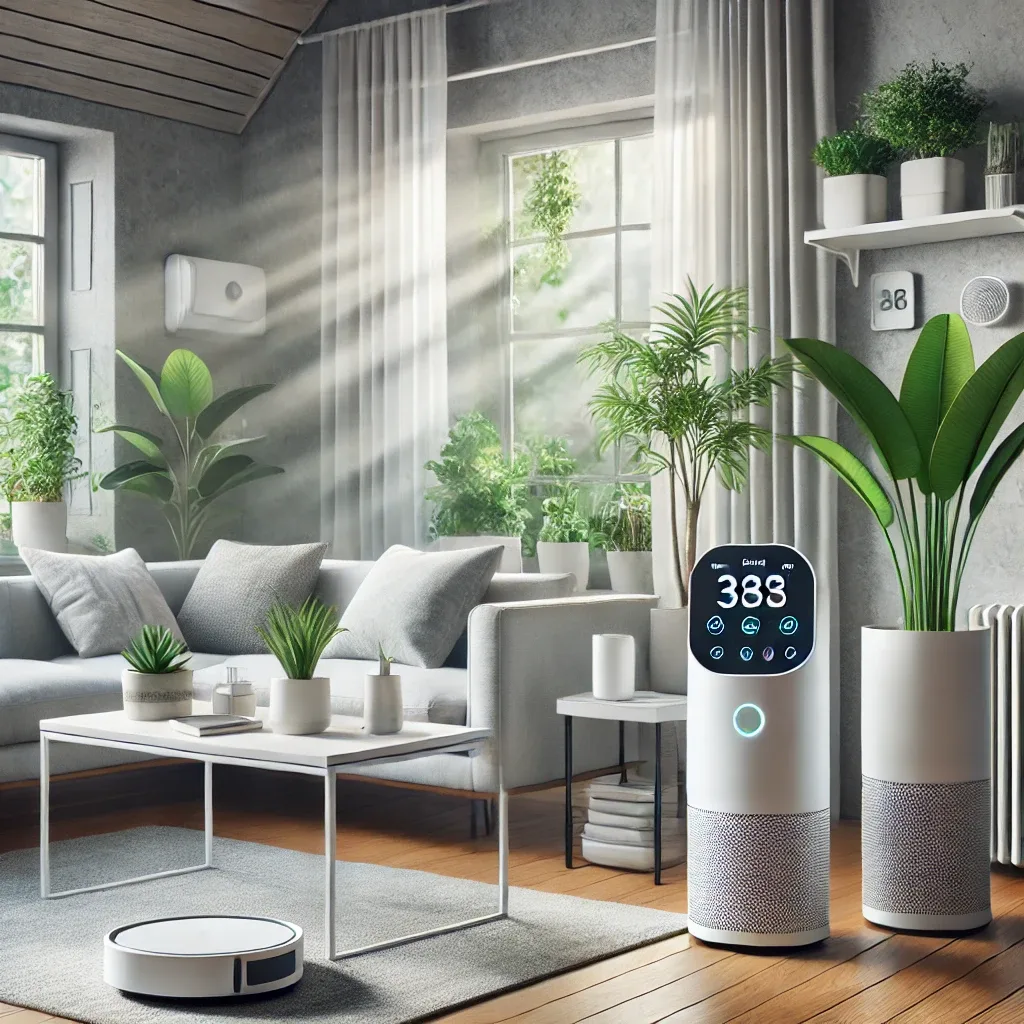
Layer 1: Smart Air Purifier
An effective air purifier needs HEPA H13 filters capturing ≥99.97% of particles ≥0.3 microns, combined with Activated Carbon for VOC and odor elimination.
Critical Smart features: real-time PM2.5 sensors with automatic fan speed adjustment, Wi-Fi connectivity for app control, MQTT support for Home Assistant integration.
Recommended options: Xiaomi Smart Air Purifier (Mi Home app + MQTT) at 3,000-6,000 THB; Philips Air Purifier Series 3000i at 8,000-12,000 THB for Homebridge+HA integration.
Layer 2: Fresh Air System (PIV/HRV/ERV)
Air purifiers work within a closed loop. Fresh Air Systems supplement by bringing outside air in:
PIV (Positive Input Ventilation): Budget option (5,000-15,000 THB), easy installation, pushes fresh air indoors but does not control humidity. Suitable for spaces under 100 sqm.
HRV (Heat Recovery Ventilation): Mid-range (20,000-50,000 THB), exchanges heat between incoming/outgoing air without energy waste. Best for always-on AC homes.
ERV (Energy Recovery Ventilation): Premium option (30,000-80,000 THB), manages both heat and humidity. Best suited for Bangkok's hot-humid climate, reducing AC load by 15-25%.
Layer 3: IoT Air Quality Sensor + Automation
Sensors like Aqara TVOC Sensor or SEN55 Multi-Sensor simultaneously measure PM2.5, VOC, CO2, temperature and humidity, sending data via Zigbee or MQTT to Home Assistant for dashboard display.
Recommended automations:
- PM2.5 > 50 μg/m³ → Turn on Air Purifier Speed 3 + Close windows (via Door/Window Sensor)
- CO2 > 1,000 ppm → Activate Fresh Air System
- Humidity > 70% → Start Dehumidifier
- Bangkok outdoor AQI > 150 → Shut Fresh Air System, boost Air Purifier
This 3-layer system reduces indoor PM2.5 by 80-95% and maintains CO2 below 800 ppm consistently. HappySmart supplies and installs complete systems with free no-obligation consultations.