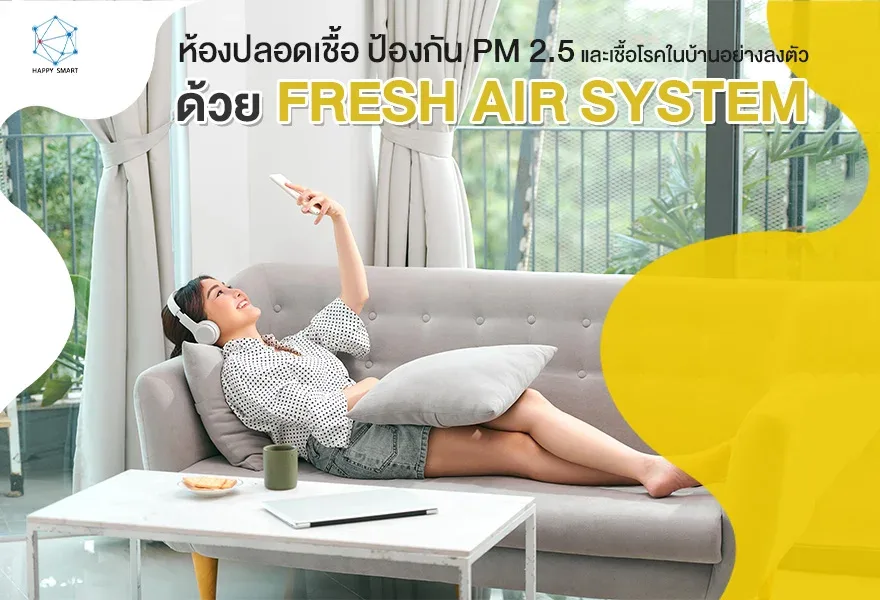
Why PM2.5 Is More Dangerous Than Most People Realise
PM2.5 refers to airborne particles with a diameter of 2.5 micrometres or less — twenty to thirty times finer than a human hair. That scale is critical: particles this small pass straight through nose hairs and upper-airway mucus membranes, penetrate deep into the alveoli of the lungs, and enter the bloodstream directly.
These particles never travel alone. The cargo they carry includes heavy metals such as lead, mercury, and cadmium; polycyclic aromatic hydrocarbons (PAHs), which are classified as carcinogens; and volatile organic compounds (VOCs) that affect the nervous system. Long-term exposure is causally linked to cardiovascular disease, chronic lung disease, stroke, and several cancers.
Bangkok and Thailand's northern provinces regularly exceed WHO PM2.5 guidelines between January and April each year. Even inside a home with windows closed, indoor PM2.5 can reach 60–80% of outdoor levels — seeping through gaps around air-conditioning units, door frames, and utility penetrations.
What Is a Fresh Air System and How Does It Work?
A Fresh Air System draws outdoor air through a multi-stage filtration unit and continuously supplies clean air to targeted rooms inside the home. The operating principle is positive pressure: the air pressure inside the treated room is kept slightly higher than outside, so air flows outward through every gap rather than inward. Contaminated outdoor air is excluded rather than filtered after the fact.
Three core components deliver this result. HEPA H13 or H14 filters capture 99.97% of particles at 0.3 micrometres — the most penetrating particle size (MPPS). UV-C lamps neutralise bacteria, viruses, and mould spores in the airstream. An Energy Recovery Ventilator (ERV) pre-conditions incoming air to near indoor temperature, reducing the load on your air conditioning and cutting energy consumption by 20–40%.
Creating a Clean Zone: You Do Not Need to Convert the Whole House
A whole-house clean-room conversion is rarely necessary or cost-effective. Targeted Clean Zones deliver most of the health benefit at a fraction of the cost.
Priority rooms are straightforward. Children's bedrooms come first: children breathe faster than adults and absorb a higher dose of airborne toxins per kilogram of body weight. The master bedroom is next — we spend six to eight hours there each night, representing the largest single exposure window in the day. A home office or study follows, where PM2.5 impairs concentration, memory, and cognitive performance even at moderate levels.
HappySmart seals every air leakage point — around split-unit sleeves, door perimeters, and window frames — then sizes and installs the Fresh Air unit to the room's volume, ensuring continuous positive pressure around the clock.
Indoor PM2.5 Testing in Bangkok
Before any installation, HappySmart conducts a full indoor air-quality audit using a laser particle counter that reads PM1.0, PM2.5, and PM10 in real time, alongside CO2, VOC, temperature, and humidity measurements. The audit identifies which rooms are worst affected and which air infiltration routes are most active.
Post-installation verification confirms the system is performing to specification. The target is PM2.5 below 12 μg/m³ — the WHO annual mean guideline — sustained throughout the day.
Protecting Your Family: an Investment That Pays Back
The lifetime medical cost of cardiovascular and respiratory conditions linked to chronic PM2.5 exposure substantially exceeds the cost of a well-designed Fresh Air System. WHO research estimates that improved indoor air quality reduces cardiovascular disease risk by 20–30% and measurably reduces childhood sick days — both of which translate directly into financial savings and quality of life.
HappySmart Fresh Air packages start at 45,000 THB for a condominium room and 85,000 THB for a full detached-home installation, including scheduled HEPA filter replacement.
Contact HappySmart via LINE @HappySmart for a free consultation and quote.