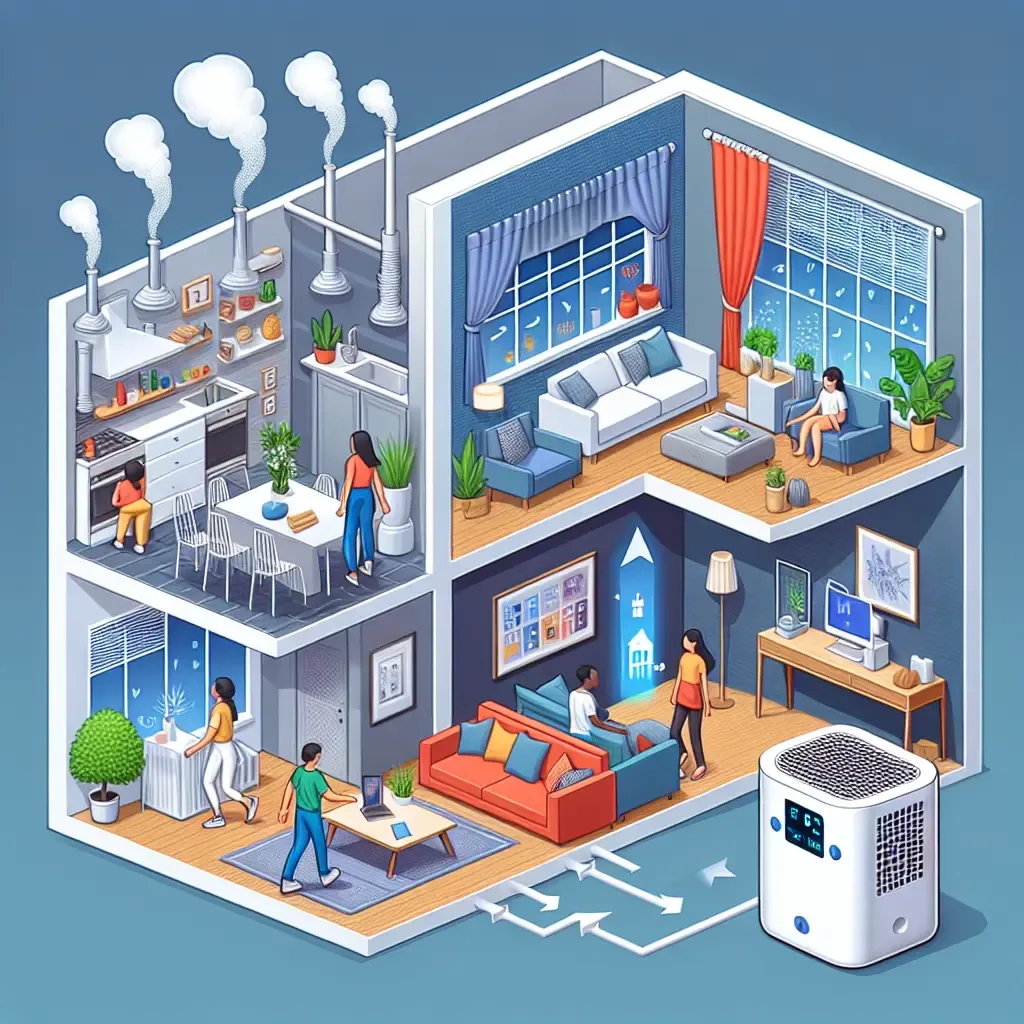
What Positive Air Pressure Devices Are and How They Work
The principle behind Positive Air Pressure Devices (PAPD) is straightforward: pump filtered outdoor air into the home in sufficient volume to raise indoor air pressure above outdoor levels. When indoor pressure is higher, air flows outward through gaps and joints rather than inward.
The result is that unfiltered outdoor air carrying PM2.5, smoke, pollen, and allergens cannot passively infiltrate through cracks and construction gaps. Any air entering the home must pass through the PAPD's filtration system first.
This technology has grown significantly in Bangkok following the PM2.5 public health concerns that became prominent during the 2024–2025 cool season.
Types of PAPD Available in the Market
PAPD systems fall into three main tiers based on coverage area and capability.
The first tier is Single-Room Units mounted in walls or windows, suited to a bedroom or home office. The Xiaomi Fresh Air System filters PM2.5 and connects to Mi Home, starting around ฿8,000.
The second tier is Whole-Home PAPD integrated with existing air conditioning ductwork, filtering air for the entire home from a single unit. This suits properties from 150 square metres upward.
The third tier is the Heat Recovery Ventilator (HRV), which simultaneously draws fresh air in and expels stale air while transferring cooling energy from outgoing to incoming air. In Thailand's hot and humid climate, an HRV significantly reduces air conditioning load compared to a standard PAPD.
Integrating PAPD with Your Smart Home
The difference between a PAPD in a smart home versus a conventional installation is automated response to real-time air quality data.
When a Zigbee air quality sensor detects rising outdoor PM2.5 — common during Bangkok rush hours or crop-burning season — Home Assistant or Mi Home can automatically increase the PAPD's fan speed and simultaneously instruct air conditioners to close their fresh air intake dampers.
This closed-loop automation responds faster and more reliably than manual adjustment, and works even when occupants are asleep or away from home.
Key Considerations Before Installation
Effective PAPD performance depends on several factors. First is building tightness — homes with many gaps and unsealed penetrations struggle to maintain positive pressure and require sealing work first.
Second is system sizing. Air Change Rate must be calculated correctly for the floor area and number of occupants. An undersized PAPD cannot maintain the pressure differential required to block infiltration.
Third is filter quality. Effective PAPD systems use at minimum HEPA H13 filtration, which captures over 99.97% of PM2.5 particles. Lower-grade filters allow fine particles to pass through the system.
HappySmart surveys Bangkok homes and condominiums before recommending PAPD specifications, ensuring the system is correctly sized and integrated with existing smart home infrastructure.