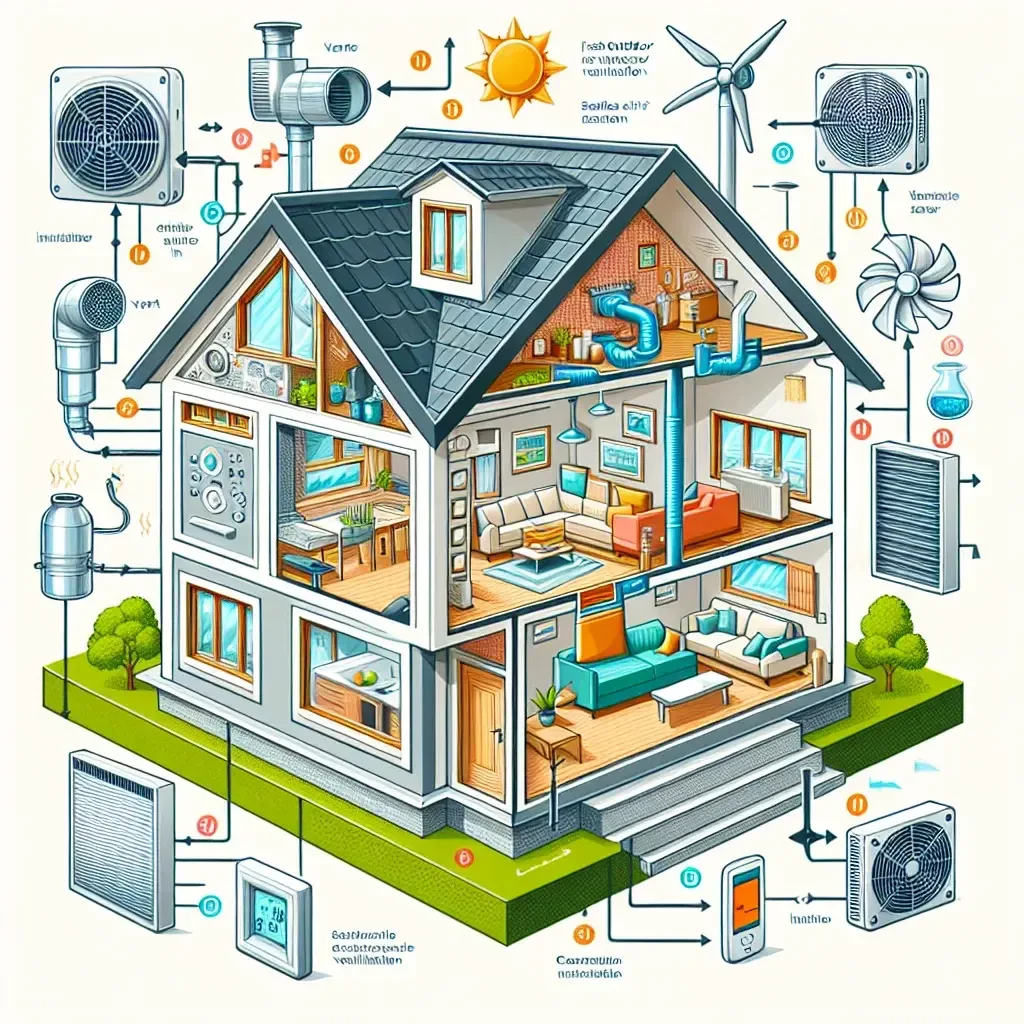
Why Indoor Air Is Often Worse Than Outdoor Air
Research from the WHO and EPA consistently finds that indoor air contains two to five times more pollutants than outdoor air. In Bangkok, where air conditioning runs continuously and windows stay closed for months at a time, the problem intensifies considerably.
The primary causes are CO2 accumulation from occupants breathing, moisture that encourages mould growth, volatile organic compounds off-gassing from furniture and construction materials, and PM2.5 particulates infiltrating from outside. Proper ventilation is the only intervention that addresses all of these simultaneously.
Health Consequences of Poor Indoor Air
CO2 levels above 1,000 ppm cause measurable cognitive impairment — reduced concentration, unusual drowsiness, and lower decision-making performance. A 2023 Harvard T.H. Chan School of Public Health study found that reducing office CO2 from 950 ppm to 550 ppm improved decision-making scores by 61%.
For residents with allergies or asthma, indoor air quality is a more controllable factor than outdoor pollution. Invisible mould colonies in humid, poorly ventilated rooms produce spores that trigger severe symptoms even in small concentrations.
How a Smart Ventilation System Works
HappySmart installs air quality sensors that monitor CO2, PM2.5, relative humidity, and TVOC in real time, feeding data into Home Assistant for automated responses.
When CO2 exceeds a set threshold, the system activates ventilation fans or adjusts air conditioner fan speed automatically. When bathroom humidity spikes, the exhaust fan runs until humidity drops to a safe level without requiring anyone to remember to switch it on. For properties in Khao Yai and Hua Hin where outdoor air quality is consistently good, the system cross-references live air quality data to time natural ventilation windows optimally.
Choosing the Right System for a Thai Home
Thailand's persistently high humidity demands careful balance between introducing fresh air and controlling moisture levels. Heat Recovery Ventilators (HRV) and Energy Recovery Ventilators (ERV) exchange stale indoor air for fresh outdoor air while retaining the thermal energy the air conditioning has already put into the space.
HappySmart designs ventilation systems around each home's layout and occupancy patterns, factoring in resident count, room sizes, and daily routines rather than applying a generic specification.