Good Air Equals Good Health: Why Indoor Air Quality in Your Home Matters Starting Today
In a world where health is priceless, most people watch their diet, exercise, and sleep — but overlook the one thing they cannot stop doing: breathing the air inside their own home, every hour of every day.
The Silent Hazards in Your Home's Air
Even a clean-looking home may contain PM2.5 particles 20 times smaller than a human hair — penetrating the respiratory tract and bloodstream directly, causing respiratory disease, allergies, and cardiovascular conditions.
Elevated CO2 in closed bedrooms or rooms causes drowsiness, headaches, and reduced concentration — often without the occupant realizing it. Dust mites, mold, and allergens lurk in carpets, upholstery, and unmaintained air conditioners.
Who Is Most at Risk?
Young children have immature immune systems — far more sensitive to pathogens and airborne toxins than adults. Elderly people have declining respiratory and immune function, meaning poor air quality causes more severe symptoms and slower recovery. Those with allergies or asthma face rapid, serious flare-ups from even minor triggers.
Smart Air Purifiers and Air Quality Sensors
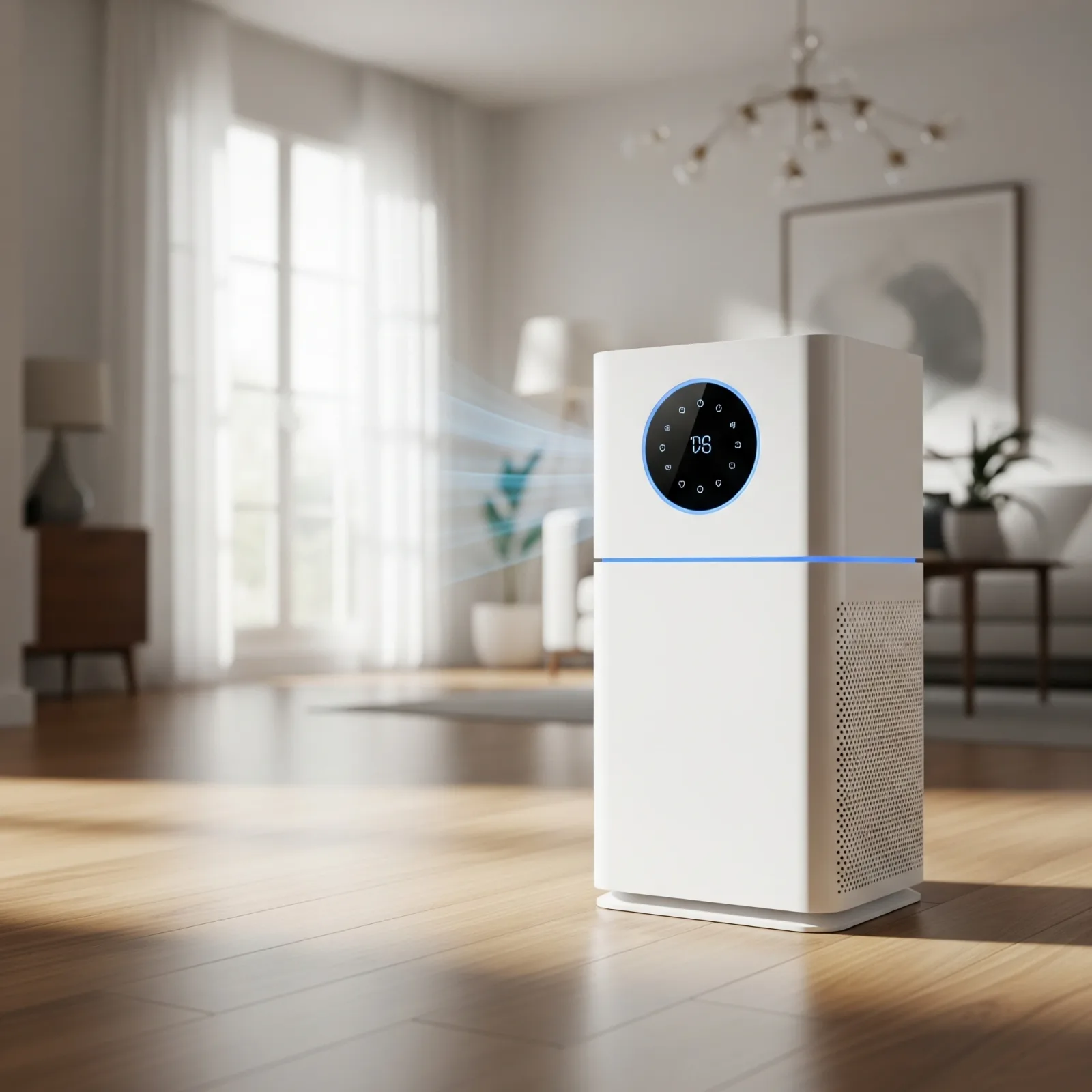
Modern smart air purifiers don't just filter dust — they capture PM2.5, pathogens, odors, and VOCs while displaying real-time air status through an app. Air Quality Sensors measure PM2.5, CO2, temperature, and humidity, sending data to trigger automated responses.
HappySmart Automation via Home Assistant
HappySmart configures fully automated air management: when PM2.5 exceeds safe levels the purifier activates instantly; when CO2 rises fans or windows open automatically; when humidity drops too low the humidifier starts. All controlled through a mobile app from anywhere, installed by specialists with comprehensive after-sale support.