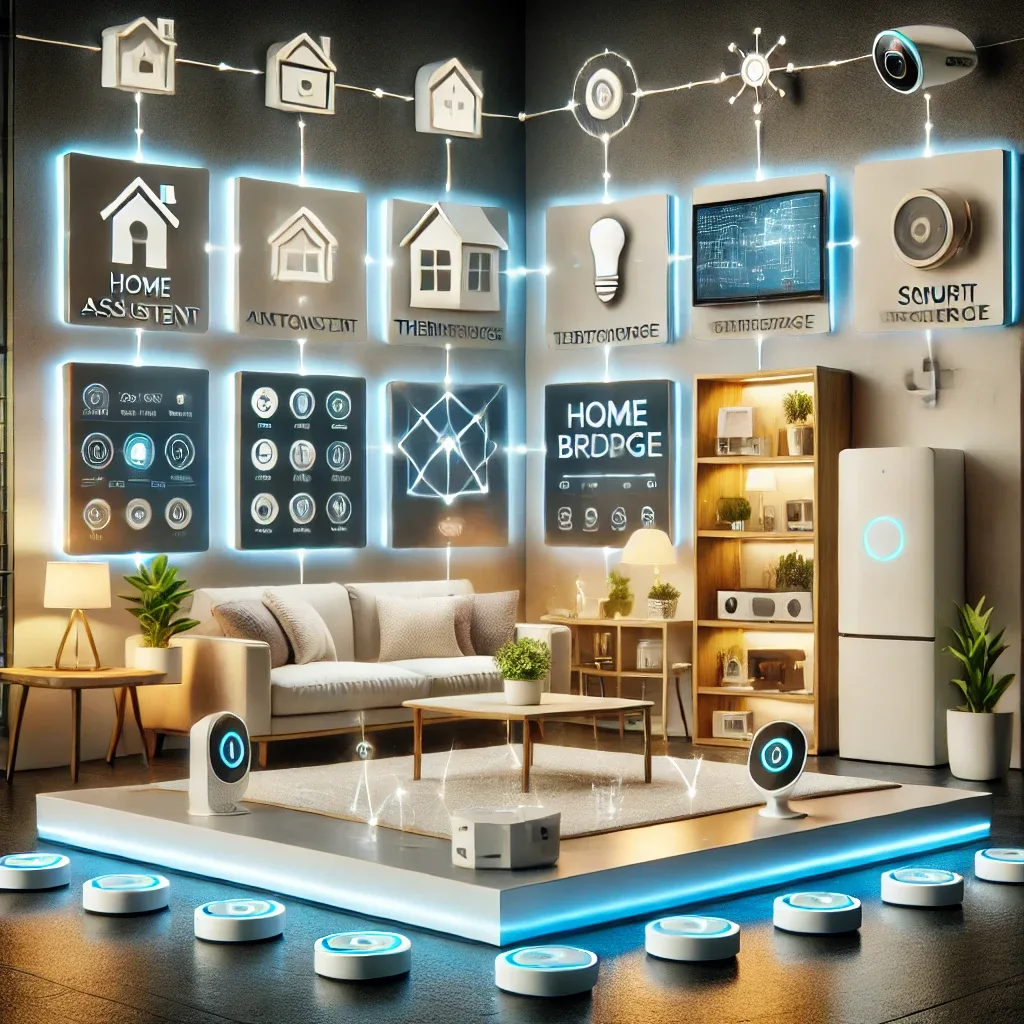
Smart Home Management Platforms in 2026
Choosing the right smart home management platform is the most important first step. In 2026, the three main options are Home Assistant, HomeBridge, and custom automation scripts. Each serves a different user profile and use case.
Home Assistant: The Open-Source Powerhouse
Home Assistant (HA) is the world's most popular local-control, open-source smart home platform. It supports over 3,000 integrations — from Philips Hue, Zigbee, and Z-Wave to Tuya, Nest, and Samsung SmartThings.
Key advantages include full local processing (no cloud dependency), a powerful YAML-based or visual automation editor, and a rich Add-on ecosystem including Frigate NVR for AI-powered cameras and Node-RED for flow-based automation. In Thailand, HA runs excellently on a Raspberry Pi 5 or Intel NUC using HAOS as the primary operating system.
The trade-off is a moderate learning curve: users need basic familiarity with YAML and Docker to unlock HA's full potential.
HomeBridge: Bridge Any Device into Apple HomeKit
HomeBridge is a Node.js server that acts as a compatibility bridge, enabling non-HomeKit devices to appear in Apple's Home app and respond to Siri. With over 2,000 plugins available on npm, it covers virtually every brand on the market.
HomeBridge is ideal for all-Apple households (iPhone, iPad, Apple TV, HomePod) who want to control Xiaomi, TP-Link, or Broadlink devices through native HomeKit automations. Entry costs are low — it runs comfortably on a Raspberry Pi 3 or 4.
Limitations include no built-in dashboard and limited complex automation support, which must be handled through iOS Shortcuts or additional Homebridge plugins.
Scripts and Automation: Maximum Flexibility
Custom scripts written in Python, Bash, or Node.js allow fully tailored automation logic. Within Home Assistant, this means YAML scripts or Python via the pyscript integration. Node-RED provides a visual flow editor for building complex multi-step automation.
Real-world examples in Thailand: a Python script that polls IQAir's API and automatically activates an air purifier when PM2.5 exceeds 50 µg/m³; a Node-RED flow that fetches MEA electricity tariff data and schedules EV charging during off-peak hours (22:00–08:00).
Platform Comparison and Selection Guide
For Apple-only households wanting simplicity: choose HomeBridge with HomeKit Automations. For a comprehensive, flexible system: choose Home Assistant with HACS add-ons. For developers needing custom logic: use pyscript or Node-RED inside Home Assistant.
In 2026, Home Assistant 2026.x supports Matter 1.3 and Thread, making new device onboarding faster than ever. HomeBridge has also matured significantly with the latest HAP-NodeJS engine.
Getting Started
If you're unsure where to begin, start with Home Assistant on a Raspberry Pi 5. It supports HomeBridge as an add-on and runs pyscript natively, letting you explore all three approaches on a single hardware platform without needing to migrate later.