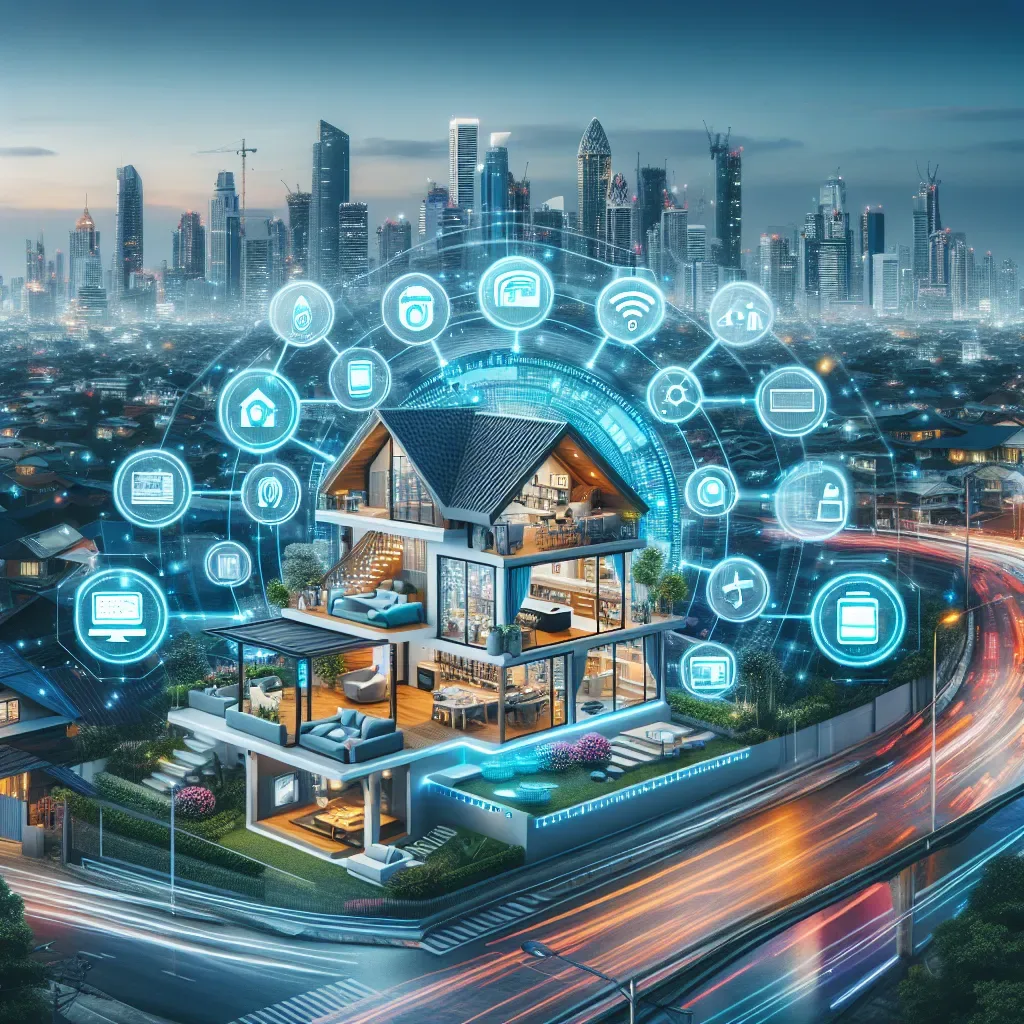
Where Thai Smart Homes Stand in 2026
Thailand's smart home market surpassed $2 billion USD in 2025 according to Statista, growing at over 20% annually. The drivers are falling device costs, Matter standardisation making installation simpler, and new condominium developments incorporating smart features as standard inclusions.
But the trends more significant than market size are the technological shifts that will redefine what a smart home means over the next three to five years.
Matter 1.4 Changes the Device Connectivity Game
Before Matter, each brand operated its own ecosystem. Xiaomi used Mi Home, TP-Link used Kasa, Apple used HomeKit. Consumers managed multiple apps and fragmented automations.
Matter 1.4, fully deployed in 2026, changes this entirely. Matter-compatible devices work together across brands natively. An Aqara switch controls a Philips bulb through HomeKit or Google Home without any bridge device.
For Thai property developers, Matter 1.4 means new projects can include smart features without locking into a single brand. Buyers can add devices of their preference after purchase without compatibility concerns.
AI Automation Shifts from Commands to Prediction
First-generation smart homes required explicit commands for everything. The next phase is homes that learn behaviour and act in advance.
Home Assistant's 2026 AI build analyses sensor data and usage patterns to build predictions: recognising that you typically arrive home at 6 pm, it activates the air conditioner and living room lighting 15 minutes before. Knowing you stay up late on Fridays, it automatically shifts that evening's lighting schedule.
Predictive Automation requires no complex configuration — the system observes actual resident behaviour over two to four weeks and builds its model from real data.
mmWave Sensors Replace Cameras in Many Roles
Millimetre Wave Radar sensors have become a genuine game changer for smart home detection. They outperform PIR motion sensors substantially — distinguishing people from pets, detecting breathing and heartbeat from across a room, and identifying falls — all without capturing any images.
The absence of imaging is critical for privacy. Bedrooms and bathrooms can have full safety monitoring without cameras. This makes mmWave the preferred detection technology for elderly care and family privacy applications.
Edge Computing Reduces Cloud Dependency
Early smart home systems depended almost entirely on cloud servers. If the internet connection dropped or the manufacturer's server experienced issues, whole-home automations could fail.
The clear 2026 trend is local processing through edge devices such as Raspberry Pi 5 or Home Assistant Yellow. The primary automation engine runs entirely on-premises with no cloud dependency. Response latency drops significantly, and data privacy improves because information never leaves the home network.
HappySmart recommends Local-First architecture for clients who prioritise maximum system reliability and data privacy.