What Is Smart Home Lighting?
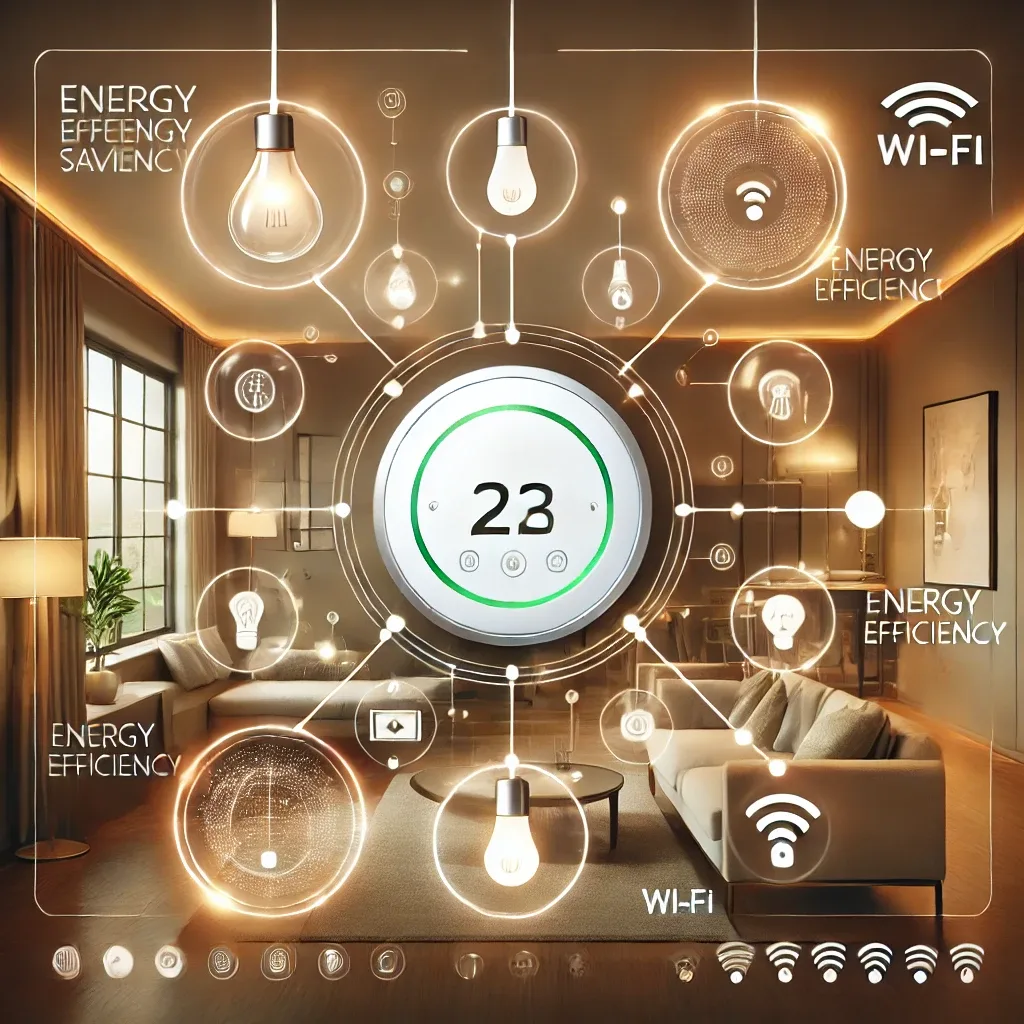
Smart home lighting refers to bulbs and fixtures controlled via smartphone, voice commands, or Home Assistant automations. Beyond simple remote on/off capability, it includes color adjustment, color temperature control, brightness dimming, and scene creation tailored to specific activities.
Smart lighting supports major protocols including Zigbee (Philips Hue, IKEA Tradfri), Z-Wave, and Wi-Fi (Tuya, Sonoff, LIFX), providing options across every price point.
How Smart Lighting Saves Energy
Energy savings from smart lighting come through four primary mechanisms. First, automatic shutoff when rooms are unoccupied — PIR or radar sensors detect an empty room and turn off lights within a configurable delay, permanently eliminating the problem of lights left on accidentally.
Second, adaptive dimming adjusts brightness based on available natural light. During daylight hours, the system dims artificial lighting proportionally, maintaining consistent room brightness while consuming less electricity.
Third, LED bulbs used in smart lighting systems are 5-8 times more efficient than incandescent bulbs and last 25 times longer, reducing both energy consumption and replacement costs significantly.
Fourth, remote control means you can immediately switch off lights from your smartphone from anywhere — even if you forgot to turn them off before leaving home.
Creating Ambience for Every Activity
Beyond energy savings, smart lighting meaningfully improves quality of life. Light color temperature affects mood, health, and cognitive performance. Warm white light (2700K) promotes relaxation. Neutral to cool white (4000-5000K) supports focus during work or study. RGB color mode sets the atmosphere for social occasions.
Circadian lighting that automatically adjusts color temperature throughout the day — warmer in the evening, cooler in the morning — helps maintain healthy circadian rhythms and improve sleep quality, supported by published scientific research on light and human biology.
Installation Steps
Installation starts with selecting bulbs or fixtures compatible with your chosen platform, connecting via the app to Wi-Fi or a Zigbee hub, naming each fixture clearly, grouping by room, and creating automations tailored to your routines.
For homes with many fixtures, HappySmart recommends Zigbee over Wi-Fi to reduce network congestion and deliver better energy efficiency.
Environmental Benefits
Energy savings from smart lighting extend beyond personal electricity bills to reduced greenhouse gas emissions from power generation. HappySmart is committed to sustainable energy practices across every installation, helping Thai households reduce their environmental impact while enjoying a more comfortable home.