Smart Home Lighting in 2026: Beyond On/Off Control
Smart lighting has evolved dramatically between 2024 and 2026. What began as app-controlled bulbs has become a sophisticated system that adjusts light based on your biological rhythm, detects occupancy, and integrates seamlessly with Home Assistant scenes and automations.
Health Impact: Circadian Rhythm and Sleep Quality
Cool white light (5,000–6,500K) suppresses melatonin production and increases alertness — ideal for morning and daytime. Warm light (2,200–2,700K) in the evening stimulates natural melatonin release, helping you fall asleep faster and sleep more deeply.
Home Assistant's Adaptive Lighting integration (available via HACS) automates this entire process based on time of day. Thai users in the Home Assistant Thailand community report measurably improved sleep quality within 2–4 weeks of enabling Adaptive Lighting.
Energy Savings: Tangible Numbers
Lighting accounts for approximately 15–20% of a typical Thai household's electricity bill. Smart lighting reduces consumption through three mechanisms: tunable white LED bulbs that use 50–70% less power than fluorescent equivalents; motion sensors that automatically switch off lights when a room is empty; and occupancy-based scheduling that adapts to real usage patterns.
Users with full-home Adaptive Lighting and motion sensor coverage report 25–40% savings on their lighting electricity costs per month.
Creating Atmosphere for Every Activity
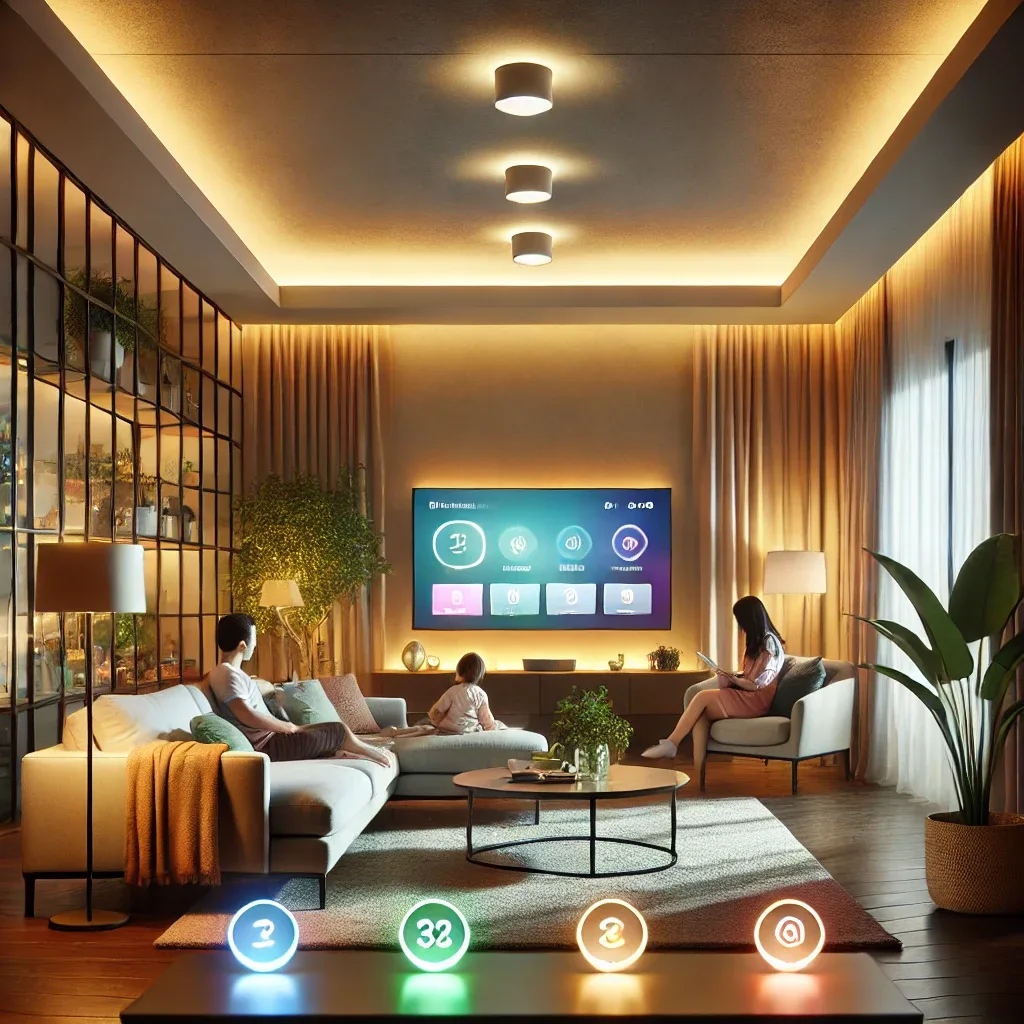
Home Assistant scenes deliver instant atmosphere transformations with a single command: a Movie scene dims the room and activates warm 2,700K bias lighting at 20% behind the TV; a Work scene activates the desk lamp at 6,000K and 100% brightness; a Sleep scene reduces all lights to 1% and turns off the living room; and a Guests scene activates warm accent lighting across all rooms.
Recommended Products in the Thai Market 2026
For beginners: Govee RGBICW Matter (Matter 1.3 support, 500–800 THB per bulb) and Ikea TRADFRI Zigbee (budget-friendly, direct Home Assistant integration).
For premium results: Philips Hue (Zigbee, complete ecosystem), LIFX (Wi-Fi, high brightness output), and Nanoleaf Lines or Shapes for decorative accent lighting.
For whole-home retrofit: Lutron Caseta Dimmer Switches offer professional-grade control without changing individual bulbs — ideal for homes with non-standard fittings.
Where to Start
Begin with the bedroom for immediate, measurable sleep quality improvements. Purchase 2–4 Zigbee or Matter bulbs, install Adaptive Lighting on Home Assistant, and observe the difference within two weeks.