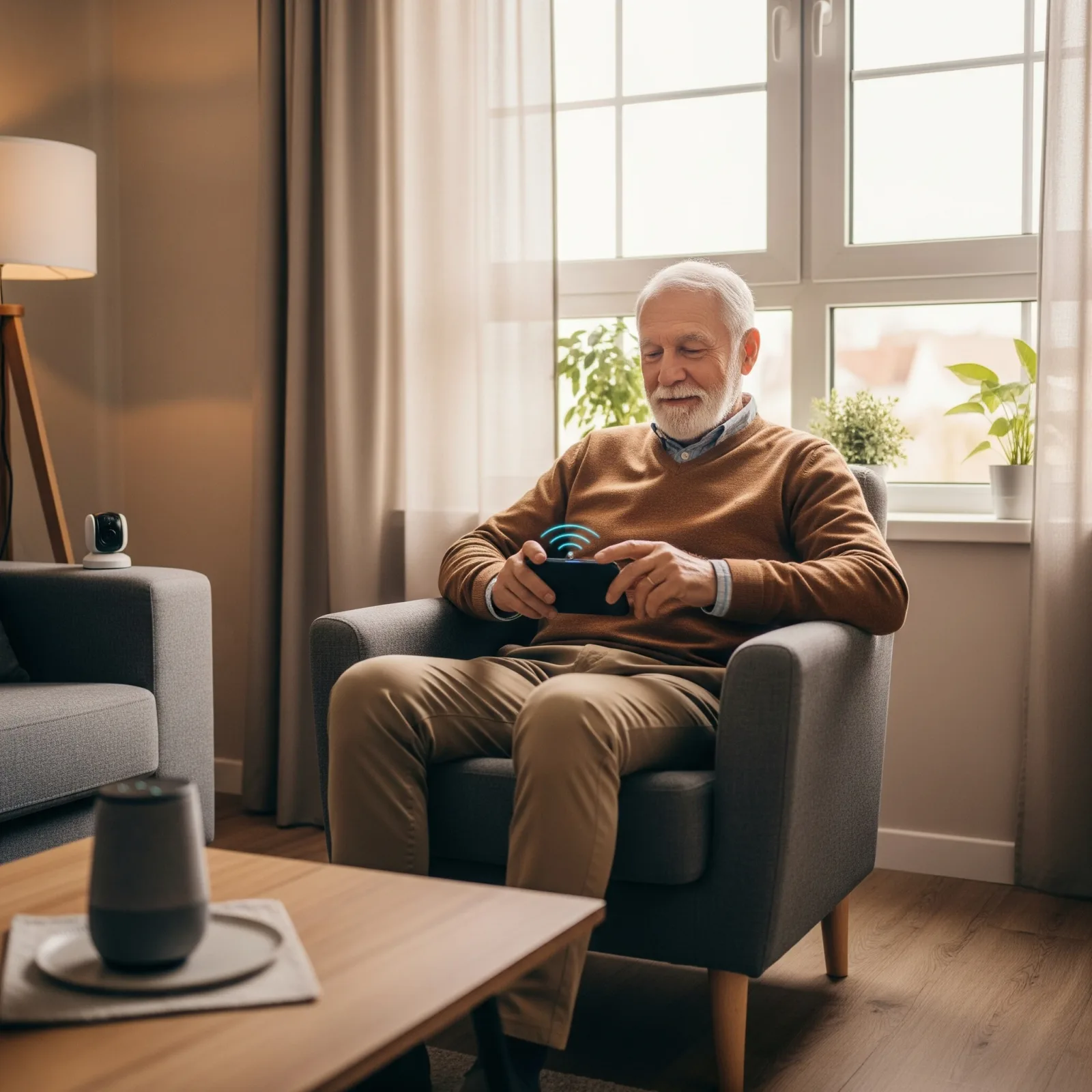
The Invisible Risks Inside an Elderly Person's Home
Elderly residents living alone face hazards that are easy to underestimate. Bathroom accidents are among the leading causes of hospitalisation in this age group — wet floors combined with reduced balance create serious risk. Beyond falls, poor nighttime lighting, inadequate air circulation in sealed rooms, and the threat of intruders represent dangers that an elderly person alone may not be able to manage.
The most critical gap is response time. When an emergency occurs, someone living alone often cannot call for help quickly enough. HappySmart's Smart Home Safety system is designed specifically to close that gap.
Technologies That Elderly Residents Actually Need
mmWave fall detection sensors installed in bathrooms and bedrooms work in complete darkness without capturing video footage. When a fall or prolonged stillness is detected, the system sends alerts to every family member's phone within seconds.
AI behaviour-analysis cameras placed in common areas such as hallways and the living room learn normal activity patterns and trigger alerts when something is off — for example, no movement detected during a time when the resident is usually active.
Two-way communication cameras let family members speak with the resident instantly from their smartphone. No phone call required; open the app and you can see and talk directly.
Wireless SOS buttons beside the bed, inside the bathroom, and at other risk points send simultaneous emergency alerts to every family member's device with a single press.
Automatic motion-activated lighting using LED strips along corridors and staircases that illuminate the moment a sensor detects movement, significantly reducing the risk of stumbling in darkness.
Smart door locks allow family members to control the front door remotely and unlock it instantly for emergency responders if the situation calls for it.
Real-Time Alerts and Customisable Rules
All devices connect through Home Assistant, which acts as the home's central hub. Family members can configure detailed alert rules: for instance, notify if the resident has not left the bedroom by 8 a.m., or if the front door has not been used by mid-morning as it normally would be.
The system supports HomeKit for iPhone users and Matter 1.4 for cross-platform compatibility, so iOS and Android family members can both monitor simultaneously.
HappySmart's Service for Elderly Residents Living Alone
HappySmart sends a specialist team to assess the home in person before designing any system. This is not a one-size-fits-all device bundle; it is a tailored design based on the specific layout of the home and the specific needs of the resident. Full 24-hour support is provided after installation.