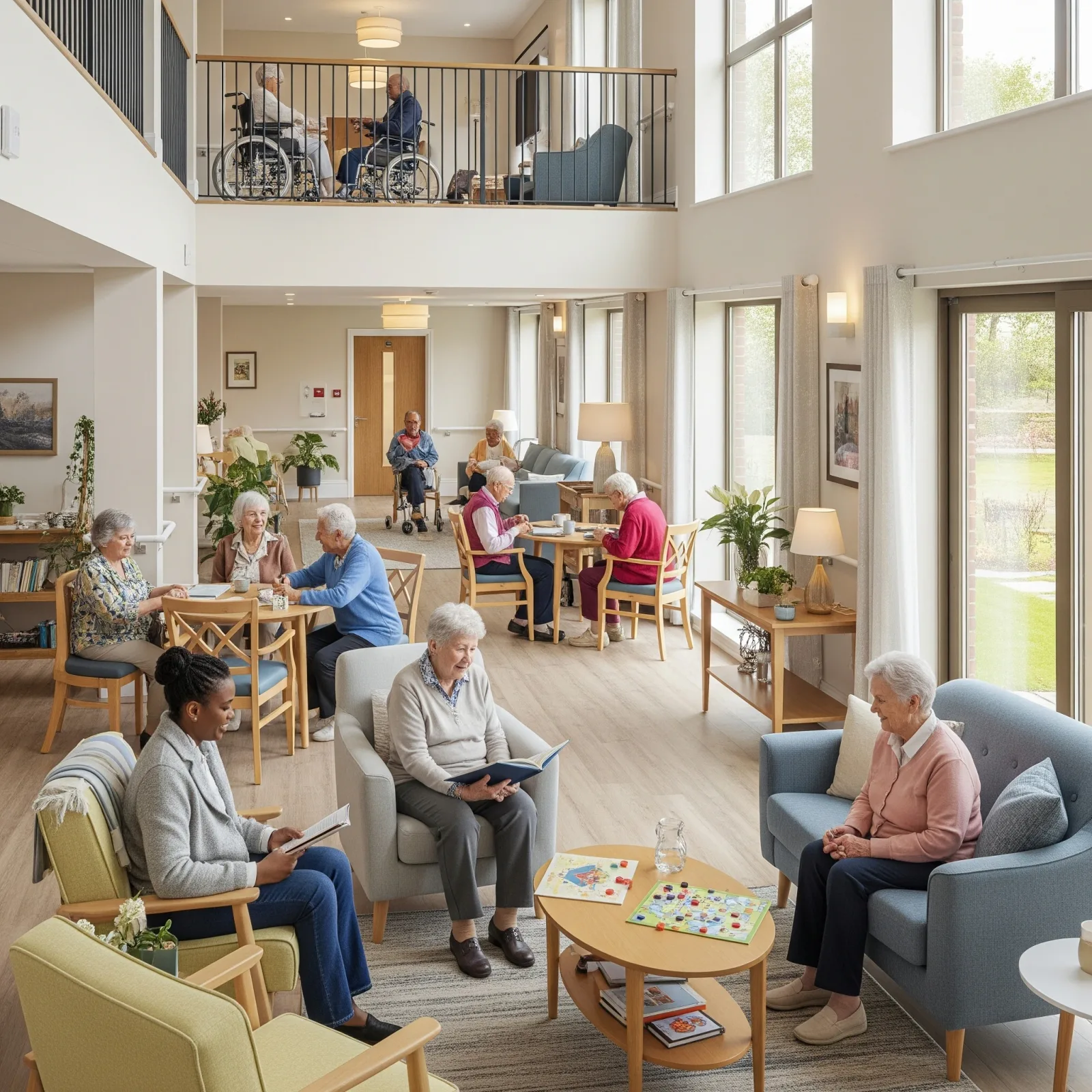
Thailand is rapidly entering a complete aged society, and a critical question facing many families is: where can elderly people live safely and happily? The increasingly accepted answer is staying in their own homes, supported by a Smart Home system.
5 Key Challenges of Aging in Place
Falls are the leading cause of serious injury and loss of independence among seniors, especially in bathrooms and at night. This risk increases significantly when elderly people live alone.
Forgetting to turn off gas or lights is a danger that can lead to fires or gas exposure — a problem that becomes more common as cognitive decline progresses.
An unsuitable environment — too hot, too cold, insufficient lighting, or poor air quality — directly affects the physical and mental health of elderly residents.
Moving around at night without adequate lighting is a common cause of accidents, as seniors often need to get up multiple times per night.
Loneliness and isolation have a significant impact on mental health. Knowing that a system is watching over them and can connect them to family at any moment helps alleviate this feeling.
Comparison: Regular Home vs Smart Home for Seniors
For safety monitoring, a regular home relies on phone check-ins or physical visits, while a Smart Home uses AI cameras and sensors to send automatic alerts 24 hours a day.
For emergency alerts, a regular home waits for the senior to call for help, while a Smart Home detects anomalies and instantly notifies family members automatically.
For environmental control, a regular home requires manual adjustments, while a Smart Home automatically adjusts temperature, lighting, and air quality based on user needs and behavior.
For privacy, Smart Homes use mmWave Sensors — which detect without cameras — preserving privacy in sensitive areas like bathrooms.
5 Essential Smart Home Devices for Senior Homes
mmWave Sensors detect falls and abnormal behavior without any wearable device — ideal for bathrooms and bedrooms. LED strip path lights automatically activate when seniors get out of bed, preventing trips and falls in the dark. AI cameras detect motion and distinguish between people, pets, and objects, instantly sending photo alerts to family phones. Smart air purifiers with Air Quality Monitors activate automatically when dust levels exceed safe thresholds. Home Assistant or HomeBridge platforms consolidate all devices in one app, controllable remotely by family members.
HappySmart Case Studies
Khun Yai Suree, 75, lives alone in a Bangkok detached house. After installing mmWave Sensors in the bathroom and AI cameras in key areas, her daughter working in another province can monitor her mother's status via app at any time — and once received a timely alert when the system detected Khun Yai remaining motionless in the bathroom unusually long.
Khun Lung Montri, 70, uses automatic LED path lighting and door sensors. Late-night trips are no longer dangerous, and his son receives a notification every time the front door opens at an unusual hour.
Smart Home is not just technology — it's a system that helps seniors live at home safely, with dignity, and stay connected to loved ones at all times.