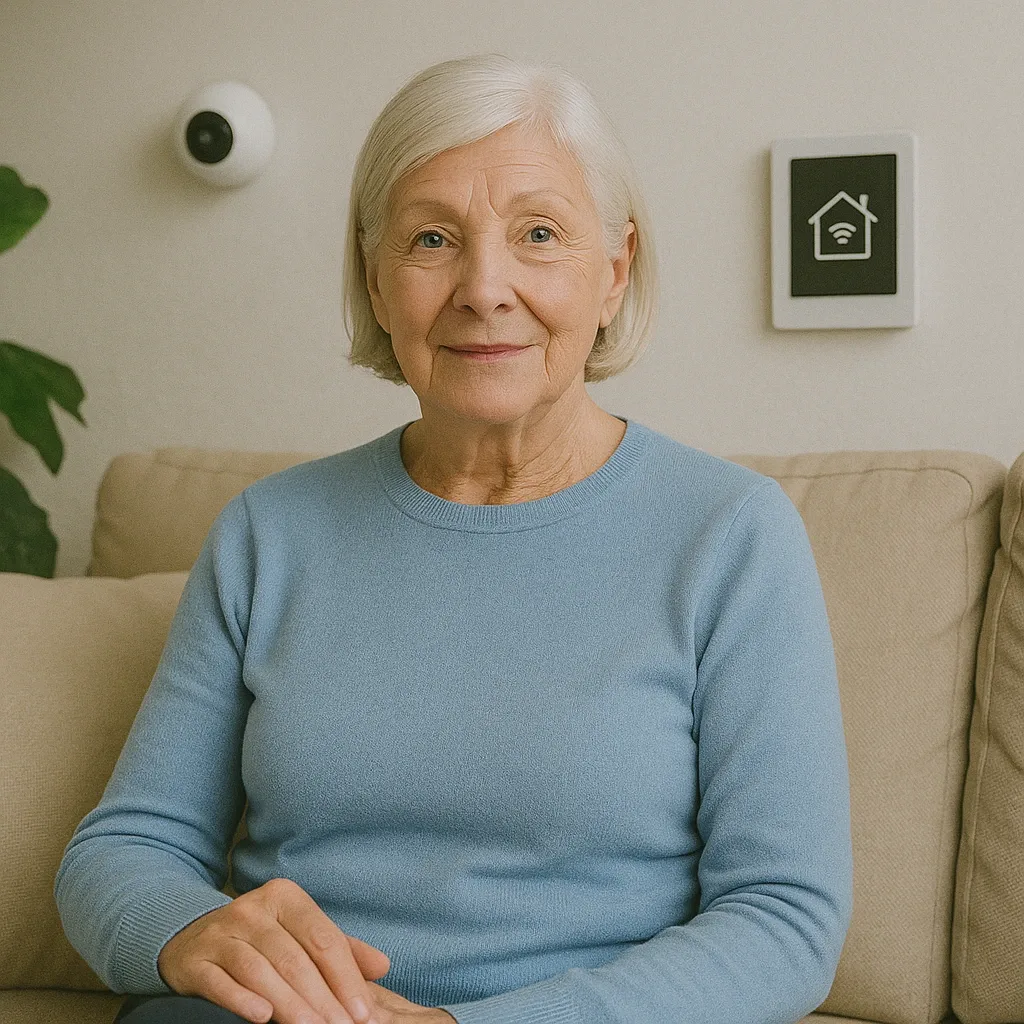
Background: Khun Pa Somsri, Lat Phrao, Bangkok
Khun Pa Somsri (pseudonym), aged 74, lives alone in a single-storey detached house in Bangkok’s Lat Phrao district. Her husband passed away two years ago; her two sons work in upcountry locations and abroad, visiting approximately once a month. She has a history of knee osteoarthritis and managed hypertension but walks independently without a walker. The family began expressing serious concern after an incident in which she fell in the bathroom and lay waiting for over two hours before a neighbor noticed through the window.
The System Installed: Four-Layer Safety Stack
HappySmart designed the following system for this home: a Home Assistant Server (Raspberry Pi 4 plus 256GB SSD) as the central hub; three Aqara FP2 mmWave sensors in the bathroom, living room, and corridor; two Reolink RLC-520A cameras (living room and corridor) processed locally through Frigate NVR; three Zigbee panic buttons in the bathroom, bedroom, and living room; a Sensibo Smart AC Controller integrated with Home Assistant for automatic 26°C temperature management per WHO elderly recommendations; and LINE Notify integration delivering alerts to a four-member family LINE group. Total budget: 32,500 baht. Installation time: 1.5 days.
Results After 90 Days: Real Numbers
During the first 90 days, the system flagged seven events requiring follow-up: three prolonged bathroom occupancy alerts (Khun Pa soaking in the tub — not emergencies), two accidental panic button presses (button positioned too close to her resting hand), and two genuine alerts. The first genuine alert occurred when she felt dizzy in the living room and sat on the floor to rest — the mmWave sensor detected the situation and sent a LINE Notify alert within 3 minutes; her son called, she confirmed she was fine, and no emergency response was needed. The second was a deliberate button press when she forgot her medication. Family check-in calls dropped from 4.2 per day to 1.8 per day because the sons could verify her status via the dashboard independently.
Lessons from the Case Study: Five Discoveries
First, mmWave sensitivity must be calibrated to each individual’s behavior — Khun Pa’s long baths caused frequent false alerts, resolved by increasing the bathroom threshold from 20 to 35 minutes. Second, panic button placement matters significantly — buttons must be positioned away from surfaces where the user rests their hand. Third, LINE Notify messages with camera snapshots reduced family anxiety far more effectively than text-only alerts. Fourth, automatic Smart AC eliminated the cognitive burden of remembering to adjust the thermostat. Fifth, local processing kept everything functional during two periods of True Move H internet outages over the 90-day window.
Family ROI: More Than Just Safety
Beyond safety, the family reported clear quality-of-life improvements. Khun Pa said she felt ’looked after’ even while alone, reducing her sense of isolation. Her son abroad reported sleeping better without needing daily check-in calls. The family estimated that the 32,500 baht investment was more cost-effective than hiring part-time in-home care, which would cost approximately 8,000–12,000 baht per month.