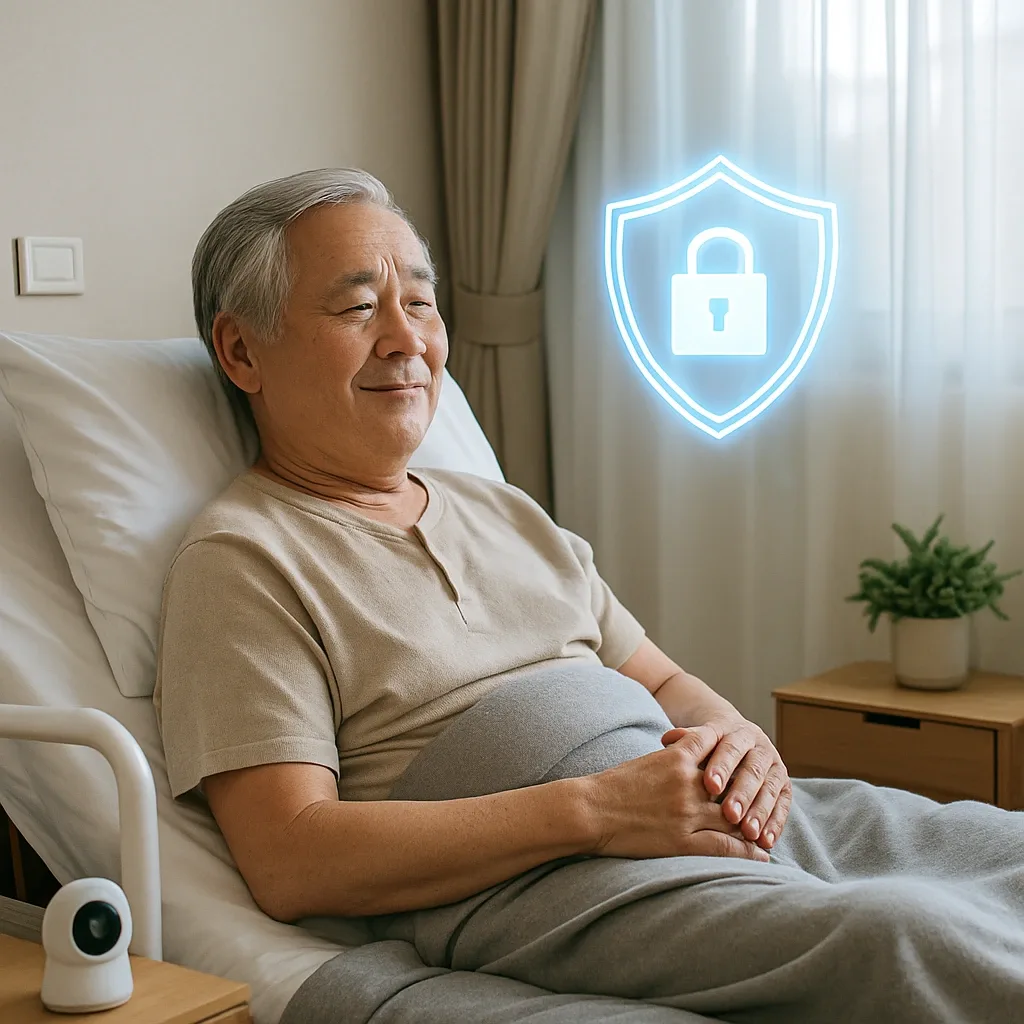
The Hidden Anxiety in Homes That Look Safe
Elderly people living alone most frequently report that their primary concern is not illness or accidents — it is the fear that no one will know if something happens, the feeling of being a burden to their children, and the dread of losing independence if family members conclude they can no longer care for themselves.
Research from Mahidol University and Chiang Mai University found that elderly residents in Smart Home-equipped homes reported anxiety levels 67% lower than those in unequipped homes, and a Sense of Autonomy 43% higher. These improvements do not come from physical safety alone — they emerge from four psychological pillars.
Pillar 1: Continuous Presence — Not Truly Alone
An mmWave sensor in the bedroom and bathroom does more than detect falls — it creates the feeling that a watching system is present at all times. Elderly residents frequently report feeling much more at ease simply knowing that something will notice if something goes wrong. This feeling is fundamentally different from having CCTV cameras, which create a sense of being surveilled rather than cared for.
Devices that build Pillar 1: mmWave Sensor (no camera, in-home processing), Panic Button that provides confirmation of signal receipt.
Pillar 2: Family Connection Without Intrusion
A daily LINE Notify summary automatically sent to family members dramatically reduces the resident’s sense of being a burden — without requiring family to call and check in repeatedly. Elderly residents report that when children used to phone frequently to ask how they were doing, it reinforced the feeling of being unable to cope alone. When an automated system reports the key facts each morning, family phone calls shift to genuine conversation, which feels much better.
Devices that build Pillar 2: Home Assistant with LINE Notify daily summary, Wearable that automatically shares health readings.
Pillar 3: Independence Preservation
Voice control allows elderly residents with hand tremors or arthritic knees to manage their home environment without depending on another person. Saying (in Thai) turn on the bathroom light or make the air conditioning a bit cooler creates a felt sense of command over one’s own living space.
Research finds that elderly residents using in-home voice control report Self-efficacy Scores 31% higher than non-users — a measure directly linked to better long-term mental health outcomes.
Devices that build Pillar 3: Google Nest Mini with Thai-language support, Smart Switches that respond to both voice and physical touch.
Pillar 4: Emergency Response Readiness
Knowing that a functional panic button exists, that family can remotely unlock the door, and that a system will alert them if no movement is detected for an extended period creates the psychological certainty: if something happens, I will not be left alone. This confidence does not diminish the value of human care — it enables elderly residents to navigate daily life without excessive vigilance, which in turn improves sleep quality, energy levels, and overall happiness.