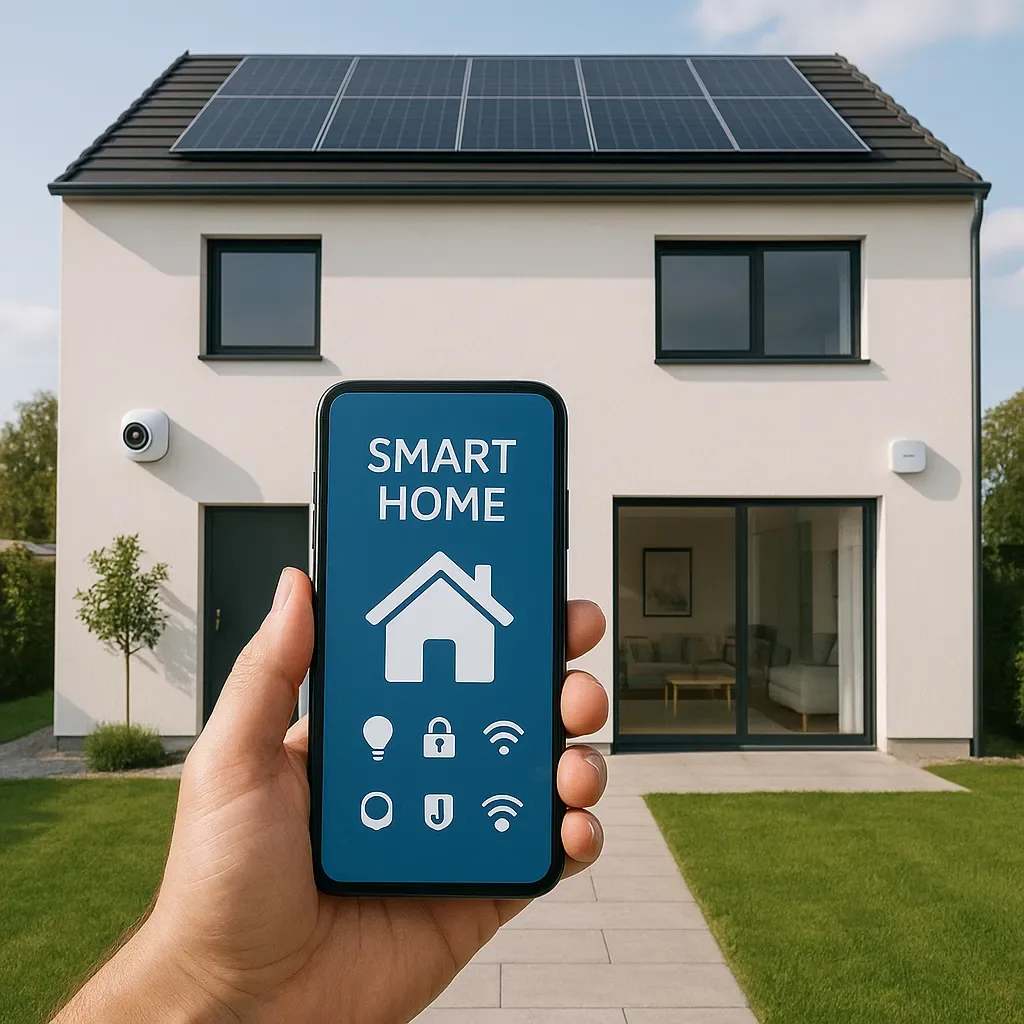
Why Smart Home ROI Requires a 20-Year View
Most smart home investment decisions compare upfront cost against immediate convenience. This framing misses the bigger picture: compounding returns over 15-20 years of useful life, including energy savings, property value appreciation, and avoided costs from proactive risk prevention.
Energy ROI Numbers for Thai Homes
DEDE (Department of Alternative Energy Development and Efficiency) 2024 data shows Thai homes with complete smart systems save 25-40% annually on electricity.
Real figures for a 200 sq.m. home:
- Current electricity bill: 4,500 THB/month = 54,000 THB/year
- Post-smart system: 2,700-3,375 THB/month
- Annual savings: 13,500-18,900 THB
- Over 10 years: 135,000-189,000 THB
- Over 20 years: 270,000-378,000 THB
Highest-impact systems:
- Smart HVAC control: 15-20% saving (HVAC = 40-50% of total bill)
- Smart lighting + motion sensors: 60-70% reduction in lights left on
- Solar + TOU management: 40-60% bill reduction
- Smart water heating timer: 20-30% saving
Property Value Premium
Thai real estate has been reflecting smart home premiums more clearly since 2023. CBRE Thailand and Knight Frank data shows:
- Grade A Bangkok condominiums: Units with complete smart systems command 8-15% premiums
- Suburban single-family homes: 5-10% value increase with security and IAQ systems
- Average days on market: Smart home properties sell 25-30% faster
- Gen Z/Millennial buyers: 67% cite smart home systems as a primary decision factor (Colliers 2024)
For a 5M THB home:
- 8% premium = 400,000 THB added value
- Complete smart home investment: 200,000-350,000 THB
- Net value added at sale: 50,000-200,000 THB
Carbon Footprint: An Increasingly Relevant Metric in Thailand
Thailand has committed to Carbon Neutrality by 2050 and Net Zero by 2065, with growing implications for real estate policy and future tax structures.
Carbon reduction from a complete smart home:
- 25-40% electricity saving → 1.2-1.9 tonnes CO₂/year avoided (Thailand emission factor: 0.5765 kgCO₂/kWh)
- 6kW solar panel: additional 3-4 tonnes CO₂/year avoided
- Over 20 years: 84-116 tonnes CO₂ reduced
- Potential carbon credit value: 42,000-116,000 THB (at $10/tonne current market)
Policy benefits:
- Corporate tax deductions for TREES-certified (Thai Green Building) homes
- MEA/PEA Solar Rooftop feed-in tariff eligibility
The Smart 20-Year Plan
Years 1-3: Foundation
- Home automation hub (HA): 15,000 THB
- Whole-home smart lighting: 30,000 THB
- Smart HVAC control: 20,000 THB
- Security system: 40,000 THB
- Total: ~105,000 THB | Payback in 5-7 years
Years 3-5: Expansion
- 6kW solar + battery: 180,000-250,000 THB
- IAQ system: 25,000 THB
- Additional: ~200,000-275,000 THB | Payback in 8-10 years
Years 10-15: Upgrade
- LFP battery replacement (10-12 year life): 50,000-80,000 THB
- AI and sensor network upgrade: 20,000 THB
20-Year Total ROI Estimate:
- Total investment: 330,000-480,000 THB
- Total returns (energy + property value): 470,000-770,000 THB
- Net ROI: +140,000 to +290,000 THB
In 2026, a smart home is not a cost center — it is a measurable asset class delivering returns across its full 20-year life.