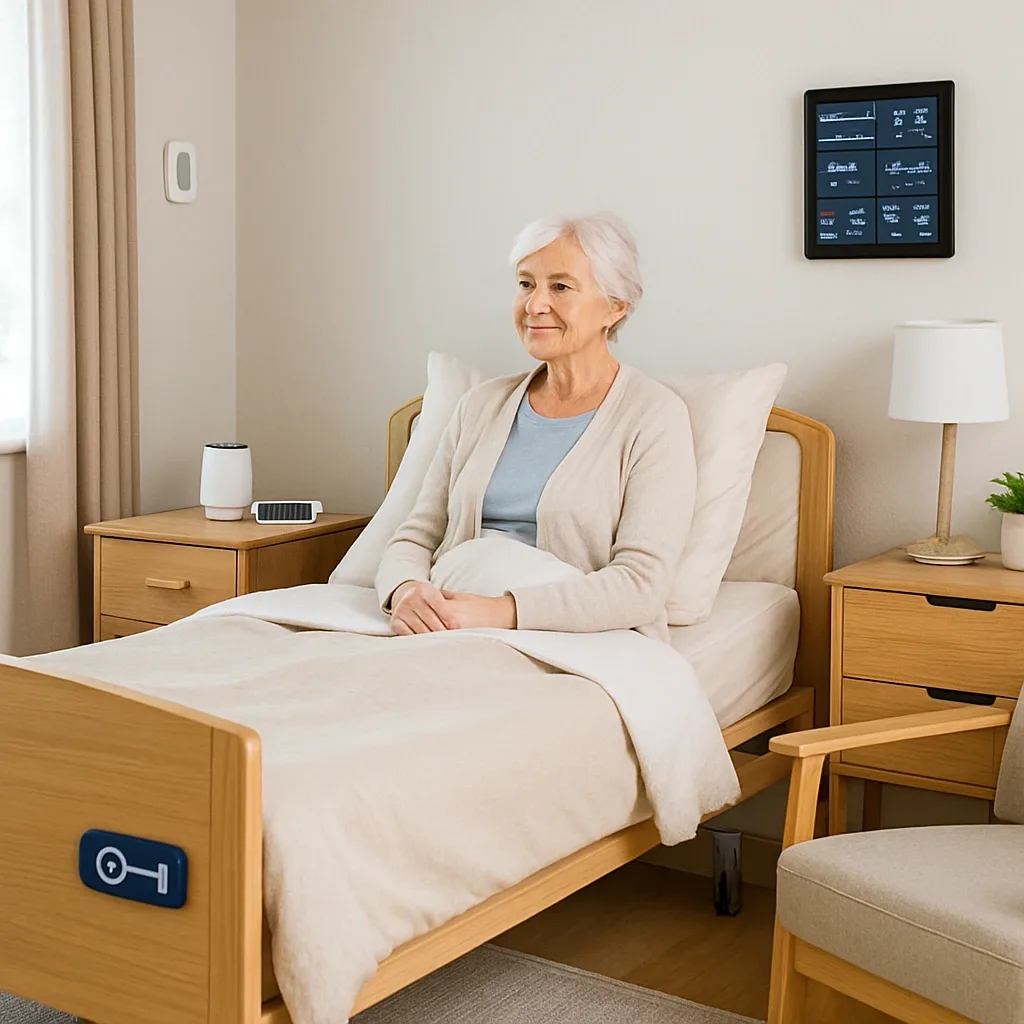
What a Standard 4×4 m Bangkok Room Can Become
A 4×4 metre bedroom is the most common room size found in Bangkok townhouses and mid-range condominiums. It is small enough for a single Smart Home device to cover the entire area, and large enough for comfortable mobility. This 21-day plan is designed to be executed without removing walls, rewiring the room, or vacating the space.
Days 1–3: Assessment and Hazard Elimination (0–2,000 THB)
Start with an elderly-eye survey — get down to floor level and look for trip hazards: loose electrical cables, small rugs that slide, sharp furniture edges, and obstacles on the path from bed to bathroom.
Immediate actions: remove small loose rugs, secure cables to walls, rearrange furniture to create a ≥ 900 mm clear path from bed to door, and apply Anti-Slip Tape at the floor area beside the bed and in front of the bathroom door. Budget for tape and cable management clips: under 2,000 THB.
Days 4–7: Lighting and Wayfinding (3,000–5,000 THB)
Week one focuses on lighting, because 23% of elderly falls occur because of poor visibility at night. Install a motion-activated LED strip under the side of the bed where the resident rises. Brightness should not exceed 50 lux at floor level and should use a warm 2,700K colour temperature to avoid disrupting sleep. Cost: 800–1,500 THB.
Add plug-in LED night lights every 2 metres along the path to the bathroom — 200–400 THB each, three units totalling 600–1,200 THB. Replace the bedside lamp bulb with a Smart Bulb that automatically dims after 21:00. Cost: 400–800 THB.
Days 8–14: Core Sensor System (8,000–12,000 THB)
Week two installs the core detection layer. Mount an mmWave Presence Sensor in a ceiling corner at ≥ 2.5 metres height, covering both the sleeping area and the bedside zone. Cost: 2,500–4,500 THB. Configure an alert to trigger if no movement is detected for more than 45 minutes during the resident’s normal waking hours.
Install wireless Panic Buttons at the bedside and in the bathroom, linked to a central hub. Cost: 800–1,500 THB per unit; two units: 1,600–3,000 THB. Set up the hub via a Xiaomi Smart Hub or Raspberry Pi 4 running Home Assistant (1,800–4,500 THB) so all devices report to a single point and automatically send LINE Notify updates to family members.
Days 15–21: Communication and Health Layer (4,000–8,000 THB)
The final week adds health monitoring and voice communication. A Smart Speaker (Google Nest Mini, 1,500 THB) handles Thai-language medication reminders, weather briefings, and voice-controlled lighting. A Smart Plug on the fan or air conditioner sets an automatic night-time off timer (800–1,200 THB).
If budget remains: add an SHT31 Temperature and Humidity Sensor that alerts when room temperature exceeds 30°C — particularly important in Bangkok where heat stroke risk for the elderly is significant. Cost: 600–1,000 THB.
Results After 21 Days
The previously unequipped room now detects occupant movement, reminds the resident to take medication, sends a morning status report to family, and can transmit an emergency alert within seconds. Total actual budget: 18,000–25,000 THB — without demolishing the room, hiring a contractor, or displacing the resident, and with full expandability for future additions.