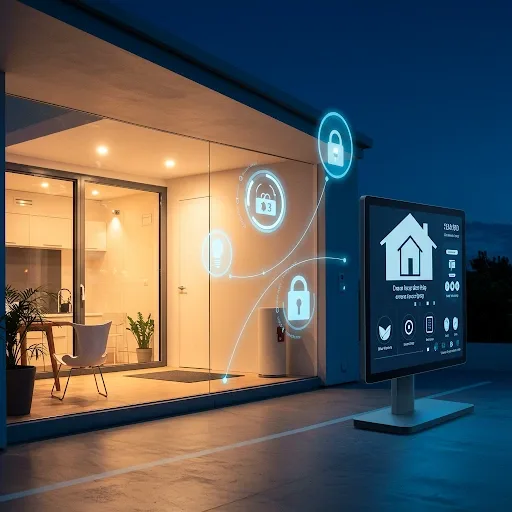
What Is a Smart Home?
A smart home is a residence equipped with devices connected to the internet through IoT (Internet of Things) technology, allowing residents to control, monitor, and automate appliances and systems through a smartphone, tablet, or voice commands — from anywhere in the world.
The core promise of a smart home is making everyday life more convenient, safer, and more energy-efficient by letting technology handle repetitive tasks and monitoring that would otherwise require constant manual attention.
Core Features of a Smart Home
A well-designed smart home integrates several key capabilities. Remote control through a smartphone lets you operate any device from anywhere with an internet connection. Automation allows devices to act on preset conditions — turning on lights at sunset, switching off the AC when a room is empty, or locking the door when you leave. Voice control through Google Assistant, Amazon Alexa, or Siri lets you issue commands hands-free.
AI and machine learning features learn household behavior patterns over time and adjust device settings automatically to match daily routines without manual input. Real-time alerts push status updates and abnormal event notifications directly to your phone the moment they occur.
Essential Devices to Start With
Smart lighting is the most popular starting point. Brands including Philips Hue, Yeelight, and TP-Link Tapo offer bulbs and switches that allow brightness adjustment, color changes, and automatic scheduling. A smart thermostat manages room temperature intelligently and delivers meaningful electricity savings over time, especially in Thailand's hot climate.
A smart security setup typically combines AI-powered CCTV cameras, a smart lock, and motion and smoke sensors. A home automation hub such as Google Home Hub, Amazon Echo, or Apple HomePod unifies control of all connected devices in a single app.
Step-by-Step Installation Guide for Beginners
Step one is defining your goal clearly — security, convenience, or energy savings. Step two is choosing devices compatible with your chosen platform. Start with basic, low-cost entry points like a smart plug or smart bulb to get familiar with the ecosystem.
Install each device using its companion app following the manufacturer's guide. Connect all devices through your smart home hub to control everything from a single application. Test your automation rules and adjust them to reflect your actual lifestyle. Then expand your setup gradually as your needs evolve.
Real-World Benefits of Going Smart
Beyond convenience, smart homes deliver measurable electricity savings through efficient energy management. Home security improves significantly with AI cameras and smart locks that respond to real threats. In many markets, properties with quality smart home systems also command higher resale values, making the investment worthwhile from both a lifestyle and financial perspective.