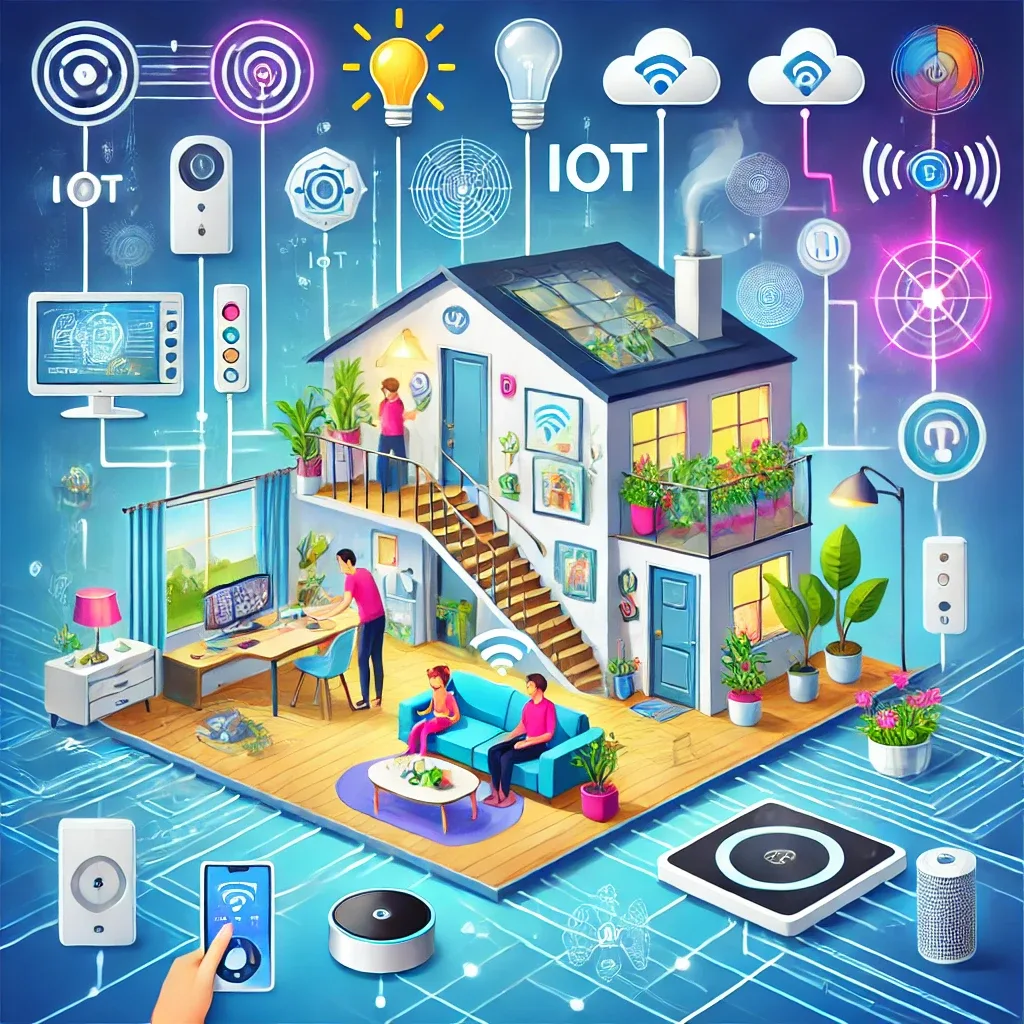
IoT Is the Foundation of the Modern Smart Home
Internet of Things describes the concept of connecting every device to the internet to exchange data and work together. In a smart home, IoT transforms individual sensors, lights, air conditioners, speakers, and cameras into a single ecosystem that responds to the occupant's behaviour and needs.
The Matter 1.4 standard in 2026 lets IoT devices from hundreds of global brands communicate using the same protocol — solving the compatibility problem that smart home users had faced for more than a decade.
How Smart Home Technology Genuinely Improves Quality of Life
Convenience. Behaviour-responsive automation transforms a home from a passive space into a proactive one. The home knows you are arriving and pre-cools the rooms. It knows you have fallen asleep and dims the lights, closes the blinds. It knows you have left and secures everything automatically.
Safety. Sensors, cameras, and smart locks working as a connected ecosystem outperform standalone devices because each device knows the state of every other. When a camera detects an unknown person, an mmWave sensor confirms presence, and the smart lock engages automatically without any human input.
Health and environment. Air quality sensors measuring PM2.5, CO2, and TVOC continuously adjust ventilation when values exceed thresholds. In Bangkok, where air quality is a genuine year-round concern, this dimension of smart home technology has a direct impact on respiratory health.
Energy. Smart plugs and energy monitors display real-time consumption per device on a dashboard, identifying unnecessary drain and enabling precise automation that cuts waste without affecting comfort.
Why AI Multiplies the Value of IoT
Early smart homes were simply pre-programmed automation. In 2026, AI adds the ability to learn from occupant behaviour.
HappySmart's AI SmartHome platform analyses usage patterns over the first 30 days and then suggests automations tailored to actual lifestyle — the air conditioning temperature you prefer at different times of day, when you typically return home, and your sleep schedule.
This is the distinction between a smart home you program and a home that learns you.
Starting with HappySmart
HappySmart designs end-to-end IoT smart home systems — from a home survey and budget-matched device selection through installation, configuration, user training, and after-sales support. Entry pricing starts at ฿1,599 and the system scales as needs grow.