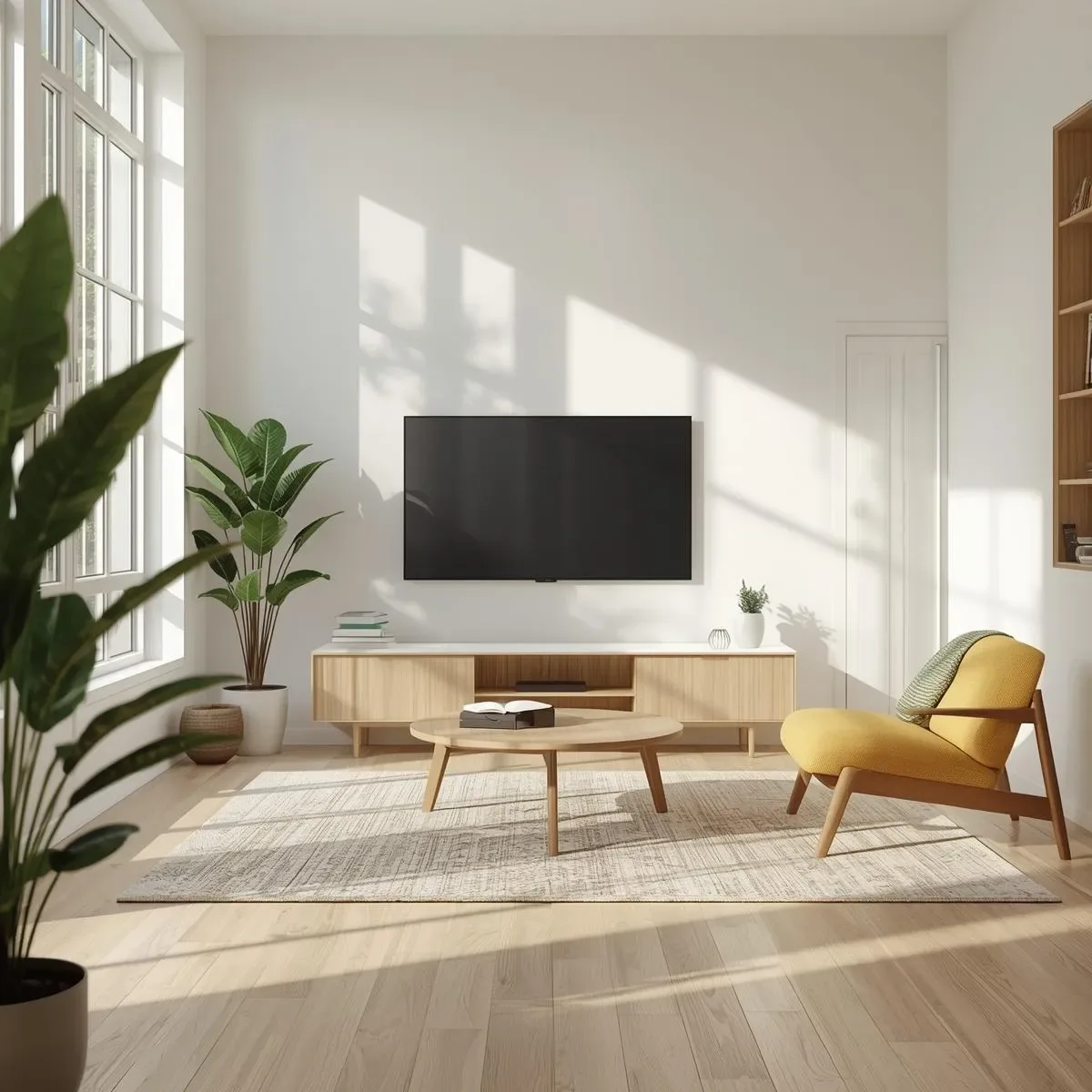
Architecture and interior design are not merely aesthetic—they produce measurable biological effects on the nervous system, emotional state, and overall health. The Academy of Neuroscience for Architecture (ANFA) has consolidated evidence that well-designed environments reduce cortisol, increase serotonin and dopamine, and improve focus and creative thinking.
Biophilic Design in SmartInterior: direct contact with nature indoors measurably reduces stress. University of Michigan research found that viewing living plants for just 5 minutes reduces cortisol by 13–15%. SmartInterior incorporates biophilic elements including a Living Wall with automatic drip irrigation, indoor plants monitored by IoT soil moisture sensors maintaining 40–60% VWC, natural materials throughout (solid wood, stone, travertine), and a small Indoor Water Feature whose sound has demonstrated cortisol-reducing effects in multiple studies. These elements are not decorative—they are functional health infrastructure.
Lighting for Mental Health: insufficient natural light correlates with Seasonal Affective Disorder and depressive symptoms. Bangkok’s abundant sunlight is partially offset by high AQI periods that keep residents indoors for weeks. DALI Lighting at 500 lux and 5,000K CCT in working and living areas during daytime increases alertness and cognitive performance. Transitioning to 2,700K in the early evening activates the parasympathetic nervous system, reducing physiological stress after the working day—a function directly relevant to Bangkok’s demanding professional lifestyle.
Thermal Comfort and Mental Health: WHO research associates sustained indoor temperatures above 28°C with increased irritability, social aggression, and reduced cognitive performance. HVAC maintaining 23–25°C (PMV -0.5 to +0.5) throughout working hours supports emotional stability and cognitive output. In Bangkok, where outdoor temperatures reach 38–40°C during April, reliable HVAC is a mental health necessity, not a comfort luxury—failure or inadequate capacity has direct psychological consequences.
A mentally restorative SmartInterior designates a Restoration Zone physically separate from work areas: a Meditation Corner with ambient lighting at 50 lux, temperature at 22°C, White Noise, and natural wood or Thai flower scent diffusion. A Screen-free Zone enforced by household agreement (no phones) creates genuine mental separation from digital demands. Even a small indoor garden or Winter Garden corner generates a sense of spatial escape within the home. All zones are planned in BIM from the initial design stage, not added as afterthoughts.