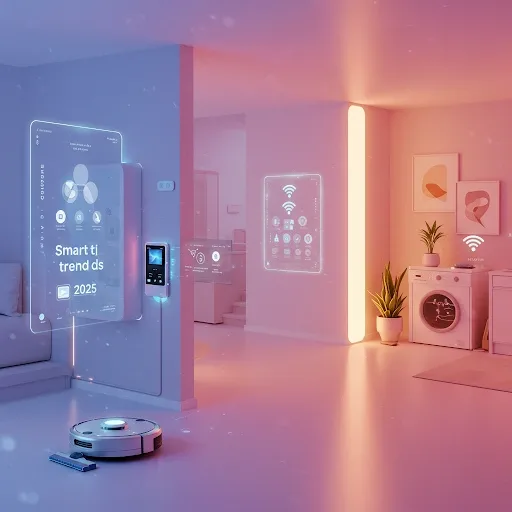
Full Home Automation: Control Everything from One Point
In 2025, Smart Home systems have entered the era of full automation. The Smart Hub acts as the central brain connecting every device in the home, from lights and air conditioners to doors, cameras, and appliances. A single voice command through Google Assistant, Amazon Alexa, or Apple Siri can trigger complex routines: say "leaving home mode" and the system locks the door, switches off all lights, sets the air conditioner to standby, and arms the security cameras simultaneously.
Smart curtains open automatically at a set morning time. Bedroom lights gradually brighten alongside the alarm. Doors auto-lock when no motion is detected inside. These Home Automation Routines can be fully customized to each owner's lifestyle, making daily life noticeably more convenient without requiring any manual action.
AIoT: Artificial Intelligence That Learns Your Behavior and Protects Your Home
The fusion of AI with IoT, known as AIoT, is the core engine of Smart Home technology in 2025. AI systems analyze real usage data, including your typical sleep time, your arrival patterns, and your preferred temperatures throughout the day, then automatically adjust devices to match your routine.
The latest AI CCTV cameras include Face Recognition that distinguishes family members from strangers. When an unrecognized face is detected, an instant alert is pushed to the homeowner's smartphone. Robotic home assistants are also emerging as practical tools for reminding elderly residents to take medication and handling repetitive household tasks with minimal human input.
Smart Energy Systems: Cut Electricity Bills While Protecting the Planet
New-generation solar panels automatically adjust their angle to track the sun and connect to battery storage systems for use at night or on cloudy days. Smart Meters track real-time energy consumption at the individual device level, giving homeowners precise visibility into which appliances consume the most power.
AI-controlled smart air conditioners regulate temperature based on humidity readings and behavioral patterns, delivering energy savings of 30 to 40 percent over conventional units. This holistic energy management approach not only reduces monthly electricity bills but also cuts carbon emissions, making Smart Home ownership a practical choice for environmentally conscious families.
Advanced Security: AI Protecting Your Home Around the Clock
Smart Home security in 2025 goes far beyond a basic camera setup. AI cameras feature precise Motion Detection, high-quality Night Vision, and Face Recognition that identifies known and unknown individuals. Smart Door Locks support fingerprints, PIN codes, and app-based unlocking. Smart Sensors detect vibration, door and window openings, and even air quality changes.
All devices operate as one integrated system. When a sensor detects abnormal movement, the camera begins recording, lights switch on automatically, and an alert is pushed to the homeowner's smartphone simultaneously. This coordinated response dramatically reduces the window of opportunity for any security threat.
Matter Standard and Wi-Fi 6: Every Device Works Together Seamlessly
A major pain point in earlier Smart Home setups was that devices from different brands could not communicate with each other. The Matter standard solves this by creating a universal language that allows products from every major manufacturer to interoperate, whether they run on Google Home, Apple HomeKit, or Samsung SmartThings.
Wi-Fi 6 and 5G networks support a large number of simultaneous connected devices with minimal latency, ensuring that app and voice commands receive fast and reliable responses. Investing in a Smart Home in 2025 no longer requires worrying about compatibility, making now one of the best times to build or expand a connected home system.