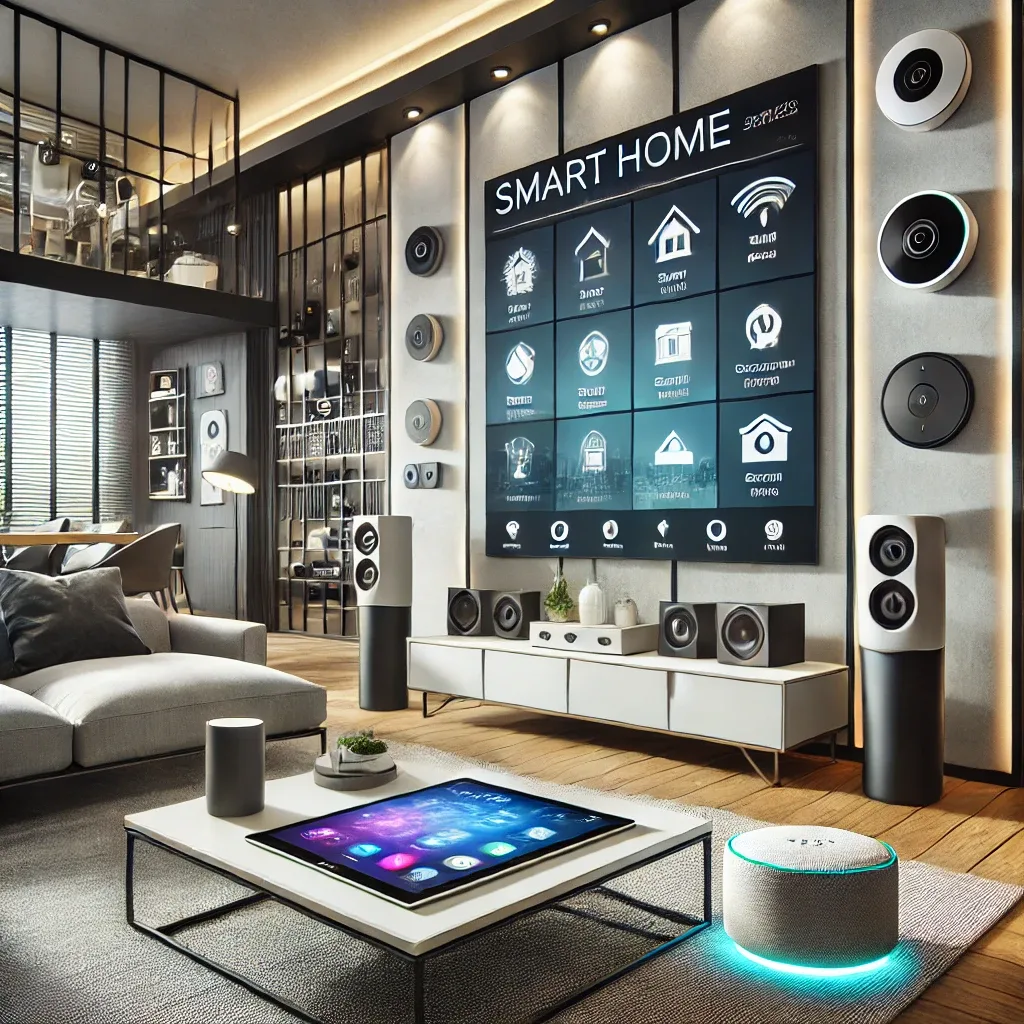
The Complexity Behind the Box
Smart home devices look straightforward on a shelf. Once you are running thirty devices from eight different brands in a real house, hidden problems appear. Zigbee and Z-Wave interference on adjacent frequencies, VLAN configuration to isolate IoT devices from your main network, correct permission structures in HomeKit and Tuya — none of this is explained in the box.
HappySmart has installed systems across hundreds of homes in Bangkok, Hua Hin, and Khao Yai. The most common support requests come from self-installed systems where the owner understood individual devices but not how the system behaves as a whole.
Technologies That Require Specific Knowledge
Modern smart home systems go well beyond Wi-Fi. Matter 1.4 requires correct Thread border router configuration for devices to communicate reliably over a local mesh network. An incorrect setup causes devices to cycle between online and offline, making all automation unreliable.
mmWave sensors like the Aqara FP2 need precise placement and sensitivity calibration matched to room dimensions. EZVIZ and TP-Link Tapo cameras installed at the wrong angle leave critical areas uncovered, undermining the entire security investment.
Home Assistant running on a local server requires Linux and YAML knowledge to maintain. Automatic updates routinely break integrations for users who do not know how to roll back or rebuild a configuration.
What a Professional Does Differently
HappySmart technicians survey the actual Wi-Fi signal strength at every point in a home before proposing any device plan. This determines where mesh nodes must go and how many are needed — not a guess based on floor plan area.
Proper cable and device management reduces heat accumulation inside equipment enclosures. In Thai conditions where a service room can reach 40 degrees Celsius in summer, thermal management directly affects device lifespan.
After installation, every automation rule is tested end-to-end. The team configures notifications and access permissions for each household member individually, then walks the owner through the app before leaving.
The Real Cost of DIY
Professional installation adds visible cost upfront. Measured against the time spent troubleshooting, hardware damaged by incorrect wiring, and a system performing at half its potential, the calculation shifts.
Many HappySmart clients who self-installed previously found that fixing the resulting problems cost more than professional installation from the start. The HappySmart AI SmartHome package starts at ฿1,599 and includes installation, configuration, and on-site testing by trained technicians.