A Home That Saves Energy Without You Having to Remember
A common frustration among homeowners: forgetting to turn off the AC before leaving the house wastes electricity for hours, or lights in unused rooms stay on until midnight. These aren’t signs of carelessness — they’re the result of humans having to track too many small details every single day.
A Smart Home system integrated with IoT solves this permanently, letting the home manage itself automatically based on real-time conditions.
How Smart Home Works for Energy Efficiency
The system operates through four stages: sensors detect data such as temperature, light levels, and motion; data is transmitted over the internet to a central processing system; the system analyzes conditions and makes decisions based on preset rules; then commands are sent to devices — turning off lights, adjusting temperatures, or cutting standby power.
All of this happens automatically, without requiring anyone to remember or manually issue commands.
Key Devices in a Smart Home Energy System
Smart Bulbs adjust brightness and color tone, and switch off automatically when no one is in the room, working in concert with motion sensors. Smart Plugs cut standby power from devices on a set schedule, eliminating the electricity that ’disappears without you noticing’ every month.
mmWave sensors detect human presence with precision — even detecting someone sitting perfectly still — ensuring lights and AC only operate when people are actually in the room. Smart Air Conditioners automatically adjust temperature based on occupancy count and outdoor temperature, never overcooling unnecessarily. The Central Hub/App connects all devices, enables Automation rules, and displays real-time electricity data.
Automation That Works for You All Day
Automation rules HappySmart clients commonly use: when sensors detect no movement in a room for 10 minutes, automatically turn off lights and raise AC temperature; when everyone has left the home (detected via smartphone GPS), immediately shut off all AC and lights, then restart 15 minutes before arrival; at 11:00 PM, dim all home lighting to 30% and automatically lock the front door.
Real-Time Energy Analytics
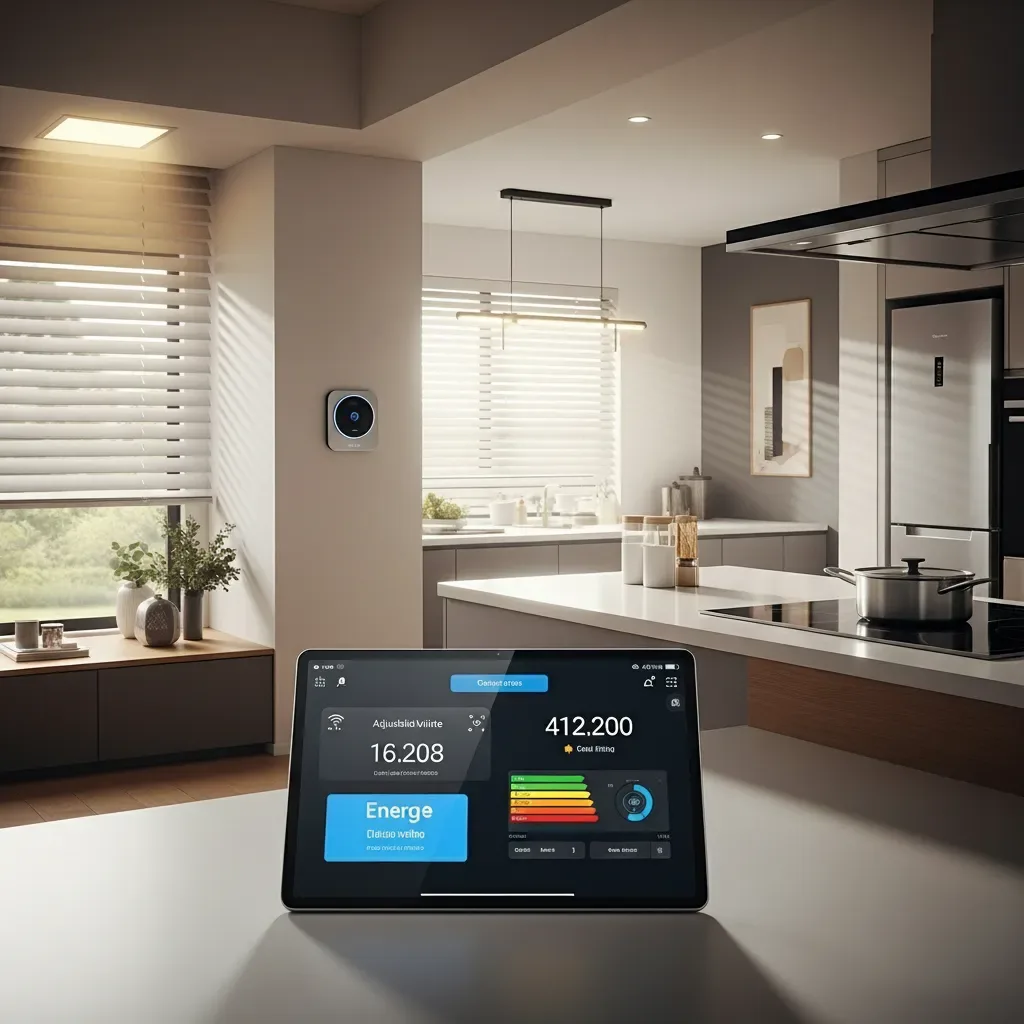
The Smart Home app displays which devices consume the most electricity during each time period, giving homeowners precise data to adjust behaviors accurately — not just guessing from a monthly bill.
Measurable Benefits
Homes with HappySmart’s Smart Home energy system typically reduce electricity costs by 20–40%, depending on previous habits and home size. Beyond lower bills, homeowners gain increased convenience, improved security, and higher long-term property value.
Start with the Starter Package at ฿5,000, or the Mid-Range Package at ฿15,000–35,000 for broader coverage. Consult for free via HappySmart LINE OA.