As MEA electricity rates continue rising and Bangkok’s climate makes cooling a primary household expense, building an Energy-Efficient Home with Smart Home Technology is an investment that genuinely returns its cost within a practical timeframe.
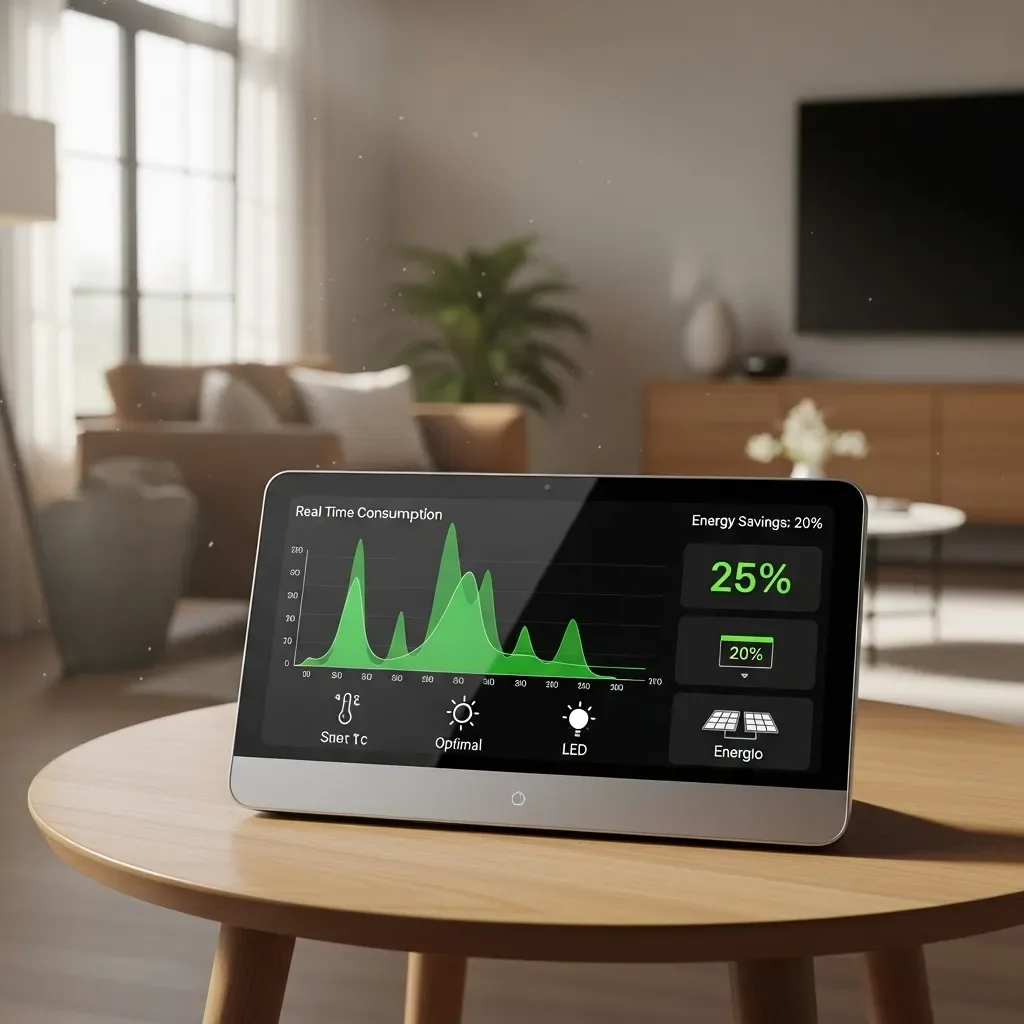
Energy Management System: The Brain of the Energy-Efficient Home Home Assistant’s Energy Management System (EMS) aggregates data from every power-consuming device in the home — Clamp Meters on the distribution board, Smart Plugs on major appliances, and the solar inverter if installed — displaying a real-time Energy Dashboard that provides an instant snapshot of the home’s energy status at all times.
Adaptive Temperature Control AI-powered Smart HVAC that learns occupant behavior adjusts temperature Setpoints automatically based on multiple simultaneous factors: outdoor temperature from a Weather API, number of people in the room from Occupancy Sensors, time of day, and current MEA TOU Rate. The home stays as cool as needed at the lowest possible cost.
Solar Plus Battery Storage Integration For homes with solar panels, the Smart Home system optimizes consumption of generated power. Heavy-load appliances such as washing machines and dryers are scheduled to operate during peak solar generation hours, rather than at night when grid power must be drawn. This type of solar optimization improves the efficiency of solar energy use by 20 to 30%.
Peak Shaving: Controlling Maximum Demand Under the MEA TOU system, keeping the home’s Peak Demand from spiking during Peak Hours produces significant savings. Smart Home performs Peak Shaving automatically — if three air conditioners and the washing machine are detected running simultaneously during Peak Hours, the system delays the washing cycle by one to two hours.
LED Dimming and Circadian Lighting Smart Dimmer-controlled LED systems reduce electricity use by 15 to 40% compared to continuous Full Brightness operation. Additionally, Circadian Lighting that adjusts Color Temperature throughout the day — warm in the evening, cool during midday — supports healthier Circadian Rhythms for occupants. The benefit is both energetic and biological.
Carbon Footprint Dashboard HappySmart also builds a Carbon Footprint Dashboard that translates kWh consumed into equivalent CO2 emissions figures, helping environmentally conscious households see the impact of their energy savings in a dimension broader than financial cost alone.