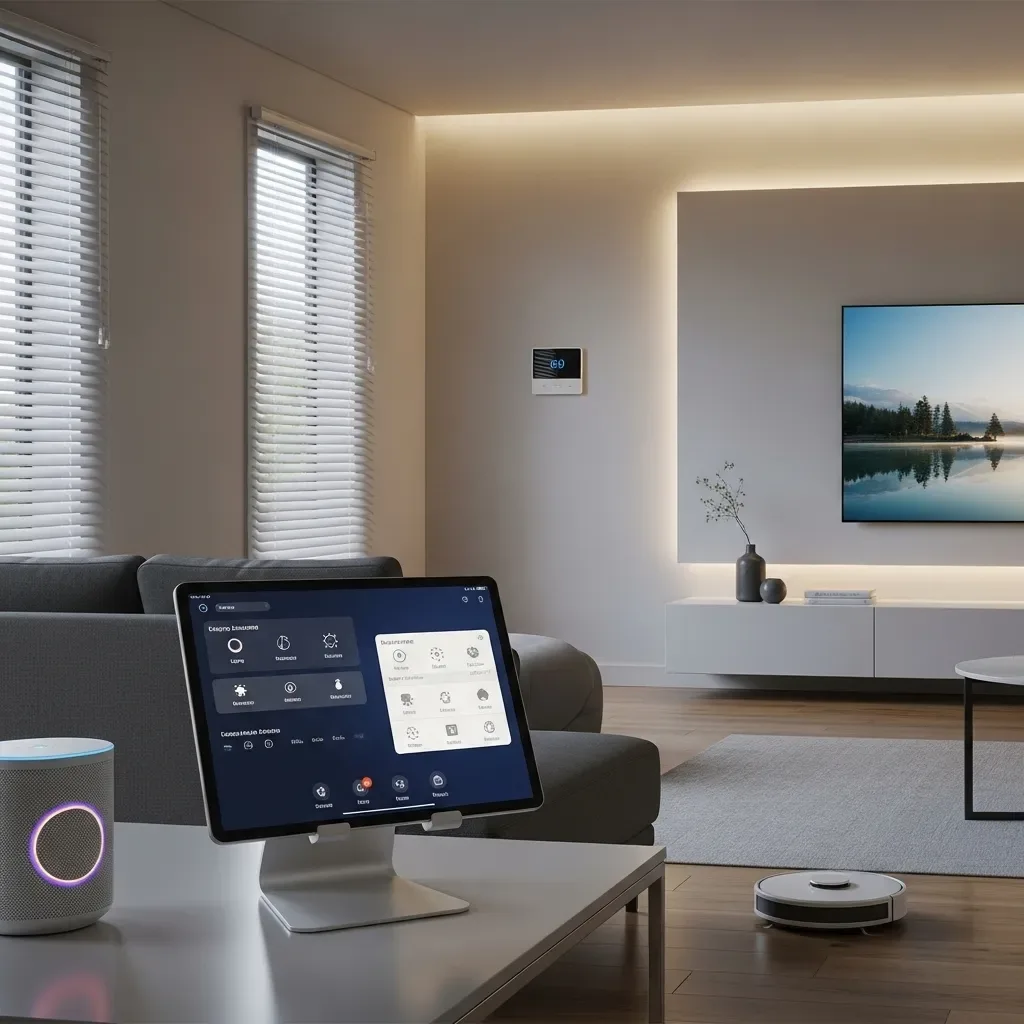
Why Does Smart Home Seem Complex for Beginners?
Many people are interested in Smart Home but don’t know where to start — there are hundreds of devices to choose from, and each brand has its own ecosystem. The truth is you don’t need to install everything at once, but you do need to plan correctly from the beginning.
HappySmart recommends starting with three core categories that deliver the highest ROI in a Bangkok context: lighting, air conditioning, and security.
Recommendations by Home Type
Detached House (2+ Floors) Start with: Central Smart Hub + Smart Switches in every room + Smart Lock on front door Expand with: mmWave presence detection on each floor + Solar monitoring + Automatic garden irrigation Starting budget: ฿30,000–50,000 for Phase 1
Townhome Start with: Smart Switches in living room + master bedroom + Smart Plug for AC Expand with: IP camera at front + Smart Doorbell + Automatic water shutoff Starting budget: ฿15,000–25,000 for Phase 1
Condominium Start with: 3–5 Smart Plugs (AC, TV, coffee maker) + Smart Speaker for voice control Expand with: Smart Lock (if juristic office permits) + Energy alert system Starting budget: ฿5,000–10,000 for Phase 1
Apartment / Rental Room Start with: Removable Smart Plugs + Smart Bulbs instead of Smart Switches Expand with: Wireless IP camera + Smart Speaker Starting budget: ฿3,000–6,000 for Phase 1
Device Selection Principles for Beginners
1. Choose one ecosystem first: Google Home, Apple HomeKit, or Tuya — pick one and commit, so devices communicate properly.
2. Prioritize Wi-Fi: Smart Home requires strong, stable Wi-Fi. Invest in Mesh Wi-Fi before buying many devices.
3. Start where you spend the most time: Master bedroom and living room should be first priority — they’re used multiple times daily.
4. Verify compatibility: Before purchasing, confirm the device works with your chosen Hub or ecosystem.