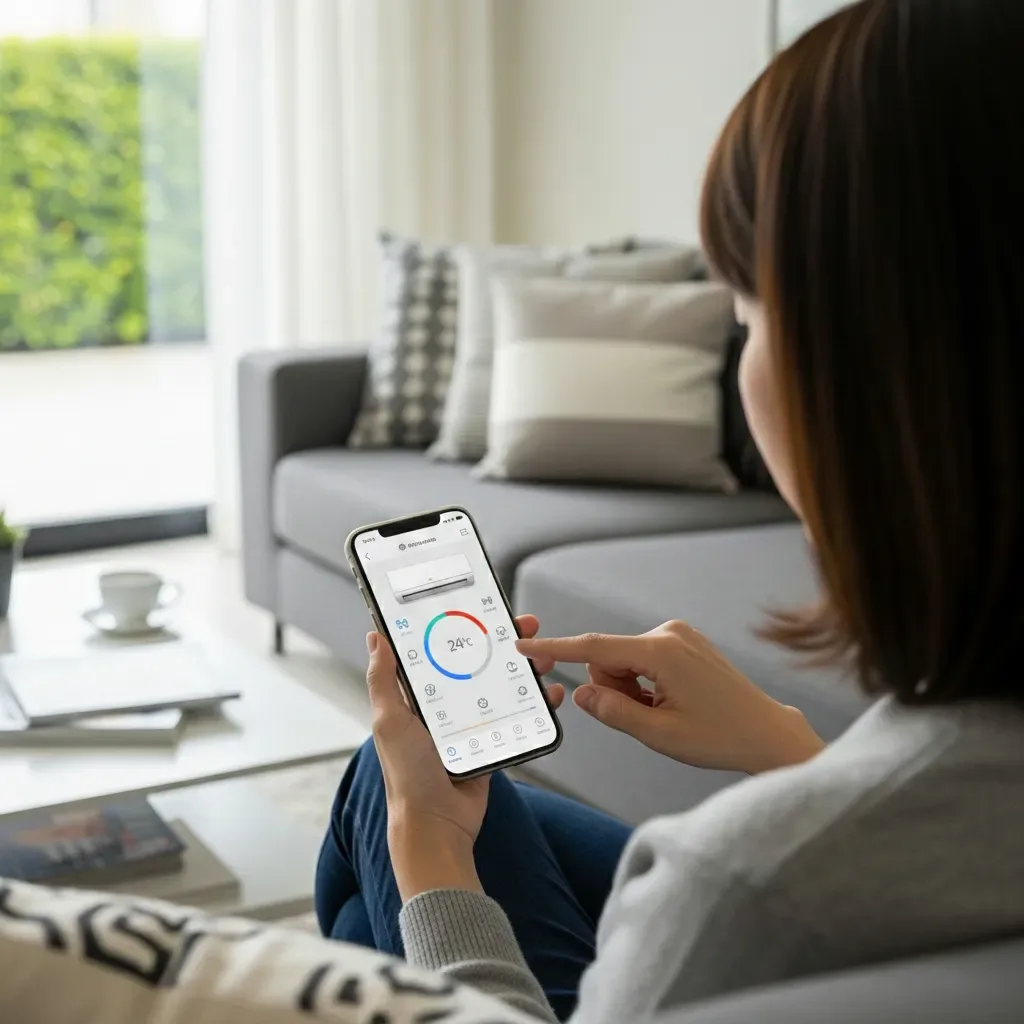
Why Devices Left Running in Empty Rooms Are a Major Cost Problem
Data from the Metropolitan Electricity Authority (MEA) indicates that in typical Bangkok residences, 30–40% of electrical energy is consumed when rooms are empty or devices are in Standby mode. An AC unit running two hours in an unoccupied room wastes electricity completely. Lights forgotten on all day and plugged-in chargers generating Vampire Power accumulate ฿200–500 per month in invisible waste. HappySmart AI SmartHome solves this by monitoring occupancy in real time and shutting off devices immediately when no presence is detected.
Presence Detection: Accurate Occupancy Sensing Beyond Simple Motion
HappySmart combines two sensor types for reliable occupancy detection: mmWave Radar Presence Sensors that detect breathing and micro-movements within an 8-meter radius — accurately detecting even a motionless seated or sleeping person — and traditional PIR Motion Sensors for corridors and entryways. The system distinguishes between a person sleeping in a room (do not turn off the AC) and a genuinely empty room (shut off all devices). This precision means no automation-triggered sleep disruption from overly sensitive time-outs.
Adaptive Timeout: Room-Specific Shut-Off Timing
Rather than applying a fixed shut-off delay, HappySmart’s Adaptive Timeout AI learns each room’s usage patterns and calibrates timing accordingly. The living room might use a 15-minute timeout (people step out briefly and return frequently), the bathroom 3 minutes, and the bedroom AC may have no timeout at all during sleeping hours. The system also learns weekday departure times versus weekend schedules, adjusting all timeouts to match actual lifestyle patterns without requiring manual reconfiguration.
Vampire Power Elimination: Cutting the Invisible Energy Drain
Vampire Power is the electricity devices consume even when switched off. A cable Set-top Box draws 10–15W continuously across 24 hours. Each unplugged phone charger draws 0.3–1W. Aggregated across all devices in a home, this can reach 50–100W flowing to waste constantly. HappySmart Smart Plugs detect Idle state and cut the circuit automatically — with no user action required. This single measure alone saves ฿150–300 per month for typical Bangkok households.
Zone Coordination: Securing the Entire Home in One Automated Sequence
When HappySmart confirms that no occupant remains in any zone — either from GPS Geofence detecting all household members have left, or from sensors across the entire home — it initiates a Leaving Home Sequence: AC units off first, lights off sequentially, Smart Plugs cut, door locked. The full sequence completes in 30 seconds with no manual trigger required. A LINE notification confirms completion, giving homeowners peace of mind regardless of where they are.
Measurable ROI: Payback Period Based on Real Bangkok Data
From HappySmart user data in Bangkok, a complete automatic shut-off system reduces monthly electricity bills by 18–25% on average. For homes with existing bills of ฿3,000–4,000 per month, this means saving ฿540–1,000 monthly. A basic 3–4 room installation with Presence Sensors and Smart Plugs costs ฿8,000–12,000, yielding a payback period of 10–20 months — after which savings are pure gain across the system’s 5–10 year operational life.