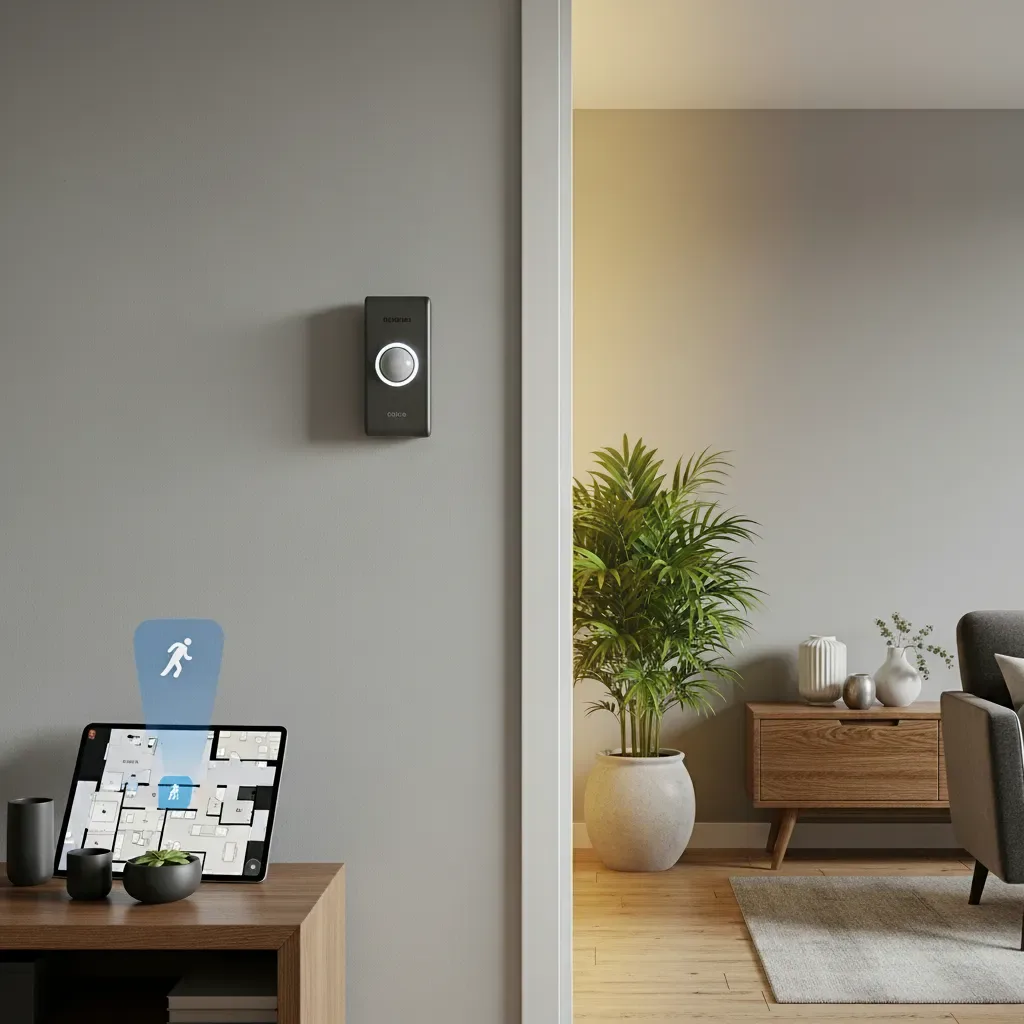
Why Motion Sensors Are the Foundation of Smart Home Energy Savings
HappySmart data shows that 15% of electricity costs in Thai homes come from lights and AC left on in unoccupied rooms — averaging ฿400–800/month for a 150–200 sq.m. home. Motion sensors integrated with HappySmart Smart Switches and Smart Thermostats eliminate this waste automatically, without relying on household members to remember or exercise discipline.
Sensor Types and Choosing the Right One
HappySmart supports three primary sensor types: PIR Sensors (Passive Infrared) — affordable (฿350–800 each), detecting thermal movement, ideal for hallways, bathrooms, and high-activity rooms, though they may lose detection when occupants sit still for extended periods; Radar/mmWave Sensors — higher cost (฿1,200–2,500 each), detecting even stationary occupants by respiration, ideal for bedrooms, home offices, and elderly rooms; and Dual Technology Sensors combining PIR and Microwave to reduce false positives in homes with pets.
Optimal Sensor Placement
Correct placement is as important as sensor type selection. HappySmart recommends: mounting PIR Sensors at room corners at 2.2–2.4m height angled diagonally for maximum coverage; avoiding direct orientation toward sun-exposed windows as solar heat may trigger false positives; using ceiling-mounted mmWave Sensors in bedrooms to detect breathing during sleep; and in large spaces, placing multiple sensors with 20–30% Coverage Overlap to eliminate detection dead zones.
Automation Configurations for Maximum Savings
Correct Automation configuration maximizes sensor effectiveness: Adaptive Timeout — different delay periods per room type (bathroom 2 min, living room 15 min, home office 30 min); Conditional Logic — lights turn off only when natural light is sufficient (via Lux Sensor), preventing lights from cutting out in dark conditions; Zone Coordination — when Zone A sensor detects activity, devices in inactive zones shut off automatically; and Learning Mode — AI automatically adjusts timeouts and conditions to match real occupancy patterns in each room.
ROI and Measurable Savings
Installing motion sensors across a 150 sq.m. home (5–8 rooms) costs approximately ฿8,000–18,000 including installation and HappySmart Hub integration. Saving ฿500/month yields payback in 16–36 months — faster for households with frequent leaving-devices-on habits. Automatic shutdown also extends appliance lifespans by reducing unnecessary operating hours, adding measurable value beyond the direct electricity savings.