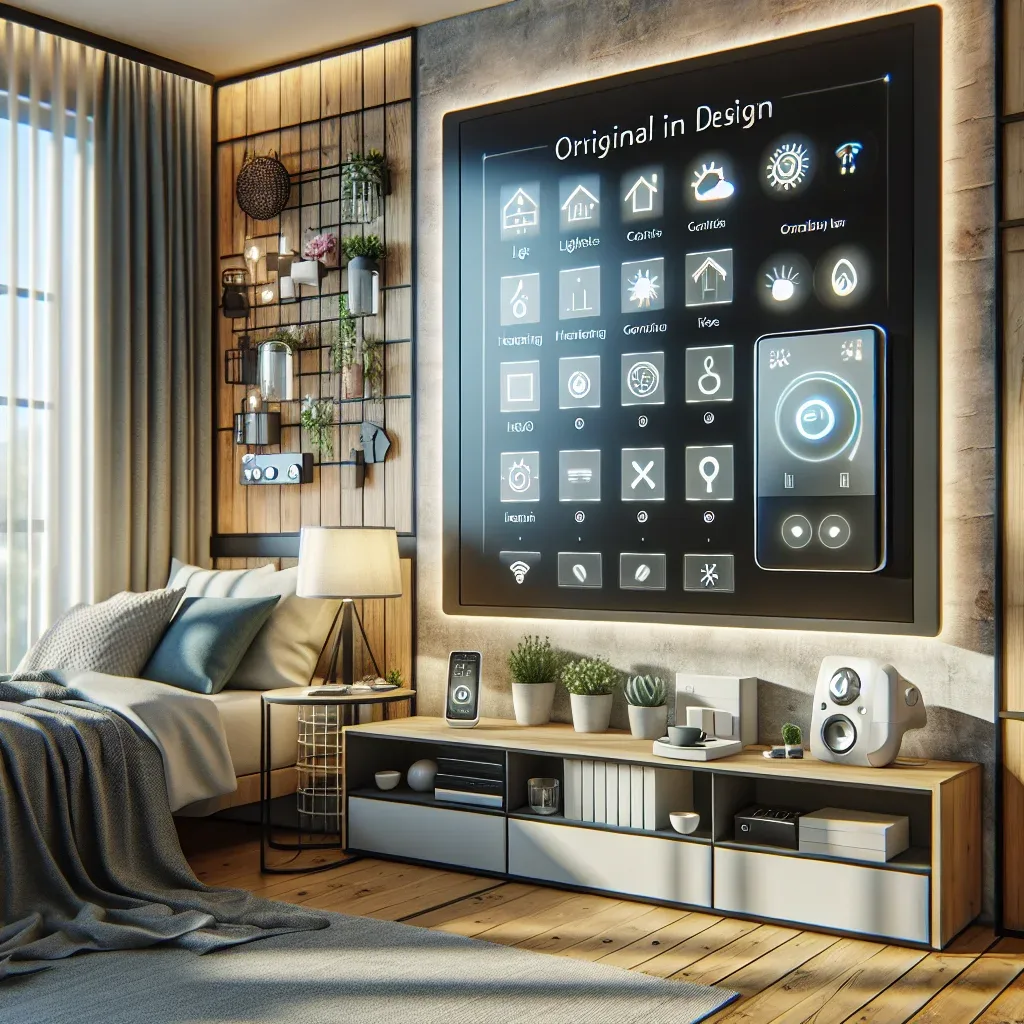
A Good Smart Home Should Feel Effortless
The most common misunderstanding about smart homes is that they require learning an entirely new way of living. A well-designed system operates in the background until the household barely notices it is there — while daily life runs noticeably more smoothly.
HappySmart begins every project by understanding how each client actually lives, not by presenting a product list. Automation sequences are designed around the real behaviour of that specific household.
Lighting That Adapts to Daily Routines
Lighting has the greatest impact on the atmosphere and feel of a home. HappySmart's smart lighting sets scenes for different activities — cooking, dining, watching films, and winding down — accessible by voice or a single tap.
Circadian rhythm lighting adjusts colour temperature and brightness throughout the day, reducing blue-spectrum light after 8pm to help the body prepare for sleep. Most clients notice a measurable improvement in sleep quality within a week of activating this feature.
Energy Control That Requires No Thought
Effective energy saving must be automatic. A departure mode that detects when no household smartphones are connected to the home Wi-Fi switches off all non-essential devices within five minutes — no checklist required.
At the same time, the system keeps cameras and sensors active for security, and maintains air conditioning at a slightly elevated temperature rather than switching it off entirely — necessary in Thailand's humid climate to prevent mould and condensation damage to furnishings.
IoT and Health Within the Home
Connected IoT devices create opportunities for health-supportive home environments that feel nothing like clinical settings. Air quality sensors, automated ventilation, and humidity control work in combination to maintain healthy conditions in every room.
For households with allergy or respiratory conditions, HappySmart's air quality automation reduces allergen exposure systematically and continuously, without requiring the resident to monitor or operate any equipment.
Scaling the System as Life Changes
A family with young children has different needs from the same family a decade later, and different needs again when elderly parents move in. Matter 1.4 and Home Assistant allow automation to be updated and expanded at any time as circumstances change.
HappySmart designs systems as strong foundations rather than fixed configurations — because a good home grows alongside the family that lives in it.