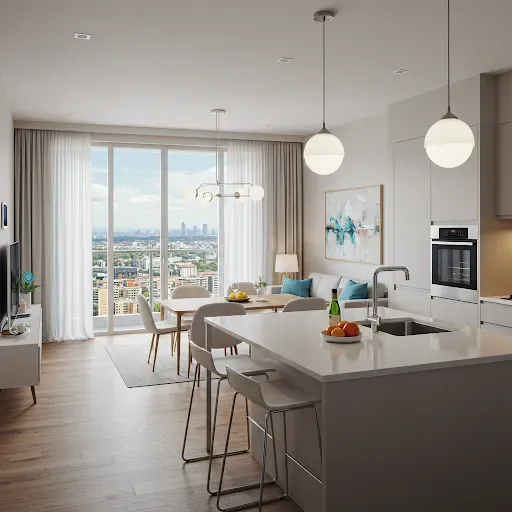
What Is Condo Smart Home and How Is It Different from a House?
Condo Smart Home means bringing smart technology into a condominium unit to control devices via apps or voice commands. The key difference from a standalone house is that condominium juristic persons typically prohibit structural modifications or wall penetrations. This means device selection must favor Wi-Fi connectivity, plug-in installation, and double-sided adhesive mounting rather than buried wiring.
6 Types of Smart Devices Best Suited for Condos
Smart Bulbs are the easiest starting point. They are controlled via app or voice, schedulable for on and off times, and adjustable in color and brightness. Recommended brands include Philips Hue, Xiaomi Yeelight, and TP-Link Tapo.
Smart Plugs provide remote control of existing appliances, scheduling capability, and energy monitoring. TP-Link Tapo P100 and Sonoff are reliable, affordable choices.
Indoor Smart Cameras deliver real-time security monitoring via smartphone and motion detection alerts. They are ideal for solo residents, pet owners, and families with elderly members. Imou, EZVIZ, and Eufy offer strong options.
Smart Switches replace existing wall switches without new wiring runs. Aqara and Tuya offer DIY-friendly replacement models. Smart Sensors for doors and windows send instant alerts when opened unexpectedly and mount with double-sided tape for as little as 200-600 THB each.
Smart Speakers like Google Nest Mini or Amazon Echo serve as voice-controlled hubs connecting all other Smart Home devices.
Supplementary Security Systems Condos Should Have
Although most condominiums have central security, adding in-unit systems provides an additional layer of confidence. Smoke and gas leak sensors are particularly important in units with gas stoves. Smart Locks eliminate the need to carry keys and enable access control. Vibration sensors are recommended for high-rise units, which amplify ground motion more than low-rise structures.
Popular Brand Comparison in 2025
Xiaomi delivers cost-effective, diverse device options through the Mi Home ecosystem. TP-Link Tapo is the easiest for beginners at a mid-range price. Aqara excels in sensor quality and supports HomeKit and Home Assistant. Tuya is an open platform supporting multiple brands at budget prices. Philips Hue offers the highest bulb quality and stability at a premium price.
Budget Planning
A basic starter set of two Smart Plugs, a bulb, a camera, and a speaker starts at approximately 3,000-6,000 THB. A full security system with multiple cameras, sensors, a Smart Lock, and smoke and gas detectors runs 10,000-25,000 THB. Most devices are self-installable without a technician.
Summary: Condo Smart Home Is Achievable Without Heavy Investment
Having Smart Home in a condominium is fully attainable by choosing devices suited to condo constraints, starting with the most important needs, and expanding the system step by step. Convenience, safety, and energy savings are all within reach at an accessible budget.