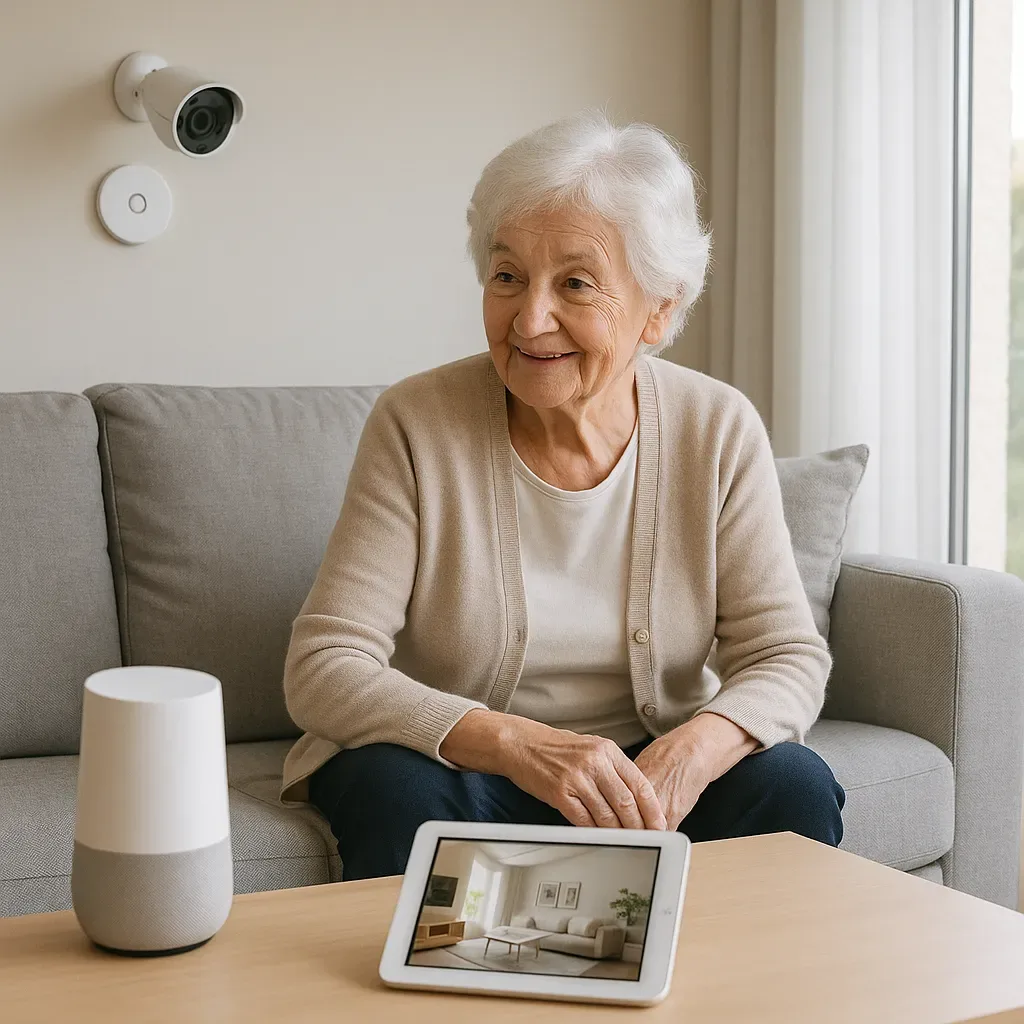
Why Safety Audit Comes First
Installing smart home for elderly without a clear plan typically delivers only partial results, because each room carries different risk types. An upfront audit helps prioritize needs, allocate budget, and select the right equipment.
Simple Safety Audit process:
- Walk through every room with a checklist
- Document risk points with photographs
- Prioritize: Critical (life-threatening), High (health), Medium (comfort)
- Calculate budget and installation timeline
Living Room: Often-Overlooked Risks
The living room looks safe but contains real risks for the elderly:
Rising and sitting falls: low chairs or soft sofas make standing difficult. Smart sensors for the living room:
- mmWave Presence Sensor (LD2410/LD2450): detects falls even when the person lies still — unlike PIR which requires movement
- Panic Button attached to sofa or coffee table: one press calls family via LINE
- Motion Sensor + Timer: no motion for 4 hours during the day → family alert
Lighting: eyes over 70 need 3x more light than younger adults. Set automation to turn lights to 80% immediately when presence is detected.
Bedroom: Nighttime Rising to the Bathroom
The most dangerous moment for elderly is rising in the middle of the night to visit the bathroom — darkness, legs weakened from lying still:
Motion-Activated Night Light:
yaml
alias: "Elderly Night Light Corridor"
trigger:
  - platform: state
    entity_id: binary_sensor.bedroom_motion
    to: "on"
condition:
  - condition: time
    after: "22:00:00"
    before: "06:00:00"
action:
  - service: light.turn_on
    target:
      entity_id: light.corridor_strip
    data:
      brightness_pct: 20
      color_temp: 2700
  - delay:
      minutes: 10
  - service: light.turn_off
    target:
      entity_id: light.corridor_strip
Bed Exit Sensor: FSR mat under the mattress — when weight leaves the mat between 2-5 AM, corridor lights turn on immediately without waiting for motion sensor delay.
Sleep Monitoring: Withings Sleep Analyzer under the mattress measures heart rate, respiration, and sleep cycle, feeding data into HA for health trend tracking.
Kitchen: Highest-Risk Room in the Home
The kitchen holds three primary risks:
Fire from unattended cooking: elderly with memory issues may forget food on the stove.
- Smart Stove Guard (Elstat/LinkTap): set maximum 30-60 minute timer; if no one is nearby → auto cut power
- Smoke + Thermal Detector: two separate devices for faster detection
Gas leak: elderly often have reduced sense of smell.
- Tuya Zigbee Gas Sensor + Motorized Gas Valve: gas detected → auto-close valve → open exhaust fan → LINE alert
Scalding: set Smart Water Heater to maximum 50°C for kitchen tap.
Bathroom: The Number One Risk Zone
WHO statistics: 80% of elderly home accidents occur in the bathroom.
Floor Safety:
- Anti-slip mat with pressure sensor underneath: confirms elderly person is in the bathroom
- Grab Bar Smart Sensor: detects grip force ≥ 50% of body weight → Warning alert
Fall Detection in Bathroom:
- mmWave Sensor mounted on ceiling: privacy-safe (no images), reliably detects falls
- In bathroom > 30 minutes → alert family
- No movement > 5 minutes → Emergency alert
Emergency Pull Cord: always install a red physical pull cord as hardware backup.
Entrance and Stairs: First and Last Mile of Safety
Home Entrance:
- Smart Door Lock + Keypad: no key needed — short PIN or fingerprint
- Video Doorbell: see who is at the door from a phone without walking to the entrance
- Smart Mailbox Sensor: know when mail arrives without going outside
Stairs (if applicable):
- Motion Sensor at stair base: instantly activates light strip along full stair length
- Stair Riser Lighting: LED at each step edge — clearly visible in the dark
- Never use sensors with >0.5 second delay on stairs — the lag itself is a fall hazard
Summary: Safety Audit Is a Living Document
Elderly needs evolve with health and age. Conduct a fresh safety audit every 6 months, or after any significant health event such as a fall, surgery, or noticeable decline. A well-designed system should allow adding sensors and automations easily without dismantling existing infrastructure.