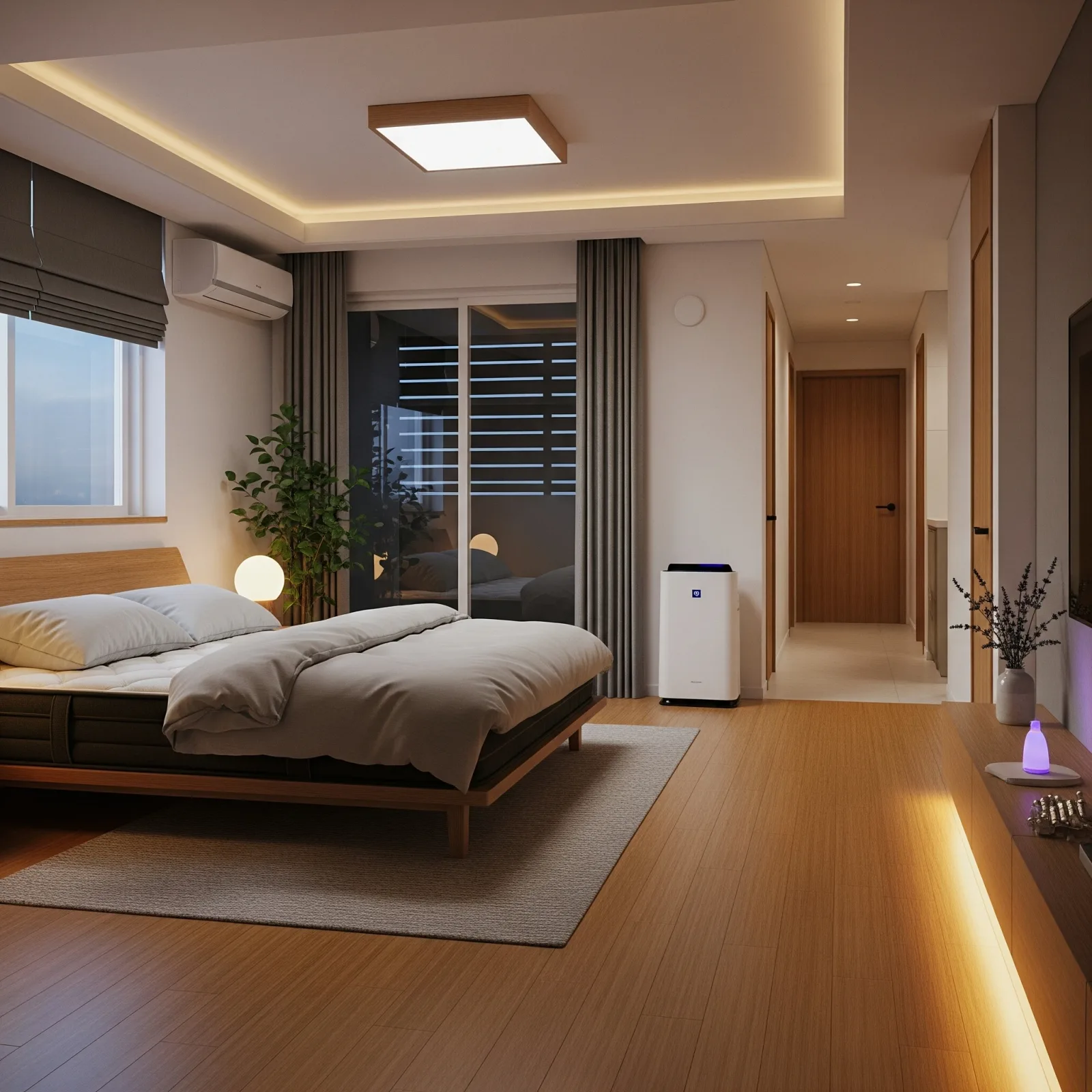
Healthy and Safe Home: Devices That Make Every Night's Sleep More Comfortable and Safe
In a city life filled with pollution and stress, quality sleep and clean indoor air have become essential — especially for homes with young children, elderly residents, or family members requiring extra care. Smart Home technology is the answer to building a genuinely healthy and safe home.
The Impact of CO2 Buildup in the Bedroom
A sealed home with constant air conditioning, or one located near heavy traffic, accumulates dust, CO2, chemicals, and mold — leading to fatigue, breathing difficulties, chronic allergies, and poor sleep. CO2 buildup in the bedroom causes a feeling of stuffiness, shallow breathing, mental fog in the morning, and increased risk of waking suddenly at night. Children and the elderly are significantly more sensitive to air quality than other adults.
HEPA Air Purifiers: The Core of Healthy Breathing
A health-home air purifier should feature a HEPA H13 or H14 filter (capturing 99.97% of PM2.5 and pathogens), Activated Carbon for odors and VOCs, a real-time CO2 sensor, Wi-Fi or Zigbee connectivity for Home Assistant integration, and Automation capability with window sensors or air conditioning. For example, Khun Aum, living in a Bangkok condominium, connected her Xiaomi air purifier to Home Assistant — set to activate when CO2 exceeds 800 ppm, switch off when it drops below 600 ppm, and send Telegram notifications.
Sound Therapy Speakers: The Technology of Rest
Complete silence is not always the key to good sleep. Playing White Noise, Pink Noise, or nature sounds — rain, ocean waves — helps the brain relax and achieve deeper sleep stages. Popular devices include Google Nest Hub, Amazon Echo, Xiaomi Smart Speaker, and specialized sound therapy machines. A Home Assistant automation can open the sound at 22:00 and close it at 06:00, simultaneously dimming the lights automatically.
Recommended CO2 Sensors for Bedrooms and Home Offices
Top CO2 sensor recommendations for Thai homes include the Airthings View Plus (CO2, VOC, PM2.5, humidity, and Radon in one device), the MCOHome Air Quality Monitor (Z-Wave, for high-accuracy setups), and the Xiaomi Air Monitor (easy Mi Home and Home Assistant integration). Benefits include reduced unusual daytime drowsiness, prevention of CO2 buildup in children's and elderly rooms, and automatic activation of purifiers or fans.
Beginner-Friendly Automations Anyone Can Set Up
Popular Home Assistant automations that are easy to configure include: automatically turning on the air purifier when the front door opens; sending a mobile alert when CO2 exceeds the safe threshold; activating sleep-aid sounds while simultaneously dimming bedroom lights. A great home is not about a large budget — it is about choosing the right technology to care for every night of every person you love.